Web Features
Words and Images by Jason Bradley | January 2026
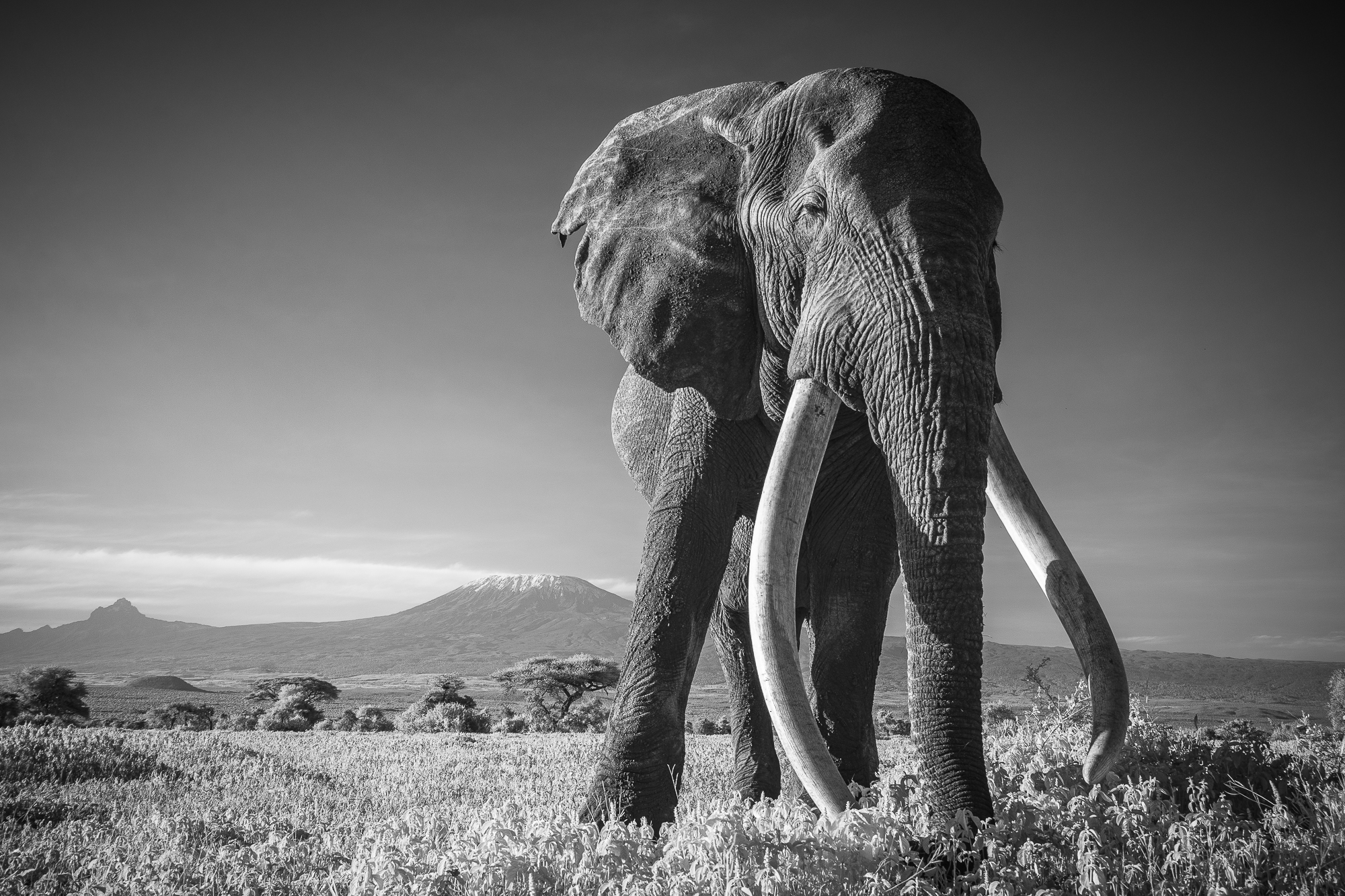
I was lying on the ground, my body tucked beneath our safari vehicle, working with a wide-angle lens and an infrared camera. Craig moved slowly toward me, unhurried, his massive frame and tusks pushing through the foliage with an almost prehistoric weight.
I was cautious because of his size, but what struck me most was the absence of tension. No warning signs. No agitation. No sense that I was negotiating space.
Getting close to bull elephants like this is a rare luxury for photographers. I didn’t feel like I was intruding. I felt allowed there. That distinction matters.
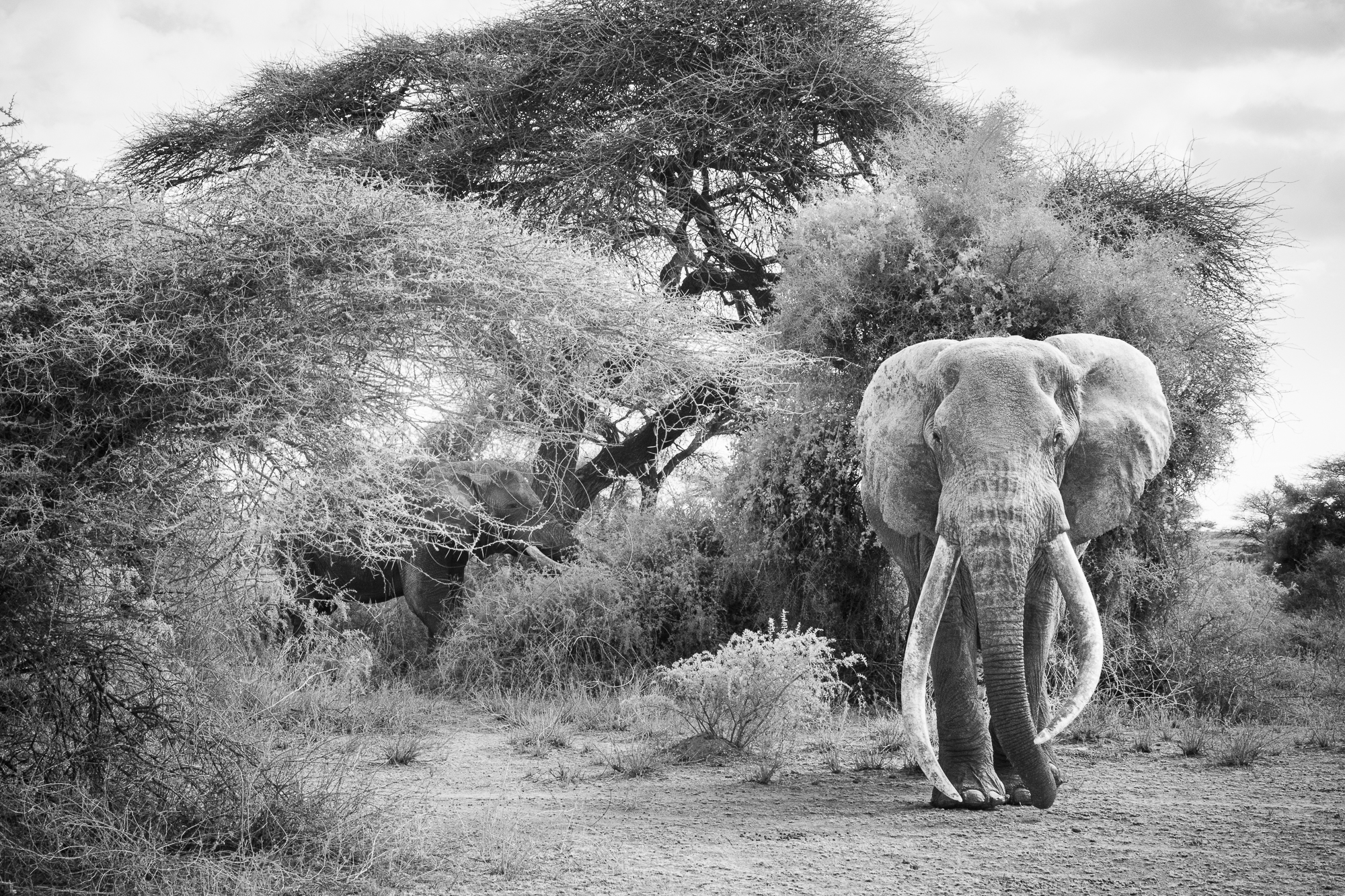
Craig wasn’t territorial. He wasn’t aggressive. Unlike many old bull elephants shaped by pressure and loss, he seemed calm in the presence of people. For lack of a better word, Craig was a pacifist. Gentle. Unnerved by us.
Before visiting Kenya, I wasn’t an elephant person. I arrived, like many, a big cat person. Elephants weren’t high on my list of animals to photograph or study. That changed in Amboseli National Park, and it changed decisively with Craig. Since that first encounter, elephants have moved to the top of my list. Not just to photograph, but to observe, to sit with, and to understand.
Craig was loved by many.
The moment that I first heard that Craig had died, my immediate fear was that it had come from an encounter with people. A fence line. A farm. A gun. Poachers. Pain. Once I learned that his death was from natural causes, I felt something unexpected. Gratitude. Gratitude that he was allowed to live the full arc of his life. Gratitude that he wasn’t taken early, violently, or anonymously.
Following his passing, I’ve witnessed a remarkable outpouring from the global wildlife photography community. Images. Stories. Quiet reflections not shared for attention, but for acknowledgment. Craig clearly meant something to many of us, even if each encounter was different.
Craig was a symbol and a teacher.
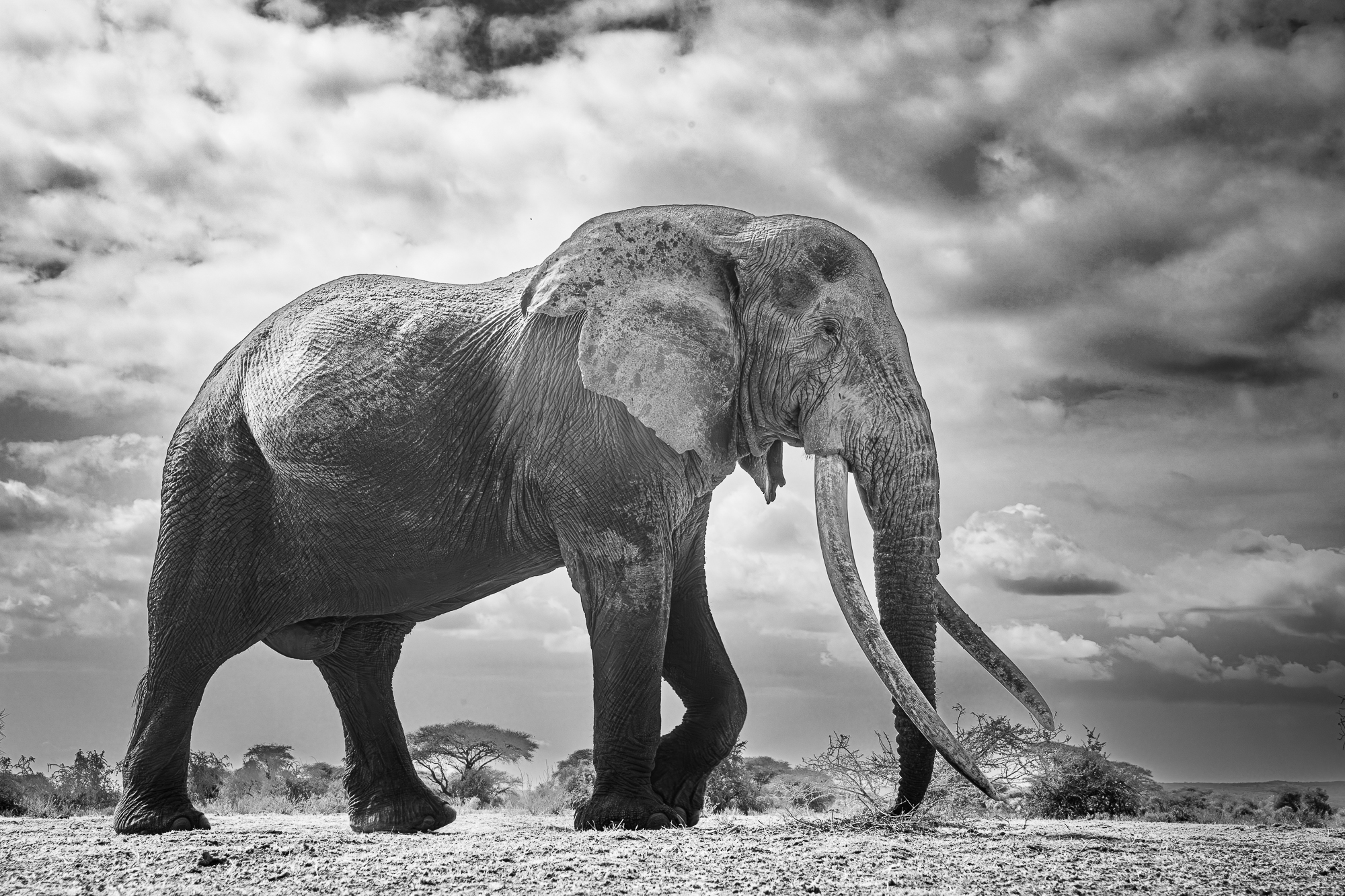
Old bull elephants carry a kind of knowledge that can’t be rushed. They model restraint. They model calm authority. Elder elephants show younger bulls how to move through the world without constantly testing it. Craig embodied that wisdom. His presence alone communicated something rare: that power does not need to announce itself.
Craig symbolized hope in a world that still threatens elephants for trophies and sport. He symbolized the value of old bulls and the wisdom they carry. And he symbolized something simpler and more profound: that elephants are worth more alive than dead, not just economically, but emotionally, culturally, and spiritually.
Craig lived well, passed in grace,
And in that, there’s hope.
Jason Bradley operates a print lab and offers workshops and events. Learn more at www.bradleyphotographic.com and follow his work on instagram, @bradleyphotographic
Get Annual Subscription