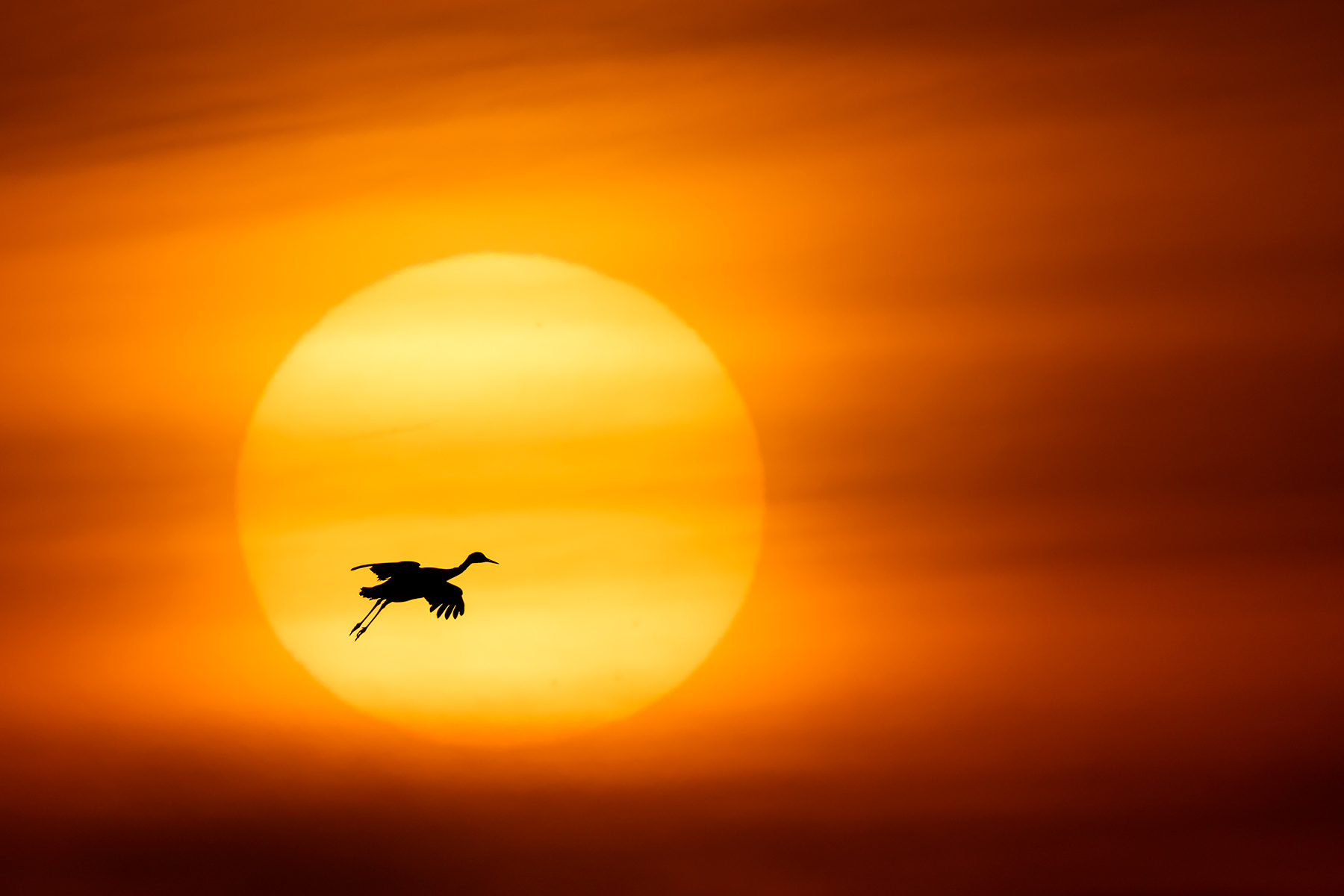
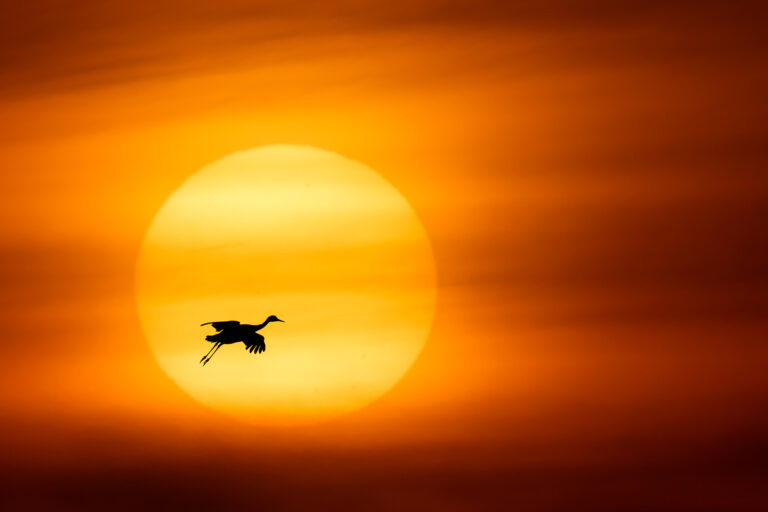
A lone sandhill crane glides gracefully toward the river with its distinctive silhouette framed by the brilliant orange color of the setting sun
↑ A lone sandhill crane glides gracefully toward the river with its distinctive silhouette framed by the brilliant orange color of the setting sun
The March Return of Sandhill Cranes
Words and Images by Cheryl Opperman
Using only the stars, maybe a bit of moonlight, and a dim red flashlight to guide my way, I started the day with a quiet, slow-paced walk. I was heading to permanent wooden blinds that are situated at the edge of the riverbank overlooking one of the largest sandhill crane roosts in the area.
At optimal numbers, it’s truly one of the most awe-inspiring natural events I’ve ever witnessed of a remarkable species that’s both fascinating and photogenic.
Patient Observation
Birds and wildlife on the Platte River in Nebraska aren’t accustomed to the continual presence of human activity as in other more populated or visited areas. This makes close-up viewing or photography on the water only possible from thoughtfully positioned blinds and a very cautious approach. I select clothing that’s dark or camouflaged to blend into the surrounding darkness. Outfits designed for hunting work especially well because the fabric is usually a fleece material that makes very little noise as I walk and move around in the blind. Cranes here are amazingly sensitive to light, movement, and sound, and can be frightened easily.
Every March, millions of sandhill cranes gather along the Platte River during a crucial stopover to rest and refuel during their long journey North.
I carefully opened the door, set down my camera bag and tripod, and sat in complete darkness, waiting for the sun to reveal the tens of thousands of cranes roosting in front of me. The mornings can be quite cold, so a heated jacket and hand warmers kept me comfortable as I waited. Listening to the various bird sounds felt almost therapeutic, and the gradual emergence of light gave me time to contemplate the enormity of it all.
An Ancient Journey
Photographing the sandhill crane migration along the Platte River is about more to me than just getting great shots. These amazing creatures have been migrating along the same route for millions of years, and the images I record help tell the story of their past, present, and even future.
Cranes have witnessed dramatic changes to the landscape, yet thanks to the work of several conservation organizations who help preserve their habitat, they still faithfully arrive every spring to rest, feed, and prepare for the journey to their nesting grounds that extend from the Northern United States to Siberia.
Cranes have exceptionally strong family bonds, generally mating for life and conscientiously rearing their young. Their survival is important to this short grass prairie ecosystem. They, however, aren’t the only wildlife to watch and photograph. From February to early March, thousands of snow geese and other waterfowl fill portions of the river and sky, often making for a chaotic scene that’s difficult to capture without unwanted subjects in every frame. Raptors, pelicans, shorebirds, deer, coyotes, and a few whooping cranes might also be seen in the vast, open expanses.
Morning Magic
It’s a relatively undiscovered photographer’s paradise full of endless creative possibilities. Even after more than a decade of annual trips to build my own body of work or introduce other photographers to the area through photo workshops, I still come home with something new every year.
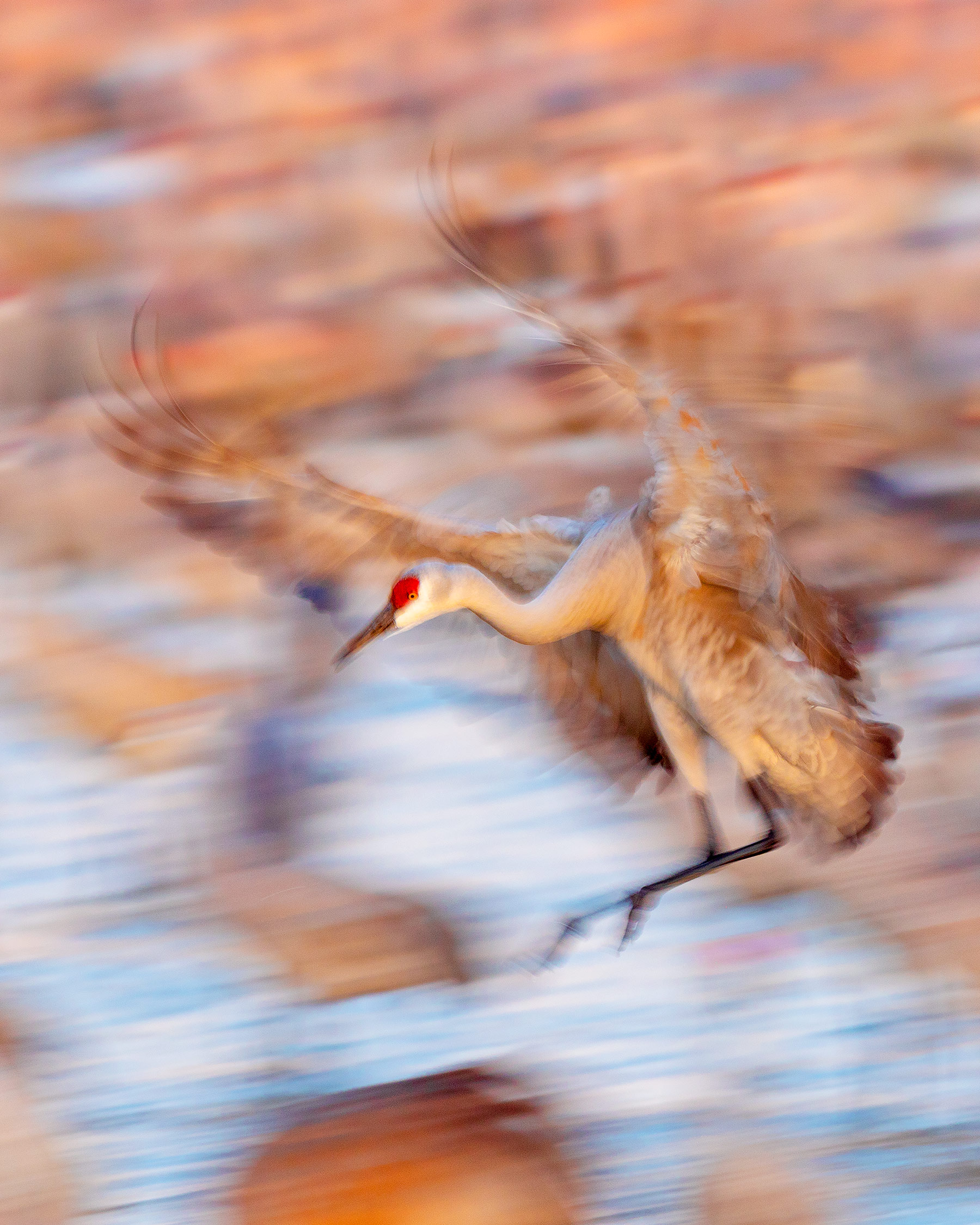
The soft morning glow of light before or just as the sun begins to crest is the perfect time to experiment with slow shutter speeds that represent motion in ways that frozen action can’t. I focus on the graceful flapping of wings with just enough sharpness in the eyes to make the birds recognizable. In these low-light moments, my photography feels more like painting a canvas of whimsical, pastel-colored shapes and textures.
In the pastel colors of dawn, wings beat through the air, forming whimsical patterns and shapes only possible with the creative use of slow shutter speeds.
As the light intensity increases, small groups of cranes begin to launch into flight toward the surrounding farmers’ fields and wet meadows that contain the nourishment necessary to sustain them on the rest of their voyage north. I can track their majestic flight across the open sky for hours, freezing every possible wing position and formation.
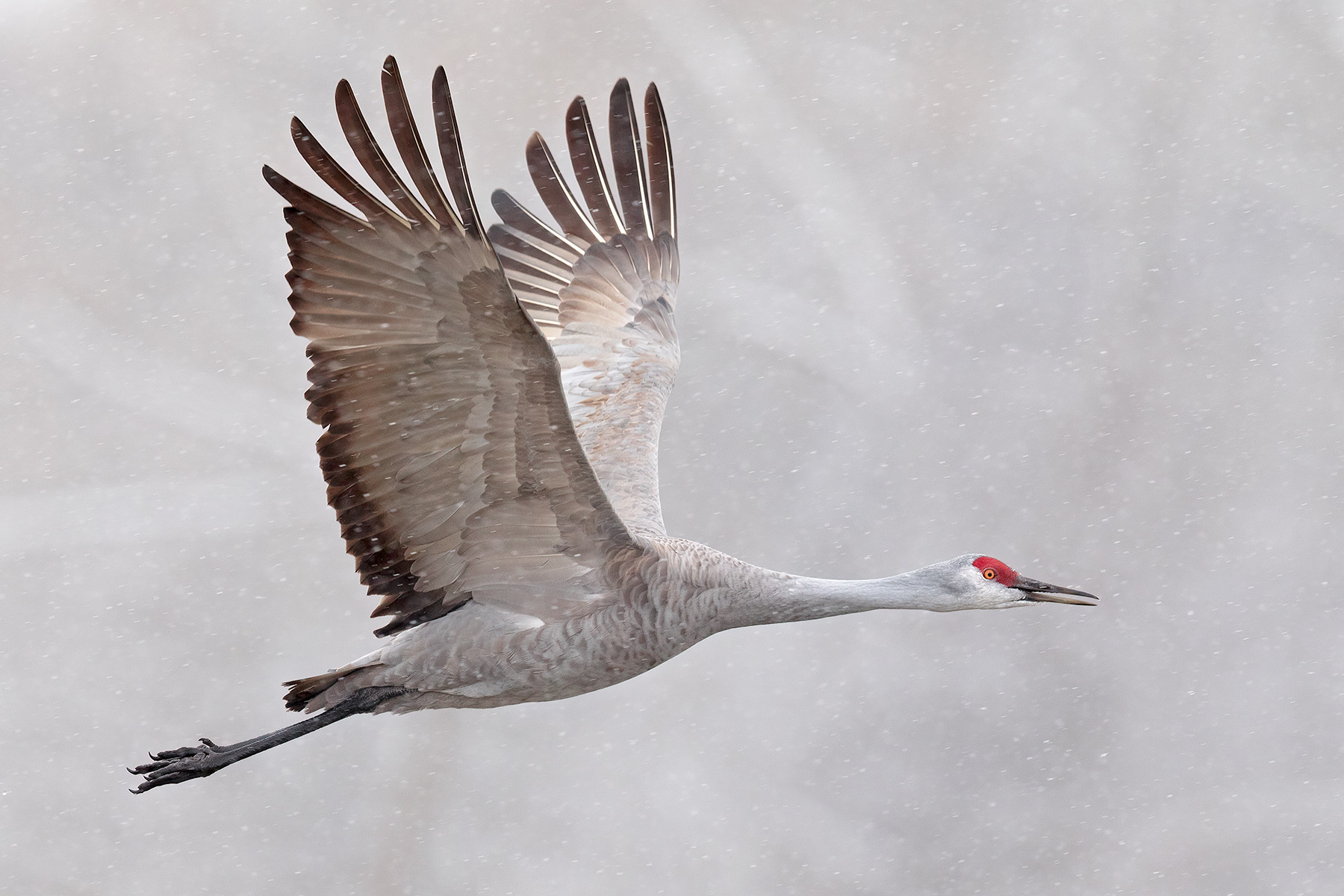
During a rare spring storm, this sandhill crane flies through the falling snow using its steady wingbeats to maintain lift in the dense, cold air.
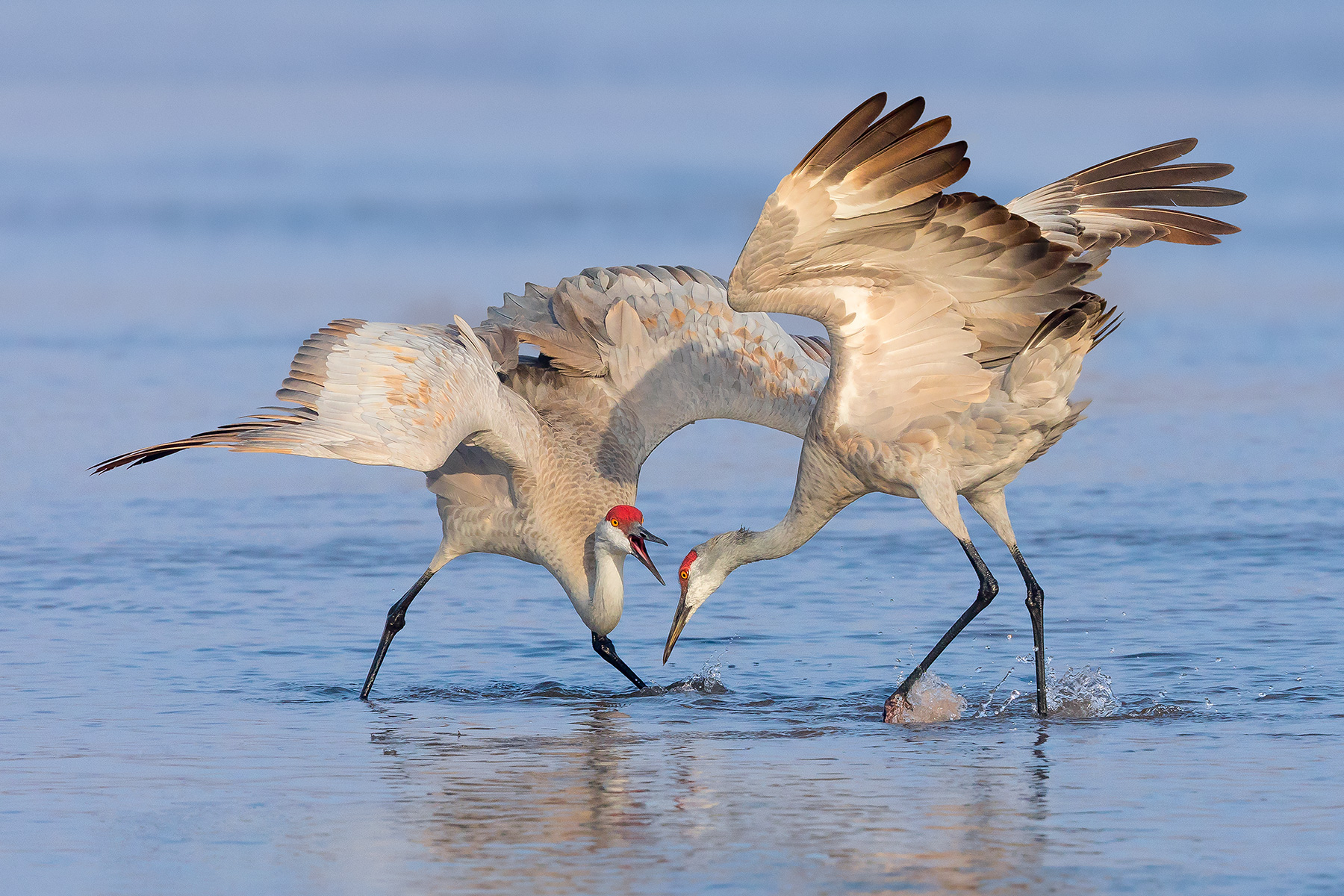
When the roost begins to thin with fewer birds on the river, I watched for pairs of cranes performing their notoriously elaborate and sometimes acrobatic dances. This is also a good time to look for ducks along the shoreline. Finding subjects in front of a clean, blue water background is part of the challenge. Patience and choosing just the right composition and crop help to make sense of this chaotic multitude of birds and activity.
In a timeless courtship ritual, sandhill cranes perform intricate dances in the beautiful morning light that indicate intent and strengthen pair bonds.
When the roost begins to thin with fewer birds on the river, I watched for pairs of cranes performing their notoriously elaborate and sometimes acrobatic dances.
Sunset Spectacle
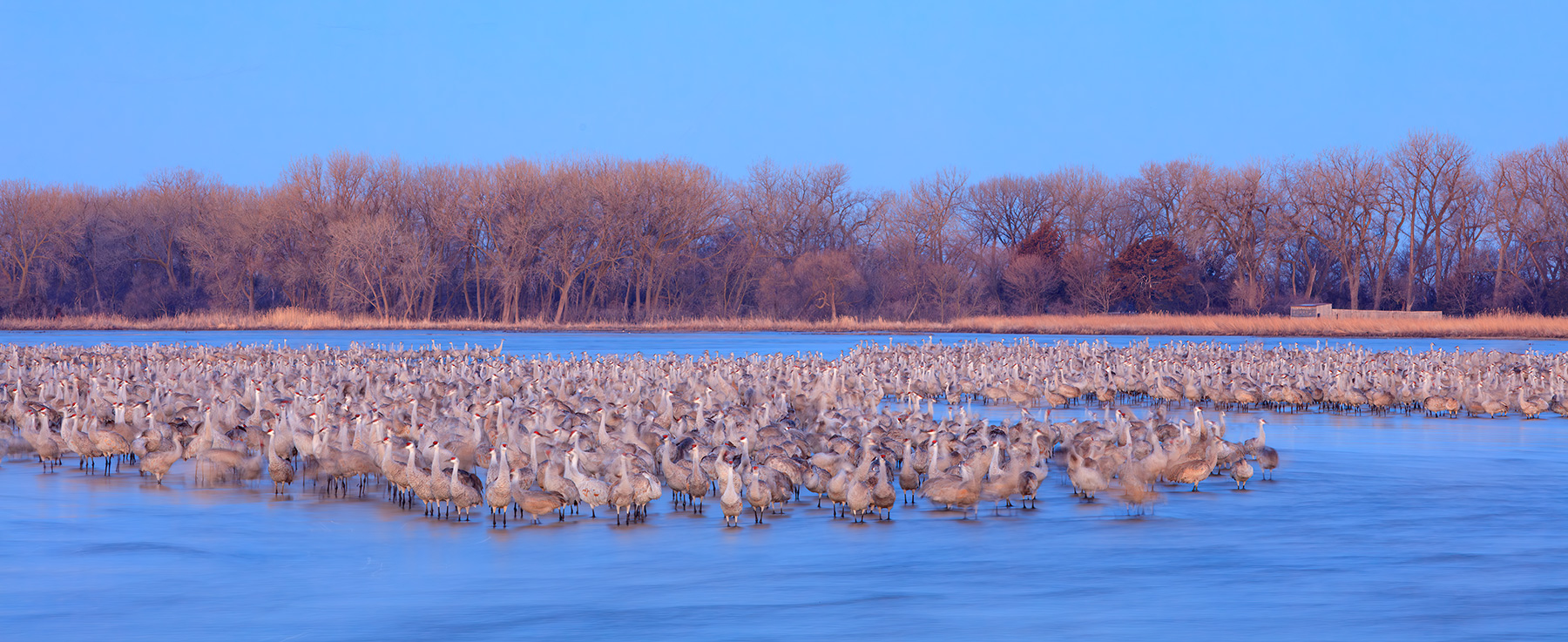
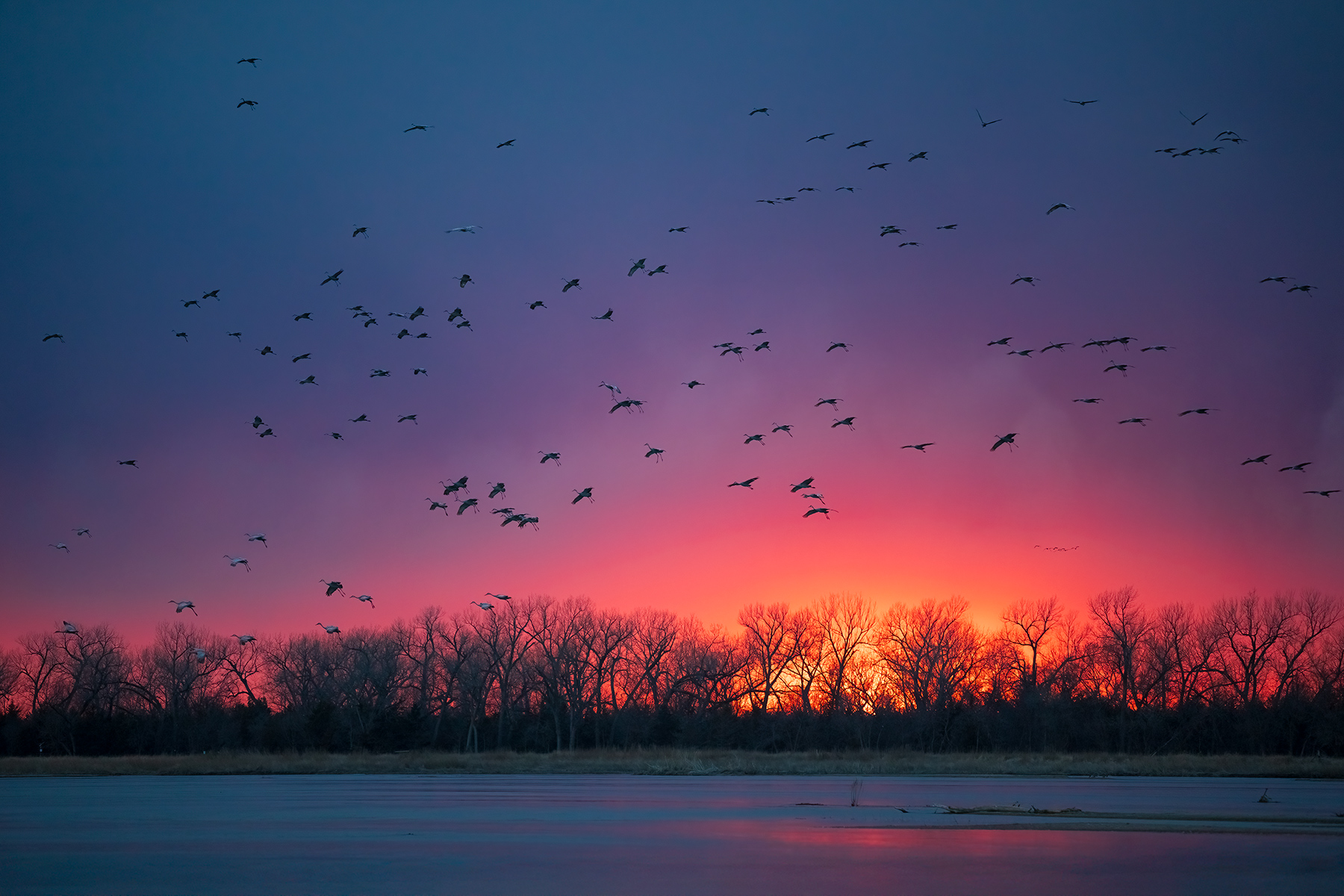
After a much-needed mid-day nap, the evening was perhaps my favorite time on the river. Sunset provided the perfect opportunity to work with dramatic backlight, emphasizing the sheer numbers and shapes of the birds. Nebraska has some of the most vibrant sunsets I’ve ever seen, furnishing an ideal backdrop for the sizable groups of cranes that return to the river for the night. In contrast to the morning, cranes tend to reappear in large flocks and land on the shallow sandbars with unobstructed views that offer them protection from predators.
Evening often begins with just a few birds in the sky who act like scouts that seemingly call in the larger groups after assessing it’s safe to descend. When eagles are present on the river, the cranes will circle in the air or move upstream or downstream, away from the potential predators. Understanding bird behavior makes it much easier to anticipate and prepare for the best images to try to capture.
Brilliant color fills the sky just after sunset as sandhill cranes return from the nearby fields to roost in the shallow waters of the river for the night.
I photographed as long as the light allowed, and then once again sat quietly until it was dark enough to exit the blind without the birds’ detection. Unless relentlessly spooked by a predator during the night or forced from the river by weather or ice, the cranes will be waiting for my return the next morning to put on another fantastic show. The cranes may not know I’m watching and supporting their plight, but I hope that through the images I share, people will be inspired to do everything necessary to ensure their long-term survival.
To provide the best experiences, we use technologies like cookies to store and/or access device information. Consenting to these technologies will allow us to process data such as browsing behavior or unique IDs on this site. Not consenting or withdrawing consent, may adversely affect certain features and functions.
Functional
Always active
The technical storage or access is strictly necessary for the legitimate purpose of enabling the use of a specific service explicitly requested by the subscriber or user, or for the sole purpose of carrying out the transmission of a communication over an electronic communications network.
Preferences
The technical storage or access is necessary for the legitimate purpose of storing preferences that are not requested by the subscriber or user.
Statistics
The technical storage or access that is used exclusively for statistical purposes.The technical storage or access that is used exclusively for anonymous statistical purposes. Without a subpoena, voluntary compliance on the part of your Internet Service Provider, or additional records from a third party, information stored or retrieved for this purpose alone cannot usually be used to identify you.
Marketing
The technical storage or access is required to create user profiles to send advertising, or to track the user on a website or across several websites for similar marketing purposes.
To provide the best experiences, we use technologies like cookies to store and/or access device information. Consenting to these technologies will allow us to process data such as browsing behavior or unique IDs on this site. Not consenting or withdrawing consent, may adversely affect certain features and functions.
Functional
Always active
The technical storage or access is strictly necessary for the legitimate purpose of enabling the use of a specific service explicitly requested by the subscriber or user, or for the sole purpose of carrying out the transmission of a communication over an electronic communications network.
Preferences
The technical storage or access is necessary for the legitimate purpose of storing preferences that are not requested by the subscriber or user.
Statistics
The technical storage or access that is used exclusively for statistical purposes.The technical storage or access that is used exclusively for anonymous statistical purposes. Without a subpoena, voluntary compliance on the part of your Internet Service Provider, or additional records from a third party, information stored or retrieved for this purpose alone cannot usually be used to identify you.
Marketing
The technical storage or access is required to create user profiles to send advertising, or to track the user on a website or across several websites for similar marketing purposes.