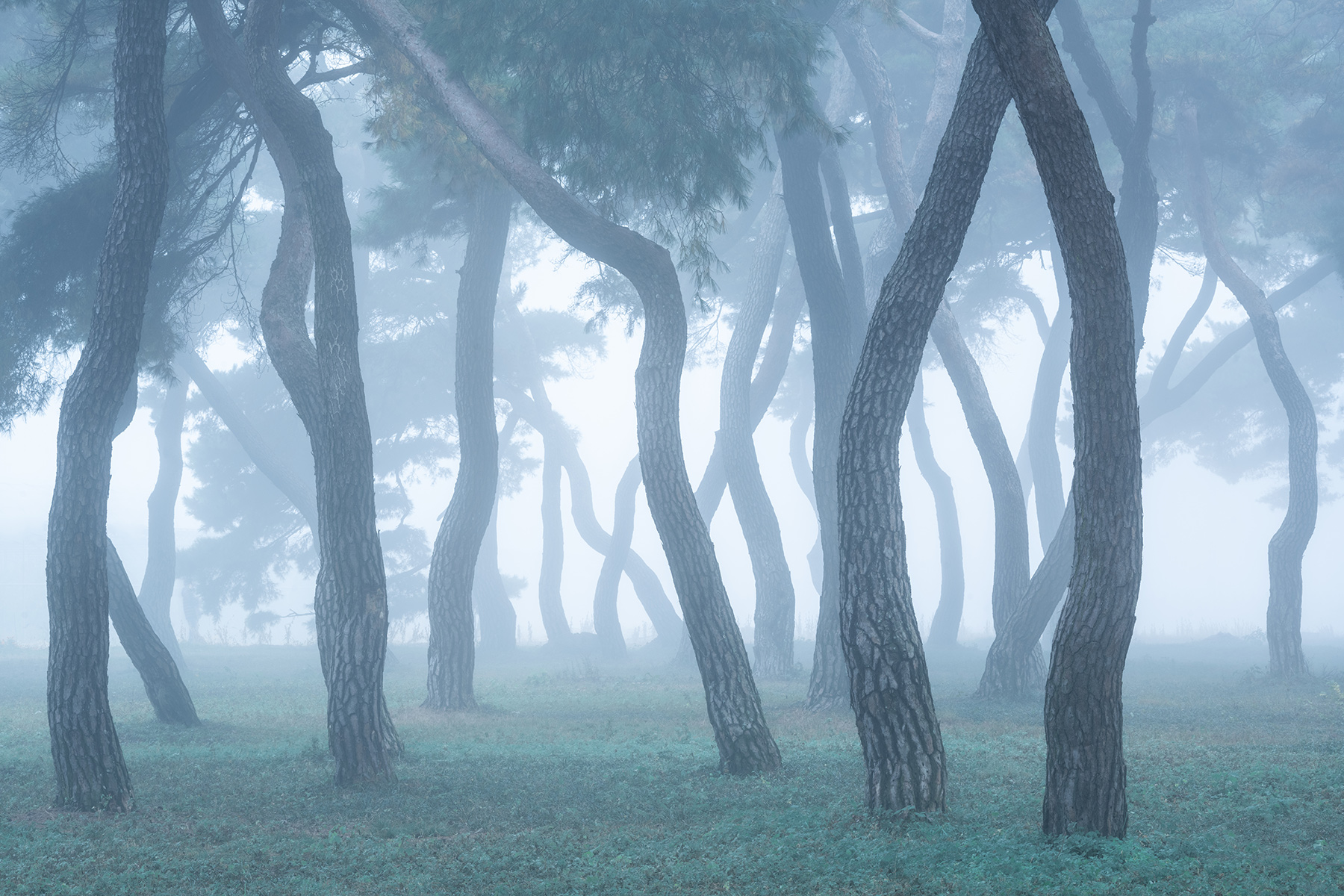
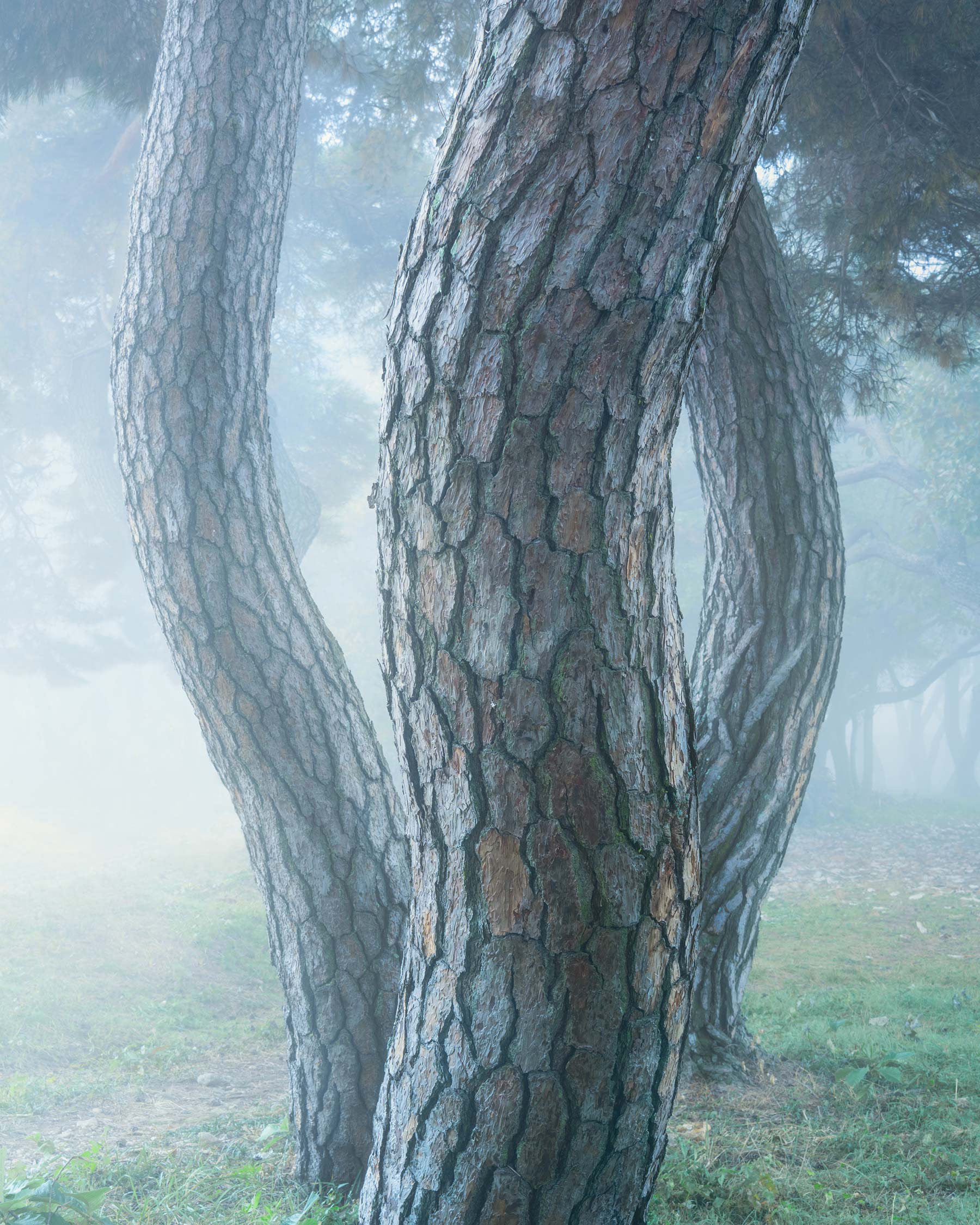
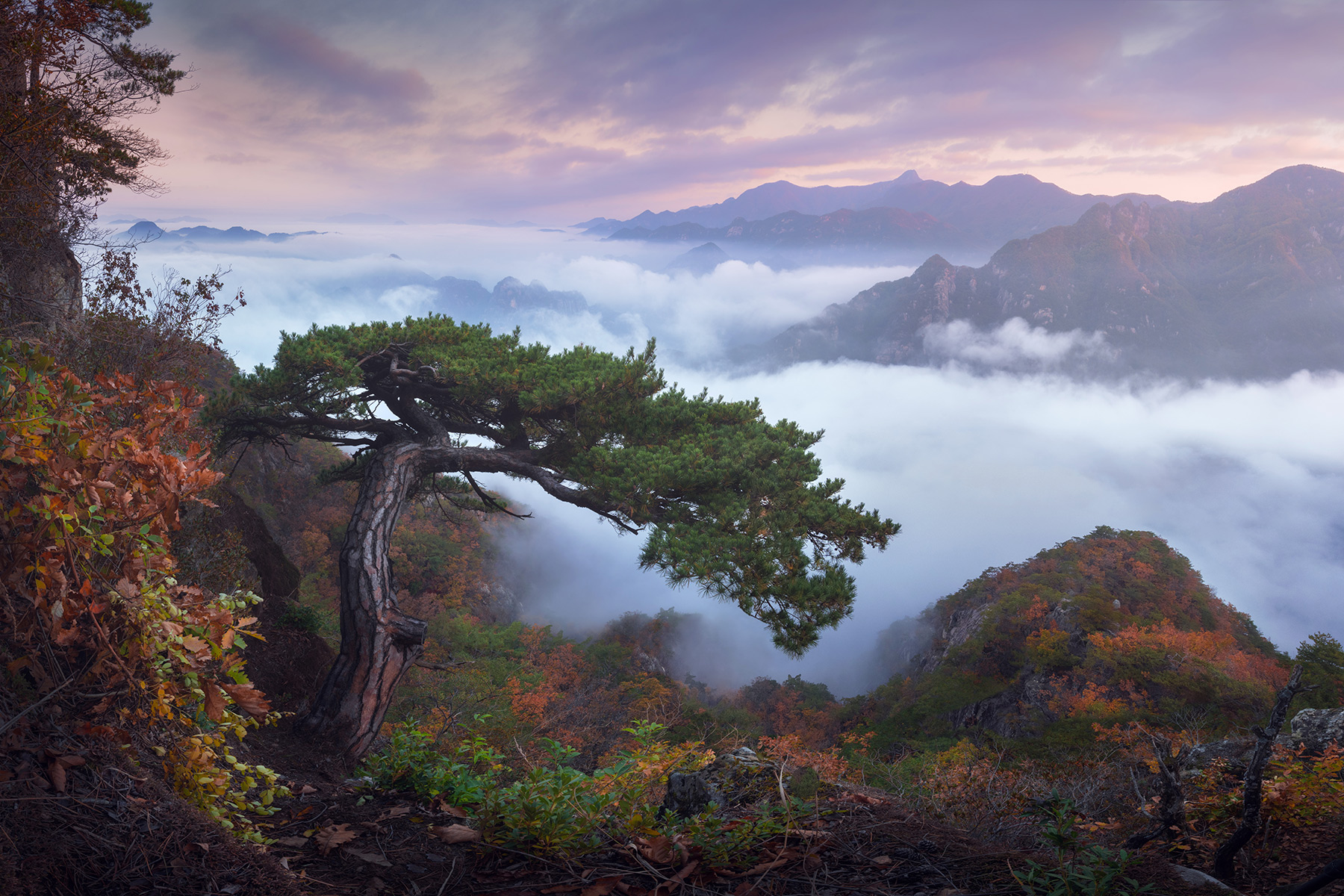
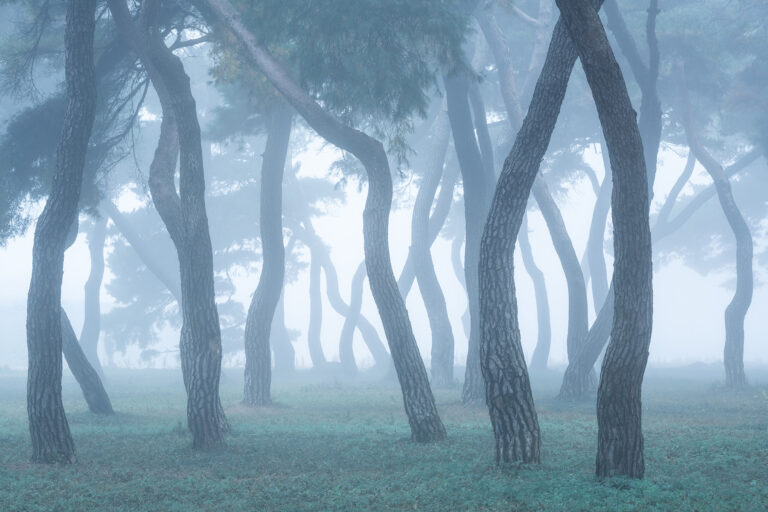
South Korea The Korean pine tree is a prominent symbol of Korea’s rich natural heritage and cultural identity. The majestic trees have adorned the Korean peninsula for centuries, playing an important role in the lives of both North and South Koreans.
↑ South Korea The Korean pine tree is a prominent symbol of Korea’s rich natural heritage and cultural identity. The majestic trees have adorned the Korean peninsula for centuries, playing an important role in the lives of both North and South Koreans.
A Tapestry of Life
Words and Images by Daniel Kordan
As a travel photographer, I see trees everywhere I go while exploring the world. They all look different, but they’re usually considered “background” or “part of the scenery.” However, I’ve come to see trees as more than just part of the landscape.
They’re silent witnesses to the passing of time. They’re the breathing soul of our planet, the lungs of the Earth, drawing in the invisible poetry of the atmosphere and returning life with every whisper of their leaves.
From ancient forests cloaked in morning mist to the solitary palms swaying against a golden horizon, trees stand as nature’s most graceful guardians, quietly sustaining the delicate balance of our world. Through my lens, I endeavor to capture their majestic forms and intricate textures. Their personalities.
As a photographer, I find an extraordinary kind of beauty in these moments; the delicate dance of shadows across an ancient tree’s bark, the emerald glow of new leaves after a storm, or the quiet dignity of a single dead tree, living on as part of the landscape.
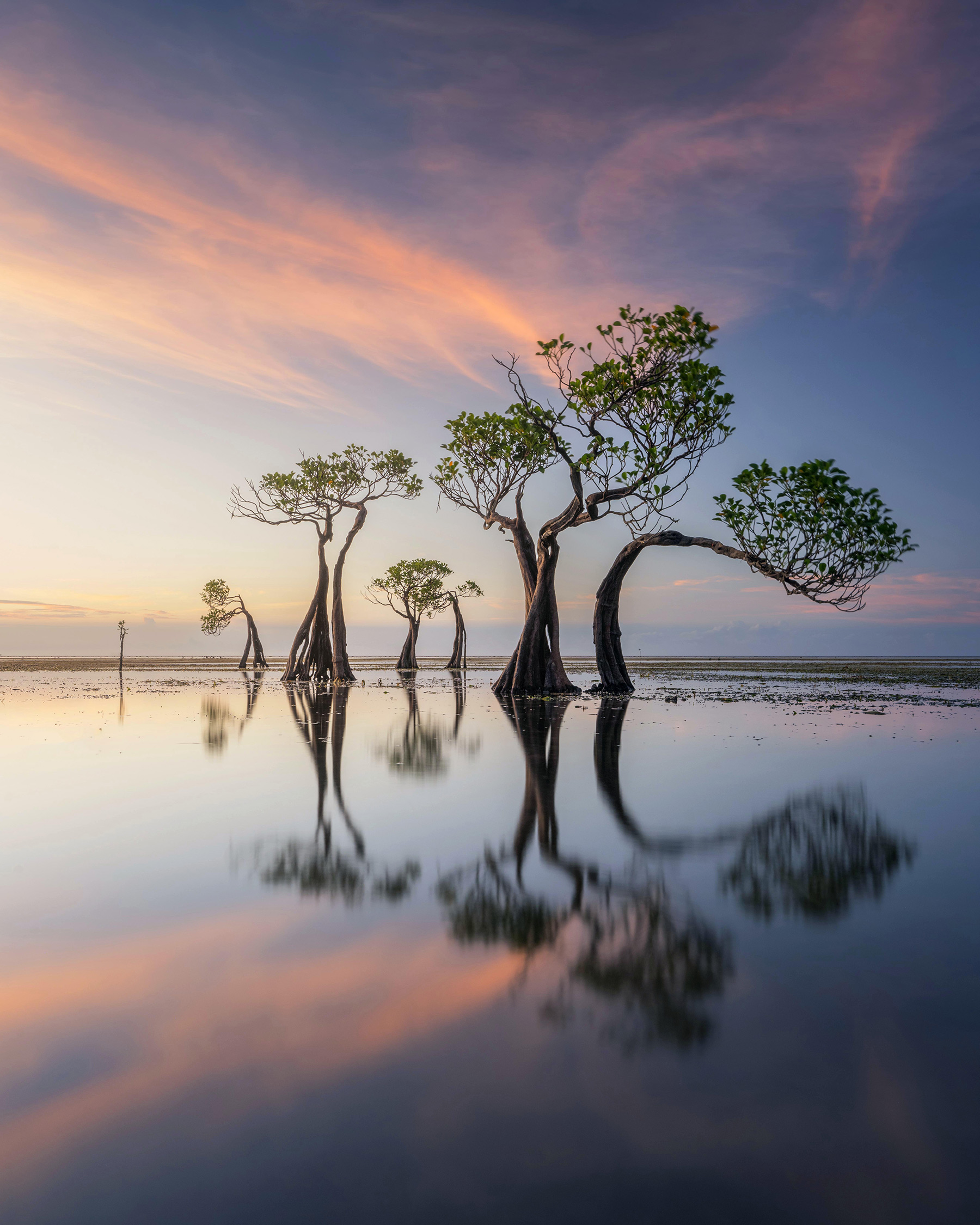
Walakiri, Indonesia Though beautiful and iconic, these Sumba dancing trees are dying. They’re very fragile, and human impact and climate change have left them struggling. Time is of the essence to implement tree restoration.
These aren’t merely beautiful scenes to preserve in a photograph. They’re intimate portraits of life itself.
Each tree breathes with the rhythm of the planet, absorbing carbon dioxide, releasing oxygen, nurturing biodiversity, and reminding us that the wilderness isn’t separate from humanity, but an essential part of who we are.
Yet, as I travel across landscapes both wild and fragile, I’m increasingly aware that the lungs of the Earth are under threat. Forests disappear under the weight of human ambition, and with every fallen tree, we lose more than a patch of green — we lose habitats, living history, and a little of the breath that sustains our future.
My photographs, therefore, are more than souvenirs of distant places; they’re invitations to pause, to witness, and to care. I hope each image of a dancing tree, a mist-covered woodland, or a lone tree standing defiantly in a barren landscape, inspires a deeper reverence for these quiet giants. To protect trees is to protect the air we breathe, the beauty we inherit, and what we pass along to future generations.
Dancing Mangroves
I’ve spent years chasing light across the globe, but the mangrove trees of Sumba, Indonesia, command a different kind of reverence. Standing knee-deep in the shallow, glassy waters of the Savu Sea, these remarkable Avicennia marina trees don’t merely grow.
They curve, sway, and bend in gestures that look unmistakably like a slow, eternal choreography.
Locally revered as the “dancing trees,” they appear suspended in a fluid performance against the backdrop of Indonesia’s dramatic equatorial sunsets.
Walakiri, Indonesia Far from being a mere aesthetic wonder, this coastal fringe acts as a critical nursery, offering vital sanctuary to juvenile marine life while protecting the coastline from the raw, erosive power of ocean surges.
These mangroves are a testament to the resilient botanical engineering of our planet. They survive where ordinary plants perish, thriving in an environment of high salinity and oxygen-depleted soils by utilizing highly specialized root systems that breathe through pencil-like structures rising vertically above the mud.
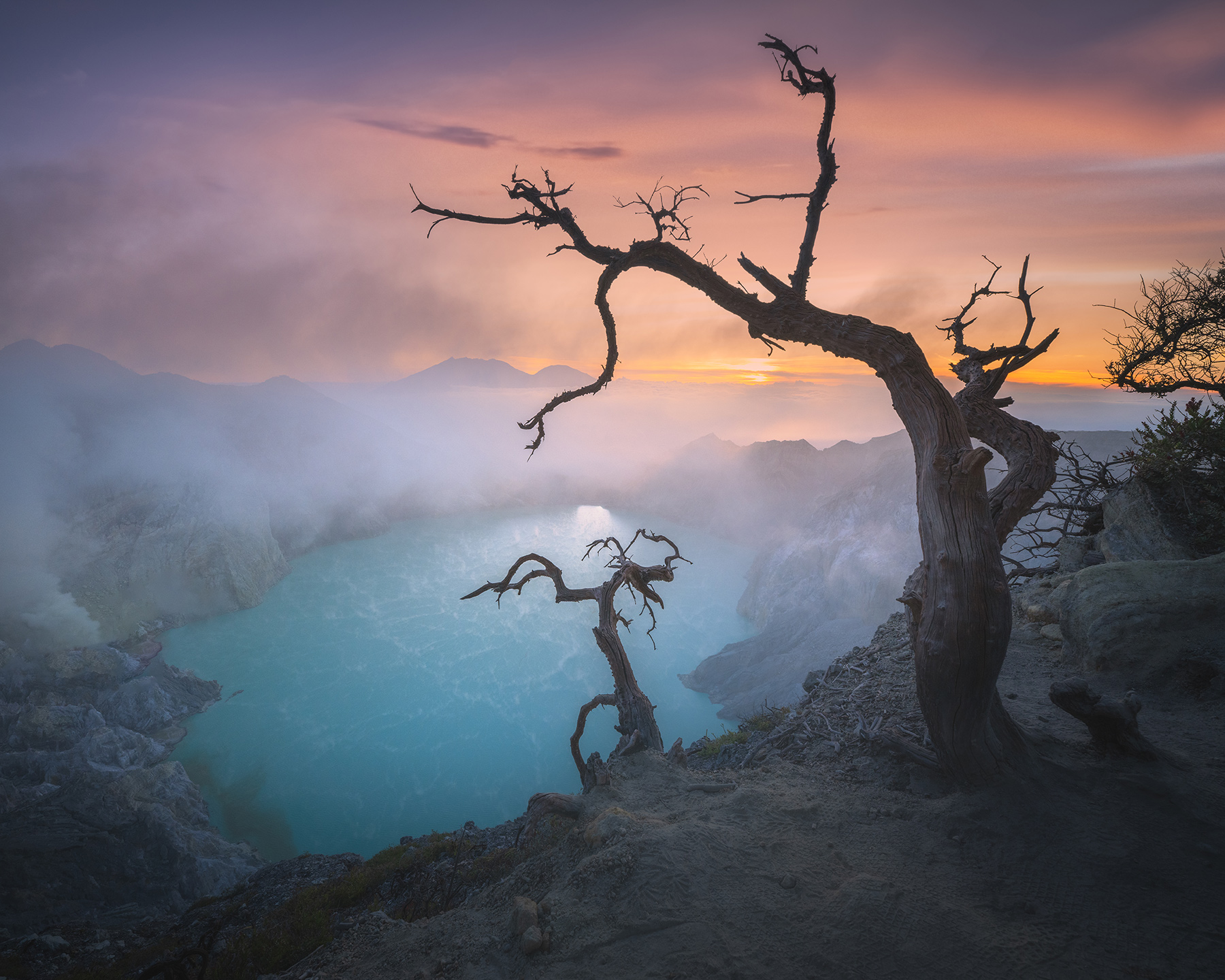
Java, Indonesia High-altitude zones are typically dominated by hardy species, plants uniquely adapted to survive on nutrient-poor volcanic soils. Yet, shifting and concentrated gases overwhelm even the toughest flora, leaving behind these striking monuments.
Ashen Sentinels
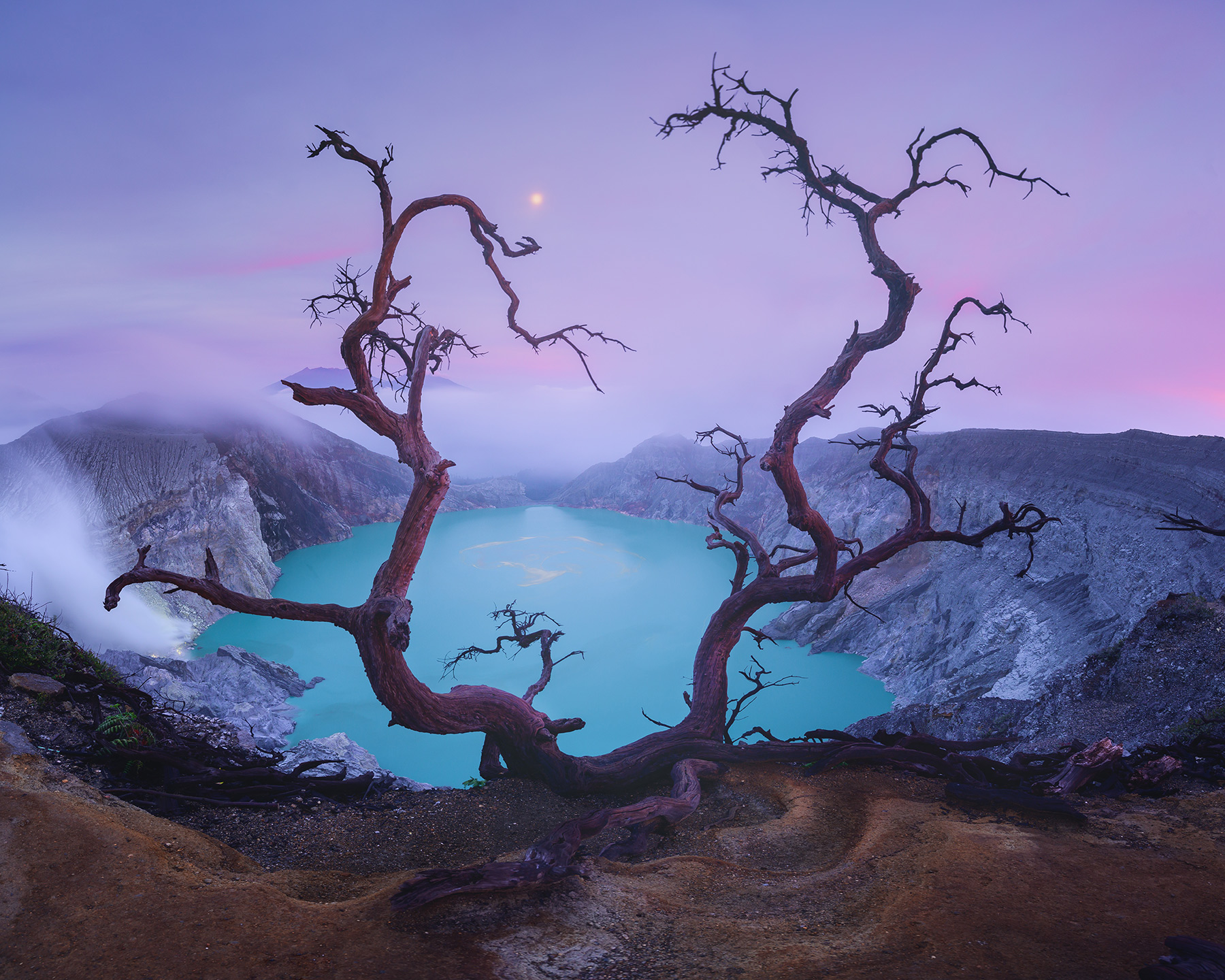
High on the jagged caldera rim of Mount Ijen on the island of Java, Indonesia, the air carries the sharp, heavy sting of elemental earth, a place where photography becomes an intense physical battle. Surrounded by shifting plumes of toxic volcanic gas stands a scattering of skeletal, twisted trees. Stripped of their foliage, their bark gnarled and bleached by acid rain and intense volcanic heat, these dead trees overlook the world’s largest highly acidic crater lake.
The contrast is devastatingly beautiful; the stark, dark lines of ancient timber framing a body of water that glows with an otherworldly, neon-turquoise hue, a coloration born from intense concentrations of sulfur and hydrochloric acid. When the first light of dawn finally broke through the sulfureous haze, revealing a gnarled, blackened branch framing the glowing abyss of the lake, it felt like capturing a raw, unfiltered portrait of our planet’s fiery infancy.
Java, Indonesia Within this extreme ecosystem, vegetation fights a constant battle. When stable, these deep root systems help secure the volatile, crumbly volcanic slopes, preventing catastrophic mudslides.South Korea The long, trailing fronds of various mosses, using the trees for structural support, catch moisture and nutrients directly from the Javanese air, trapping the humidity beneath to create a rich microclimate.
Solitary Grace
Across the mist-shrouded ridges of South Korea’s sacred mountains, the silhouette of the Korean pine tree stands as an enduring symbol of resilience, longevity, and spiritual balance. For centuries, these trees have been deeply woven into the cultural identity of the peninsula, frequently depicted in traditional ink wash paintings for their ability to remain unyielding against the harshest elements.
Whether clinging precariously to a rocky precipice over a sea of clouds or standing in a fog-bound grove, their heavily textured, plated bark and gracefully contorted trunks evoke a sense of deep, meditative calm.
In the mountain ecosystems of Northeast Asia, the Korean pine is a foundational species. Thriving in cold, high-altitude climates, its large, nutrient-rich seeds are an indispensable food source for an array of alpine wildlife. They, in turn, disperse the seeds across the rugged terrain, giving life to new trees that help anchor the mountainsides against erosion.
South Korea A Korean pine tree can live up to 700 years. After 100 to 200 years of growth, it enters the fruitful youth stage, and after 300 to 400 years, it enters the fruitful adult stage, bearing pine cones that produce pine nuts.
A Timeless Canopy
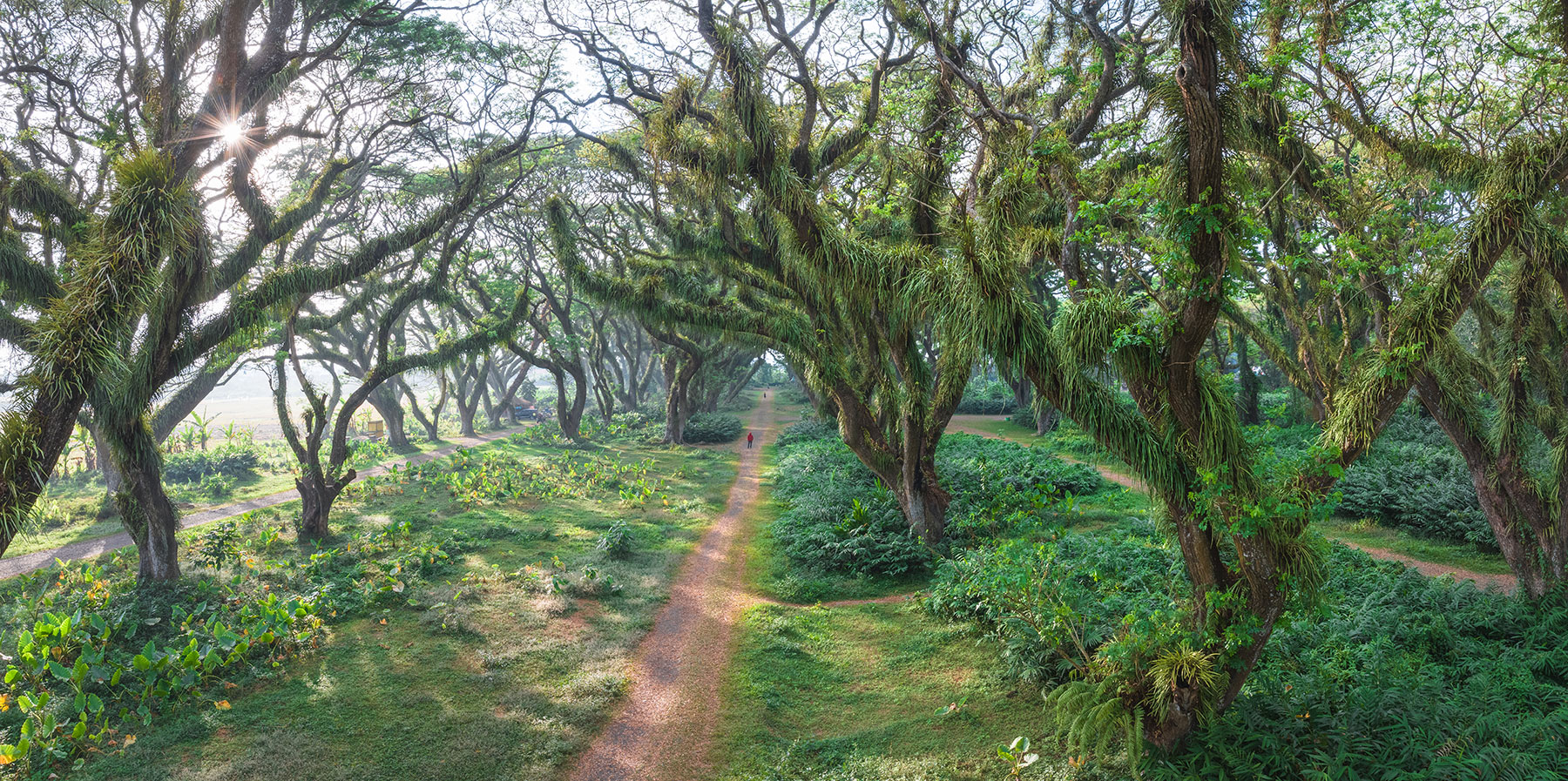
Stepping into the De Djawatan Forest in Banyuwangi, also on the island of Java, is like breaking through the fabric of time itself, entering a landscape that feels completely primordial.
Towering high above a labyrinth of green pathways are giant monkey pod trees, their massive, sprawling branches heavily carpeted in thick cloaks of epiphytic ferns.
The monkey pod tree is a structural marvel of the tropical world, defined by its immense, symmetrical crown that can span over a hundred feet across. This vast canopy serves an extraordinary ecological purpose.
Sheltering a microclimate of intense humidity and shade beneath it, the canopy creates a multi-layered ecosystem that provides a complex network of habitats for countless insects, birds, and small mammals amidst a rapidly developing agricultural landscape.
South Korea The Korean Pine is a precious tree species with both economic and ecological value. Ecologically, it serves the function of conserving water and soil while supporting biodiversity.
Classical Elegance
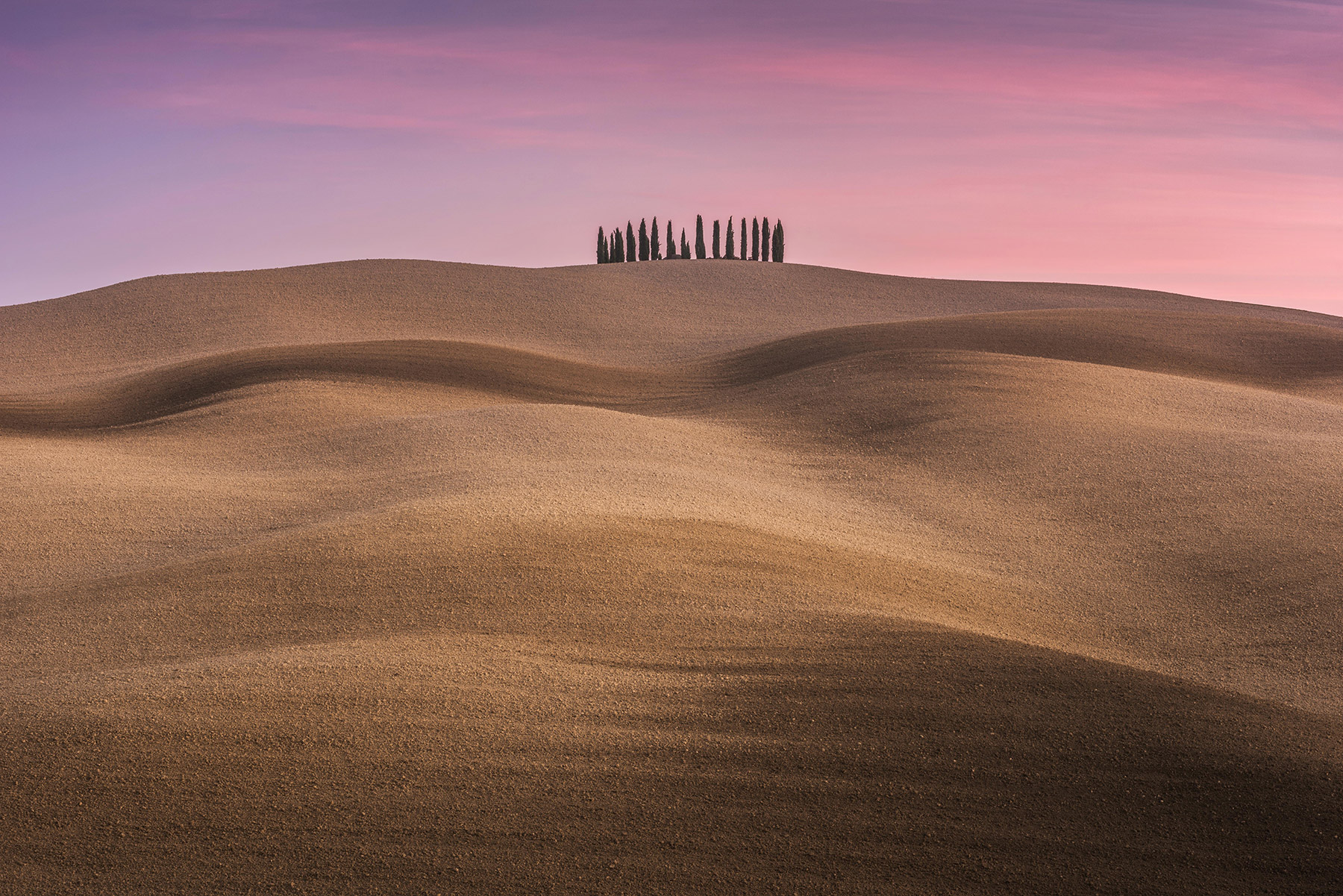
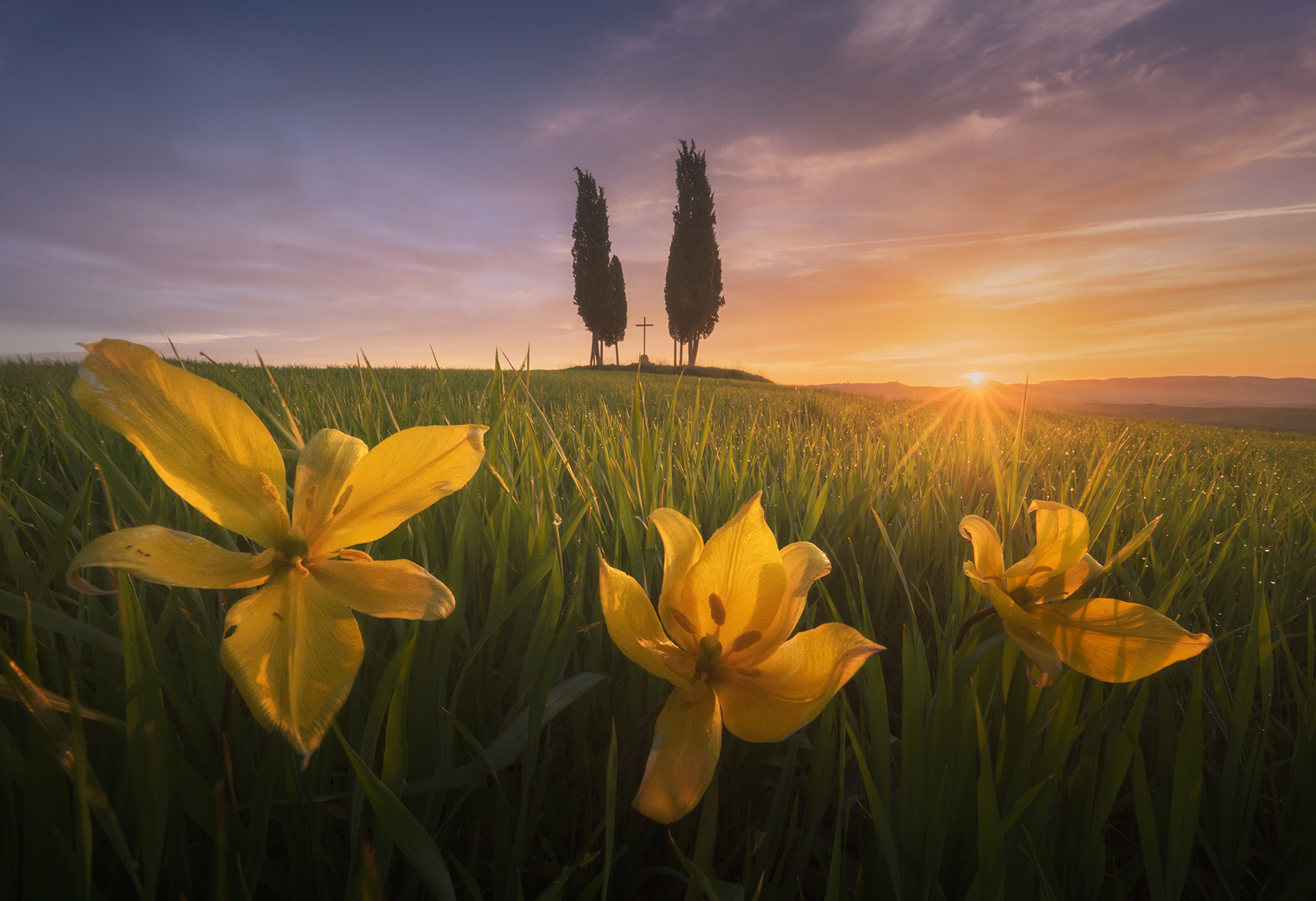
The rolling hills of the Val d’Orcia in Tuscany are perhaps one of the most harmoniously sculpted landscapes in human history. Rising like sharp, dark green exclamation points against the undulating, golden earthen waves are the iconic Italian cypresses.
Whether planted in a tightly clustered ring atop a lonely knoll or lining a long, winding dirt road leading to an ancient stone farmhouse, these slender, columnar trees give the Italian countryside its unmistakable, timeless rhythm.
Val d’Orcia, Tuscany Despite representing Tuscany, the cypress trees were originally introduced from the eastern Mediterranean and Anatolia (Turkey) by the Etruscans.
The cypress is perfectly adapted to the Mediterranean climate, utilizing deep taproots to seek out water far below the parched summer soil while its dense, compact foliage minimizes water loss through evaporation. Historically introduced to the region thousands of years ago, these rows of windbreaks protect fragile topsoil and vineyards from the sweeping, dry winds of the region.
Val d’Orcia, Tuscany According to regional tradition, single or grouped cypress trees acted as ancient road signs for pilgrims; one tree meant a rest stop, two meant a tavern, and three indicated a hostel.
Silent Winters
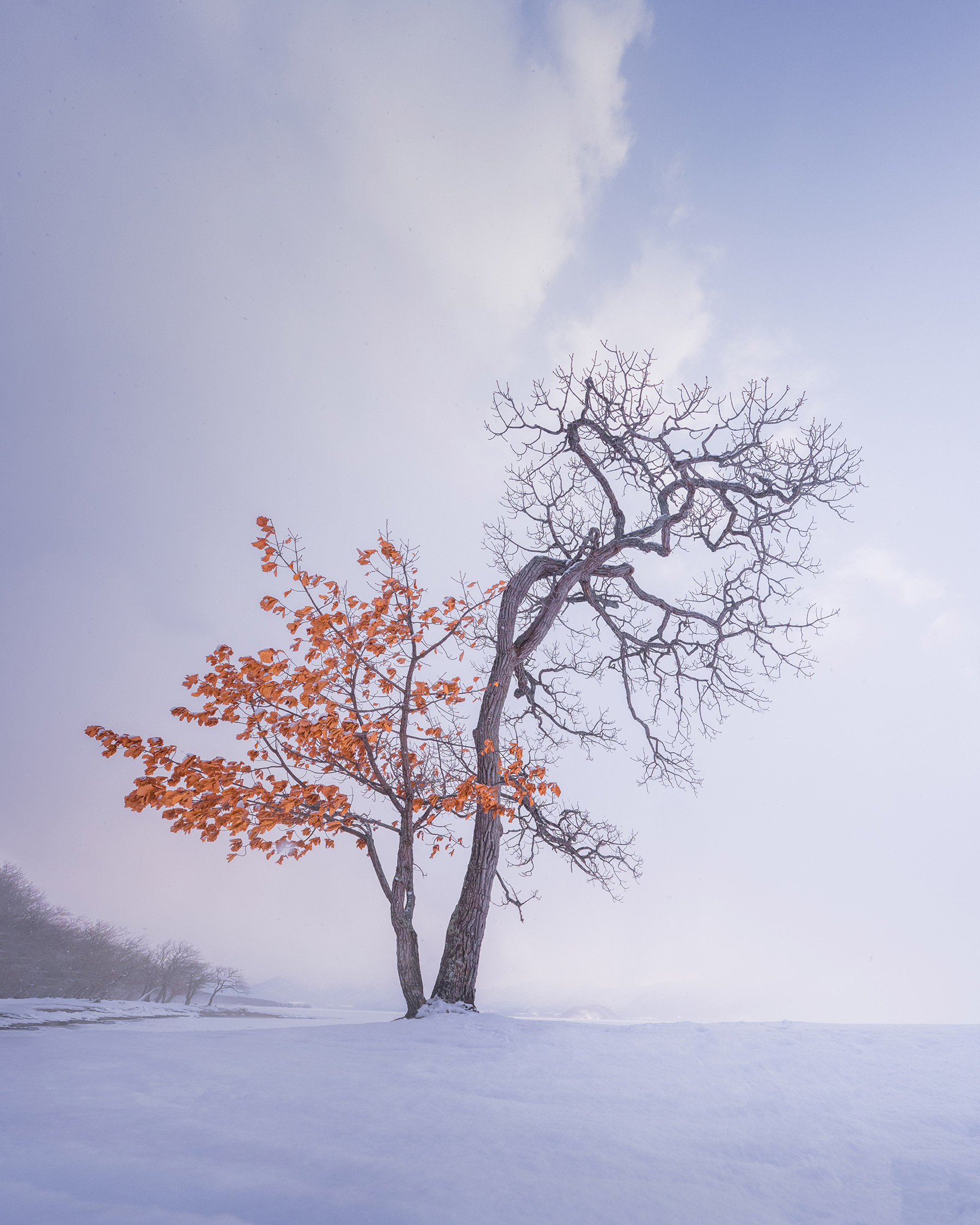
Winter in Hokkaido, Japan, is a masterclass in absolute stillness, but behind that serene beauty lies an environment of extreme technical hostility for a photographer. The northernmost island of Japan is swept by freezing Siberian winds, burying the rolling agricultural plains of Biei and Furano under a thick, pristine blanket of powder snow.
Hokkaido, Japan Some trees are planted by the Japanese or left between fields to minimize soil erosion. The majority of Hokkaido is still wild, so it’s not uncommon to see wildlife sleeping under such trees.
Rising alone from these vast, blinding white fields are solitary trees, most famously, the lone spruce known widely as the Christmas tree. Under a muted, pastel sky where falling snow blurs the horizon, these isolated trees stand as stark, beautiful monuments to solitude.
Hokkaido, Japan Ecologically, even a single tree standing in an open field serves as a vital winter hunting perch for migratory birds of prey looking for small rodents moving beneath the snow crust. And the root system from a tree plays an important role in preventing soil erosion.
Ephemeral Splendor
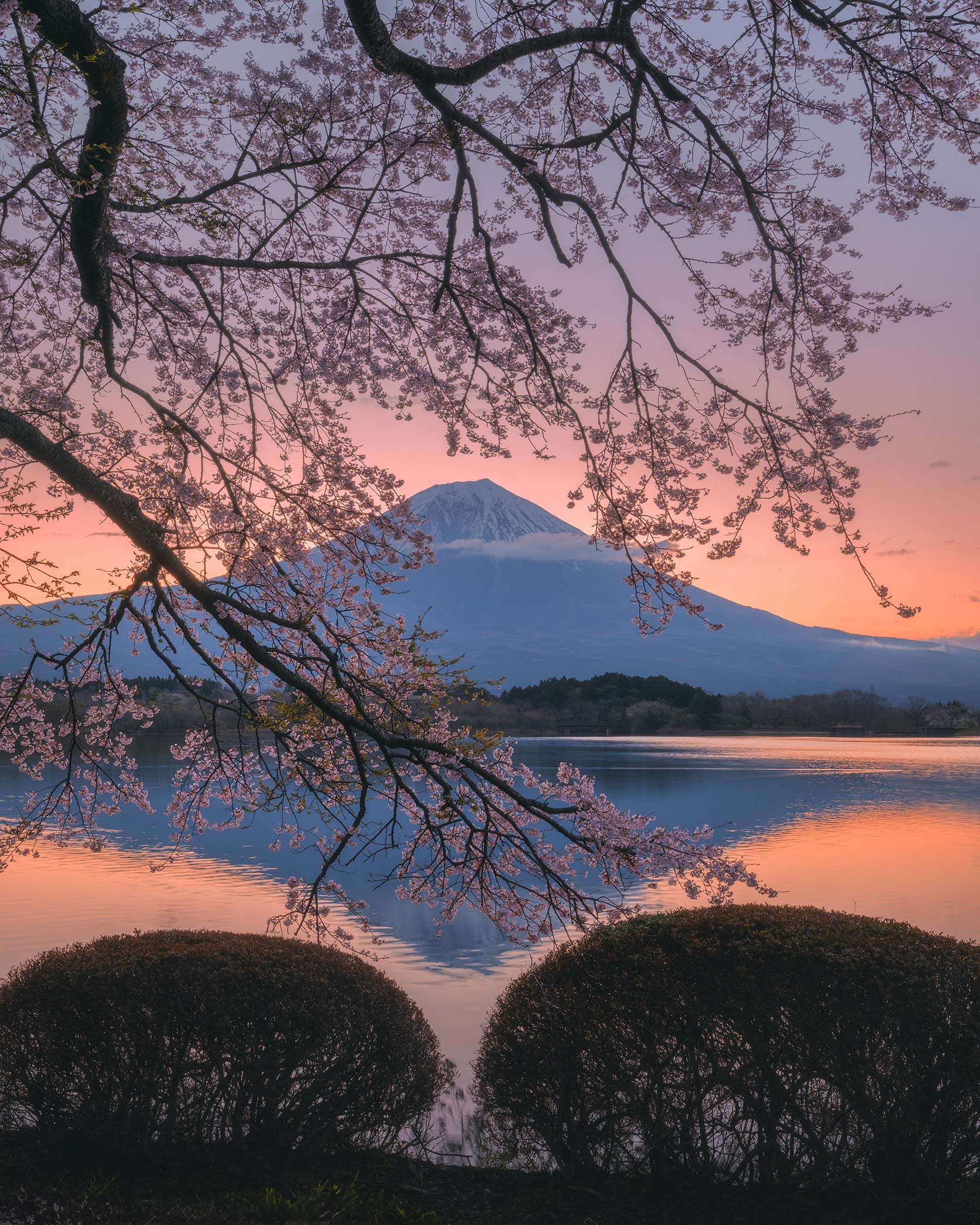
There’s arguably no image that encapsulates the soul of Japan more profoundly than the delicate pink blossoms of the cherry tree framing the snow-capped symmetry of Mount Fuji, an alignment of natural elements that requires years of experience to time correctly.
Known as, “Sakura,” primarily the Yoshino cherry tree, these blossoms are celebrated globally for their deep cultural resonance, serving as a vivid reminder of the beautiful, melancholic awareness of the impermanence of all things.
Fujisan, Japan In Japanese culture, sakura are a profound symbol of the transience and beauty of life, as their brief prime bloom mirrors human mortality.
The expansive root systems of the cherry trees stabilize the banks against spring meltwater erosion, and as the blossoms fall, they return vital organic nutrients directly to the aquatic ecosystems, marking a transcendent seasonal rebirth.
Fiery Autumn
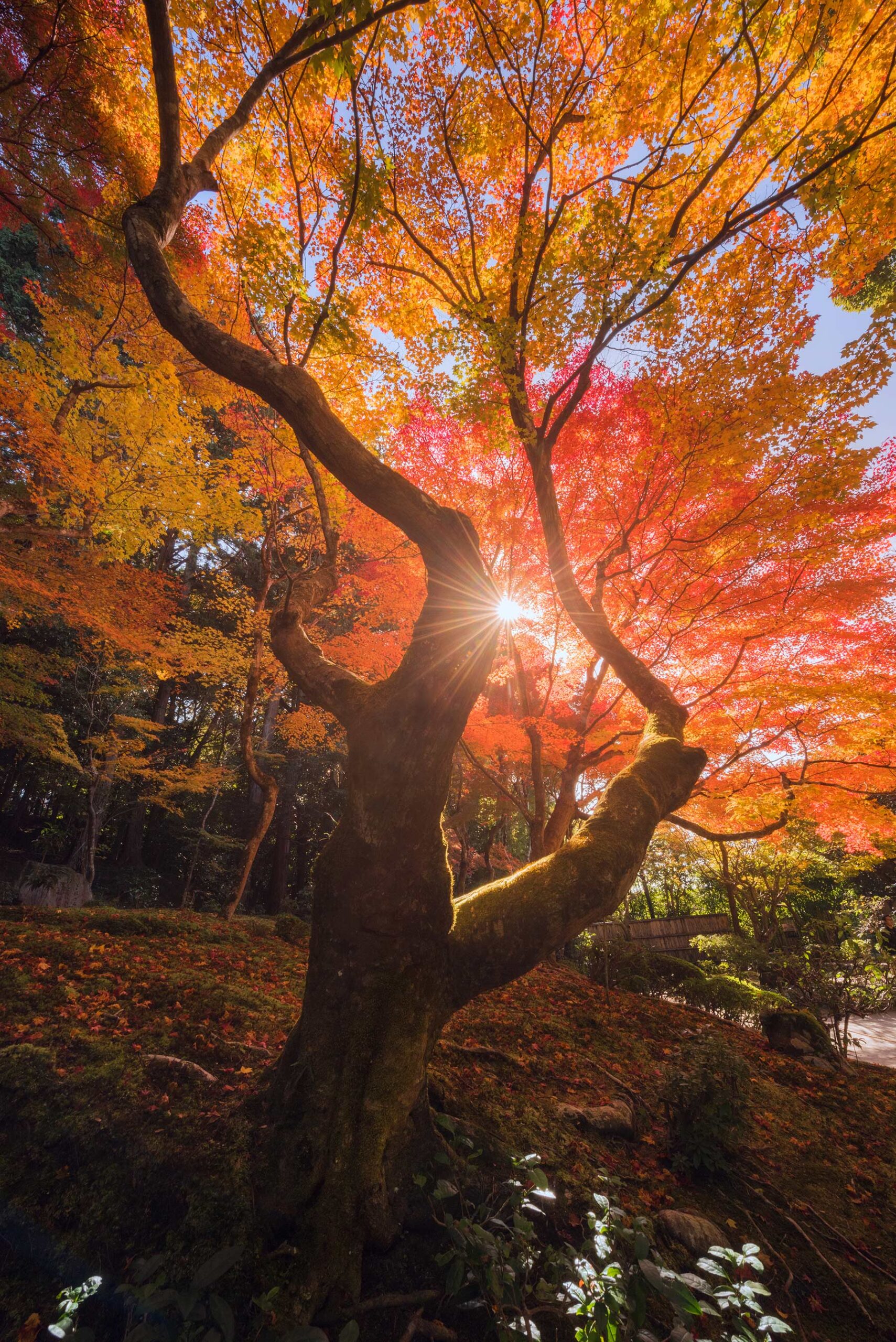
As autumn sweeps across the ancient temples and moss-covered gardens of Kyoto, Japan, the landscape erupts into a dazzling palette of crimson, orange, and gold, offering a masterclass in composition and light control.
Kyoto, Japan Kyoto’s red maple tradition centers around Momijigari (red maple leaf hunting), a centuries-old cultural practice. People of all ages search for their own perfect branch or leaf.
At the heart of this seasonal transformation is the Japanese maple. Cultivated for centuries within the serene confines of Zen temple grounds, these trees have been carefully pruned and integrated into traditional landscape architecture to create living works of art that celebrate the transition of seasons, a time revered locally as “Koyo.”
Mystic Fog
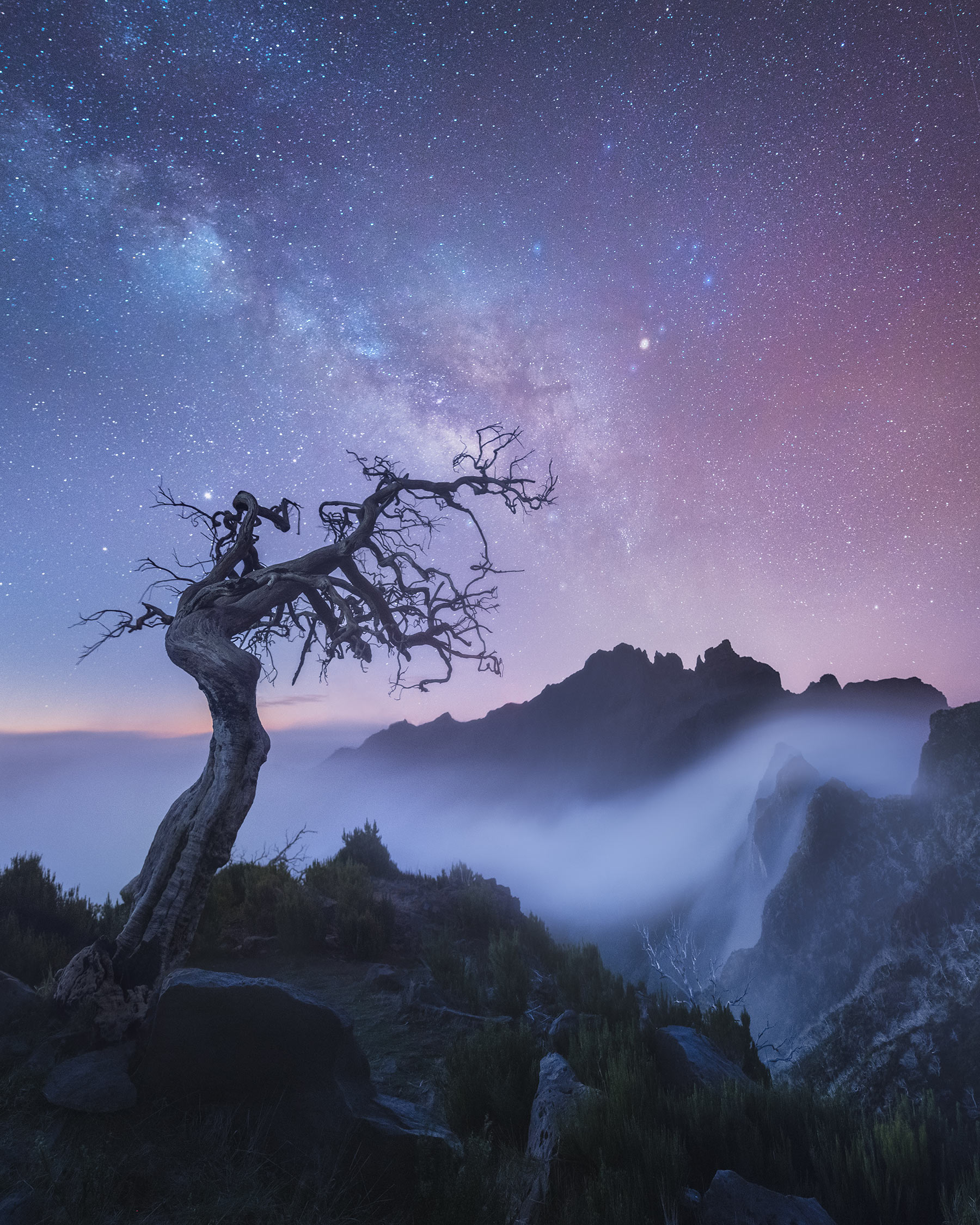
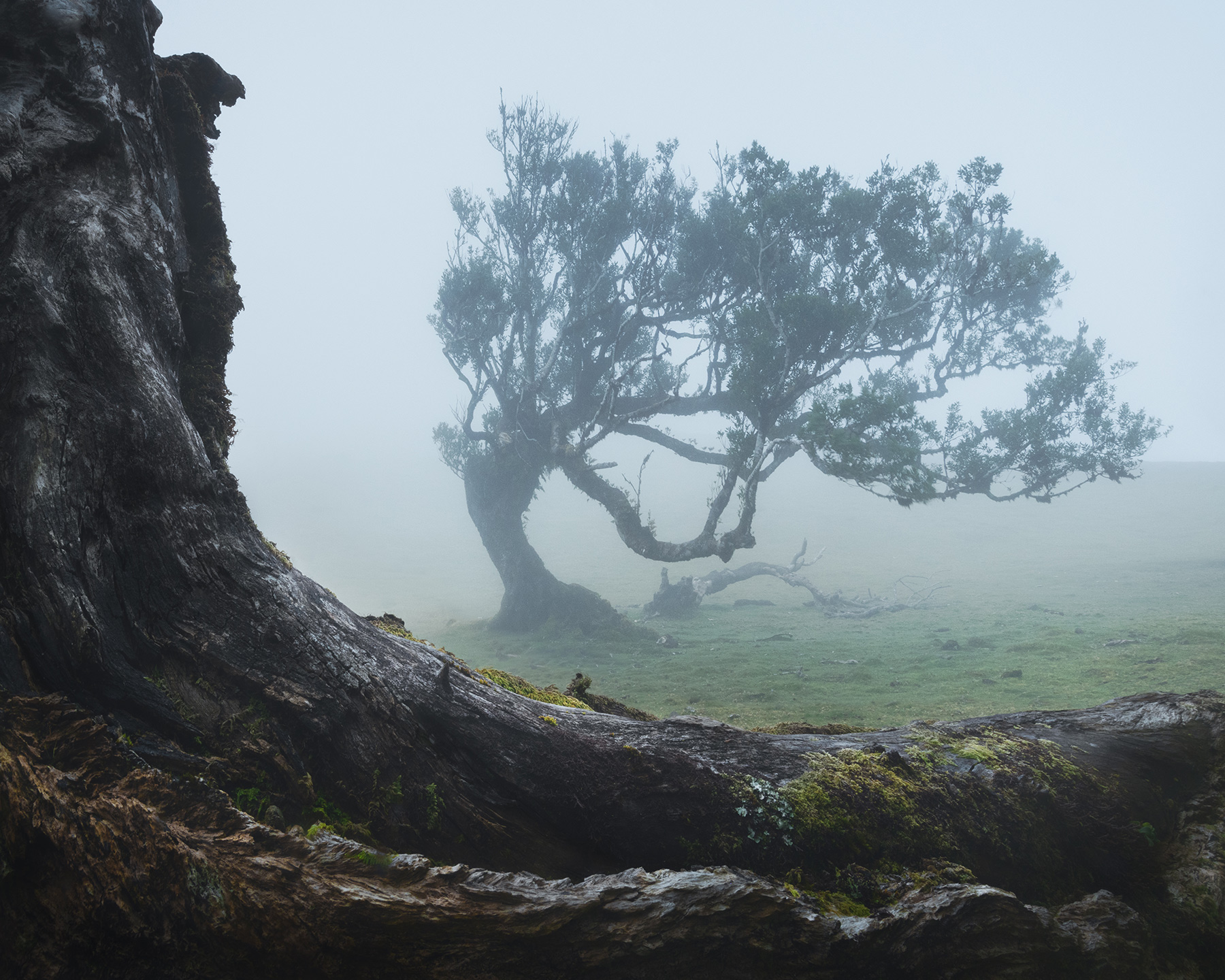
High in the volcanic mountains of Madeira, Spain, lies Fanal, an ancient, mist-drenched plateau that feels completely disconnected from the modern world, a place where I spent weeks tracking weather patterns to capture its true essence.
Fanal is home to a critically important remnant of the ancient, UNESCO-listed Laurisilva, a rare subtropical laurel forest that once covered much of Southern Europe millions of years ago. Walking among these prehistoric, twisted til trees, some of which have stood for over 500 years, is a deeply haunting experience.
Madeira, Portugal Thick Atlantic fog rolls over the gnarled, moss-covered limbs of these giants, appearing to reach through the gloom like ancient spirits.
As the thick Atlantic fog rolls over the ridge, the gnarled, moss-covered limbs of these giants appear to reach through the gloom like ancient spirits. My field strategy at Fanal requires embracing unpredictable shifts in weather. The fog can go from a beautiful, soft mist to a blinding, wet whiteout in a matter of minutes.
Madeira, Portugal To create a sense of depth, I use the massive, fallen, moss-covered trunks in the foreground as leading lines, guiding the viewer’s eye through the heavy atmosphere toward the ghostly silhouette of a standing laurel.
The Sunken Graveyard
Deep within the towering, apricot-colored dunes of the Namib Desert lies Deadvlei, a stark, white clay pan that preserves one of the most hauntingly beautiful graveyards on Earth, a location that demands extreme precision in composition.
Over a thousand years ago, an ephemeral river flooded the area, allowing camelthorn trees to take root and flourish. But as the climate shifted and the massive dunes migrated, they choked off the water supply, sentencing the grove to a dry, lingering death. Today, scorched black by centuries of relentless desert sun, these skeletal remains stand as a powerful monument to the impermanence of water.
Because the environment is so dry, the wood of these camel thorn trees can’t decompose. They’re effectively sun-mummified, frozen in their final reaches toward the cosmos. When alive, these trees were the lifeblood of the valley, utilizing exceptionally deep taproots to access hidden water tables, providing vital shade and nutrients that sustained desert-adapted wildlife.
Deadvlei, Namibia These trees grew around 900 years ago when the Tsauchab River flooded and formed temporary pools. They died roughly 600 to 900 years ago when climate changes and shifting sand dunes blocked the river.
Volcanic Rebirth
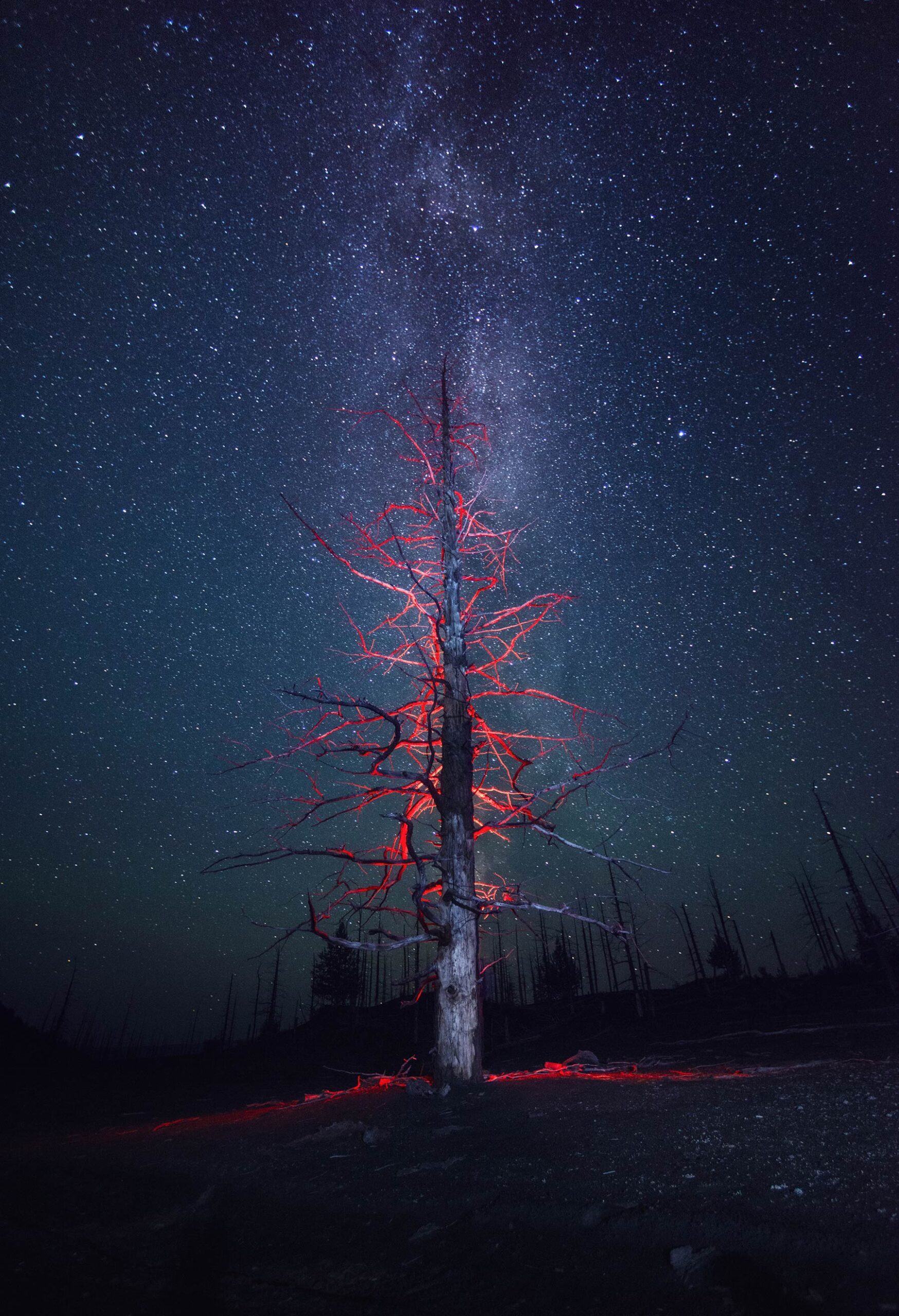
Many times, in the 1960s through the 1970s and most recently in 2012, the earth split open in the remote wilderness of Kamchatka, Russia, as the Tolbachik volcano unleashed a massive fissure eruption, creating a landscape of devastating ruin that I flew over via helicopter to document.
For months, rivers of white-hot basaltic lava flowed across the terrain, while columns of ash and toxic gases choked the sky. Near the Leningradskaya research station, a beautiful forest of larch and pine was caught directly in the path of the heavy ash fall.
Kamchatka, Russia The crimson light reflecting from my headlamp off the charcoal-colored wood created a powerful visual metaphor, making the dead tree appear as if it were still pulsing with the volcanic heat that destroyed it.
Today, what remains is a stark, post-apocalyptic dead forest, a vast plain of black volcanic cinder populated by the charred, skeletal remains of trees that were suffocated where they stood. Yet, even in death, this forest plays an integral role in the slow process of volcanic ecological succession.
A Quilt of Diversity
The diversity of trees across our planet is one of nature’s most extraordinary treasures. From the towering redwoods of California to the ancient baobabs of Africa, each species tells a different story of adaptation, resilience, and belonging. Every tree has evolved to thrive in its own environment, shaped by centuries of wind, rain, sunlight, and the intricate relationships it shares with the life around it.
Together, the world’s tree species form a remarkable tapestry of ecosystems, providing shelter and sustenance for countless species, enriching the soil, regulating water cycles, and helping to stabilize our planet’s climate.
Yet the true wonder of this diversity lies not only in the roles trees play, but in the individuality of their forms, textures, colors, and characters.
To lose a species of tree is to lose a unique expression of nature’s creativity, a living chapter in the story of our planet that can never be rewritten.
As I travel the world with my camera, I’m reminded that every tree, whether standing alone on a windswept hillside or growing among thousands in a dense tropical forest, has its own place in this intricate web of life.
Protecting the diversity of trees is therefore about more than preserving landscapes. It’s about safeguarding the extraordinary richness of life on Earth and ensuring that future generations can continue to discover, experience, and marvel at the many forms through which nature expresses itself.
To provide the best experiences, we use technologies like cookies to store and/or access device information. Consenting to these technologies will allow us to process data such as browsing behavior or unique IDs on this site. Not consenting or withdrawing consent, may adversely affect certain features and functions.
Functional
Always active
The technical storage or access is strictly necessary for the legitimate purpose of enabling the use of a specific service explicitly requested by the subscriber or user, or for the sole purpose of carrying out the transmission of a communication over an electronic communications network.
Preferences
The technical storage or access is necessary for the legitimate purpose of storing preferences that are not requested by the subscriber or user.
Statistics
The technical storage or access that is used exclusively for statistical purposes.The technical storage or access that is used exclusively for anonymous statistical purposes. Without a subpoena, voluntary compliance on the part of your Internet Service Provider, or additional records from a third party, information stored or retrieved for this purpose alone cannot usually be used to identify you.
Marketing
The technical storage or access is required to create user profiles to send advertising, or to track the user on a website or across several websites for similar marketing purposes.