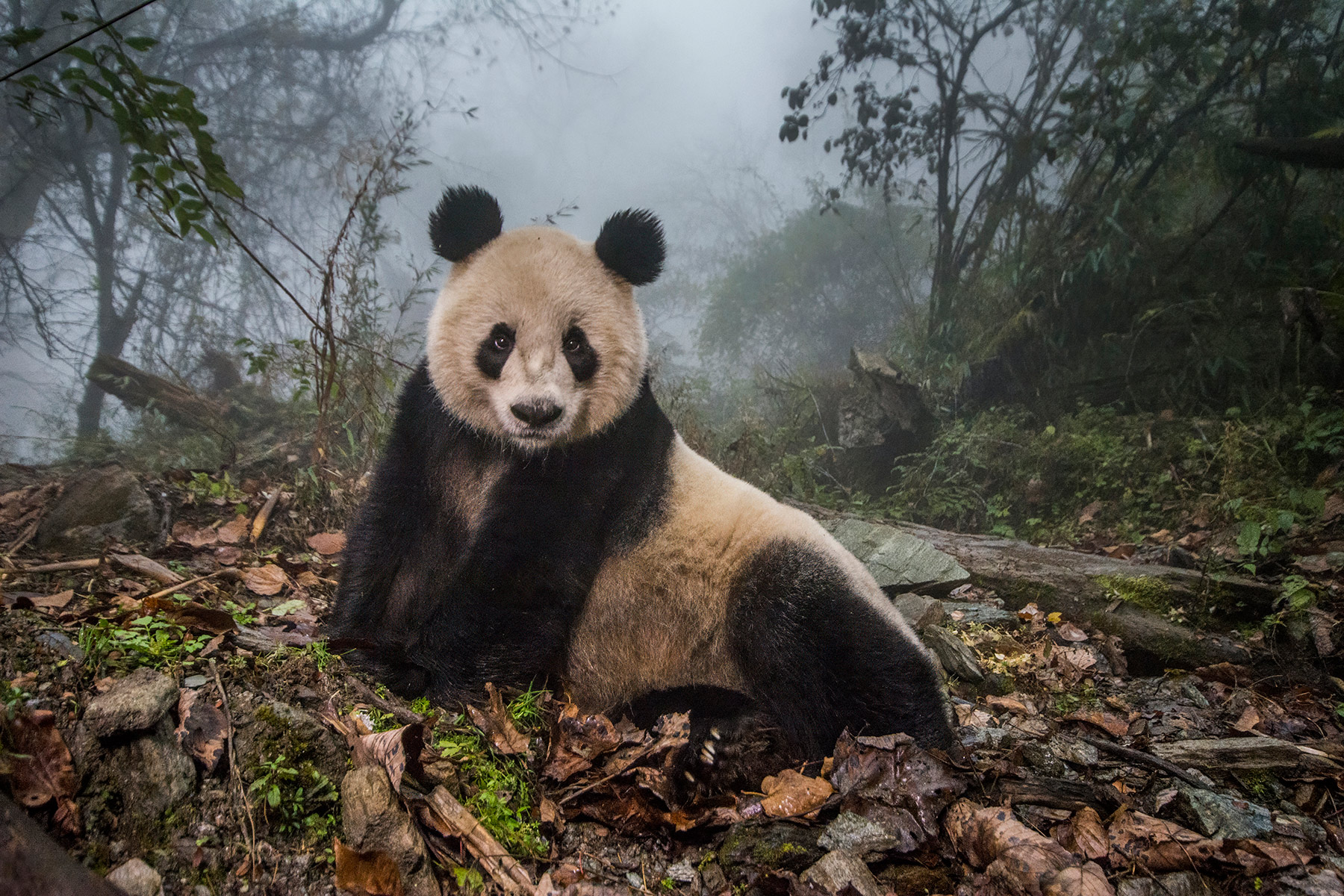
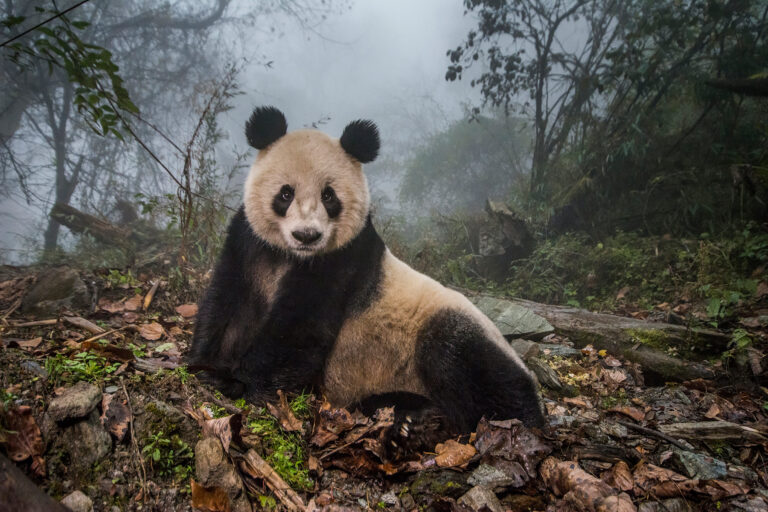
Wolong National Nature Reserve, Sichuan Province, China Pandas were once so elusive they seemed almost mythical. They had existed for millions of years, but remained unknown to the Western world until 1869, when a French missionary first documented them scientifically.
↑ Wolong National Nature Reserve, Sichuan Province, China Pandas were once so elusive they seemed almost mythical. They had existed for millions of years, but remained unknown to the Western world until 1869, when a French missionary first documented them scientifically.
Rewilding an Icon
Words and Images by Amy Vitale
Leaving home forever must be terrifying. So, when Zhang Xiang, whom we called “Hope” in English, was about to become the first captive-born female giant panda released into the wild, I did the only thing that seemed sensible: I dressed as a tree.
I was part of a film crew documenting Hope’s release in Sichuan Liziping National Nature Reserve in China. But I wanted to blend in so as not to frighten her with my camera. I hid behind a tree, trying to disappear into the landscape. I watched as she took her first steps toward a life for which she had been carefully prepared.
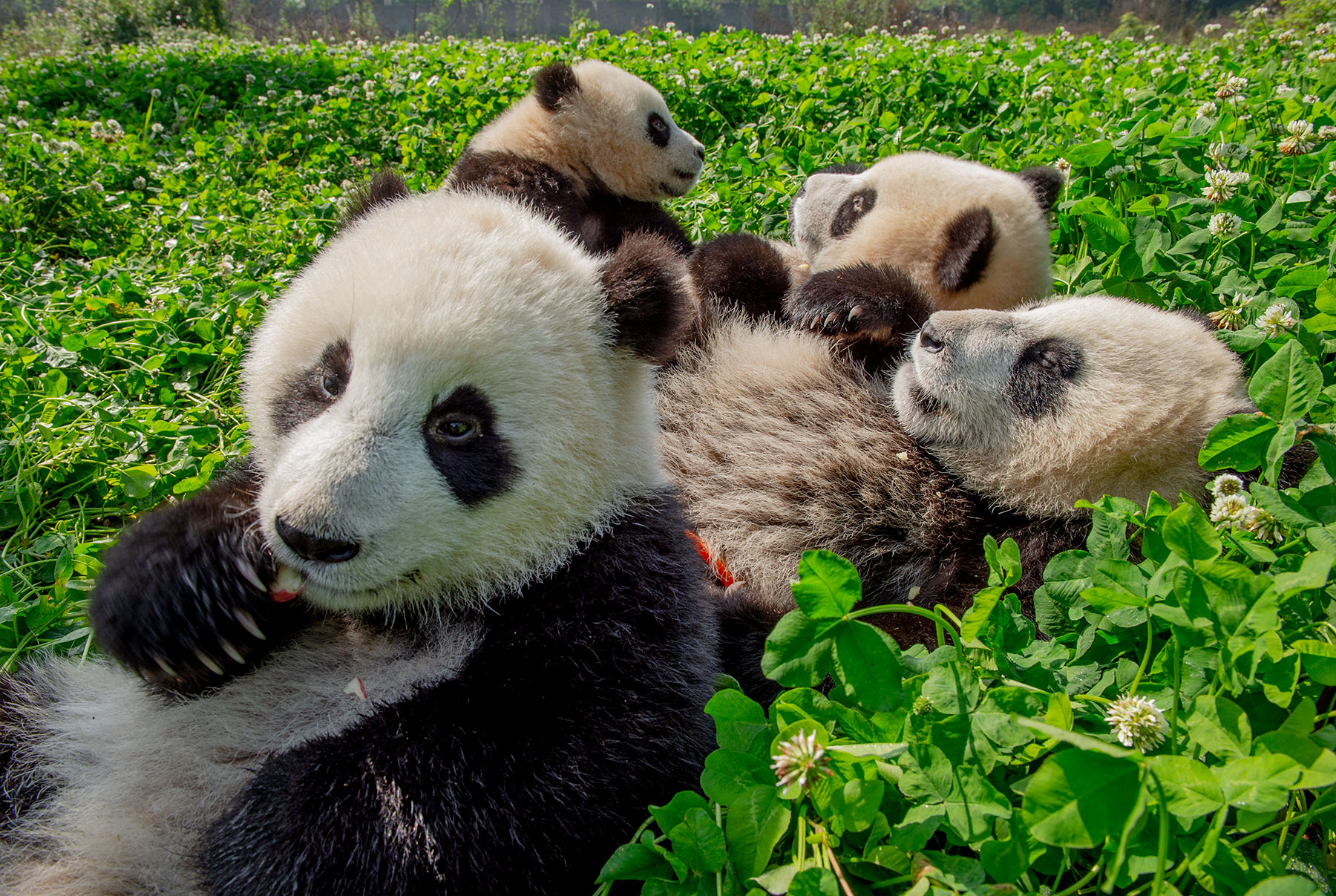
Dujiangyan Panda Base, Chengdu, China At around one year old, young pandas learn to navigate their environment. Developing essential survival skills, like climbing trees and foraging for food, is key to preparing them for life in the wild.
Afterward, Zhang Hemin, affectionately known as “Papa Panda,” came over. He was touched that I had considered the experience from the panda’s perspective. That moment changed everything. What began as a single assignment opened the door to a world I could never have imagined. I was given extraordinary access and began what became a three-year journey documenting China’s ambitious effort to return captive-born pandas to the wild.
Challenge Accepted
The challenge for me as a photographer was enormous. The giant panda may be one of the most photographed animals on Earth. We have turned pandas into global icons — fluffy, cuddly and sleepy — seemingly built for stuffed animals and birthday cards.
The wild panda is something else entirely. Elusive. Solitary. Remarkably difficult to find. In the steep, misty bamboo forests of central China, pandas are perfectly adapted to disappearing. Fewer than 2,000 individuals remain in the wild, and their survival depends not only on protecting and reconnecting their forest habitat, but also on understanding how to maintain a healthy population that can survive without human intervention.
That is where China’s rewilding program comes in. For decades, Chinese scientists have worked to solve the complicated puzzle of panda conservation: breeding animals in captivity, protecting habitat, studying their behavior and, ultimately, determining whether a panda born in captivity could actually survive in the wild.
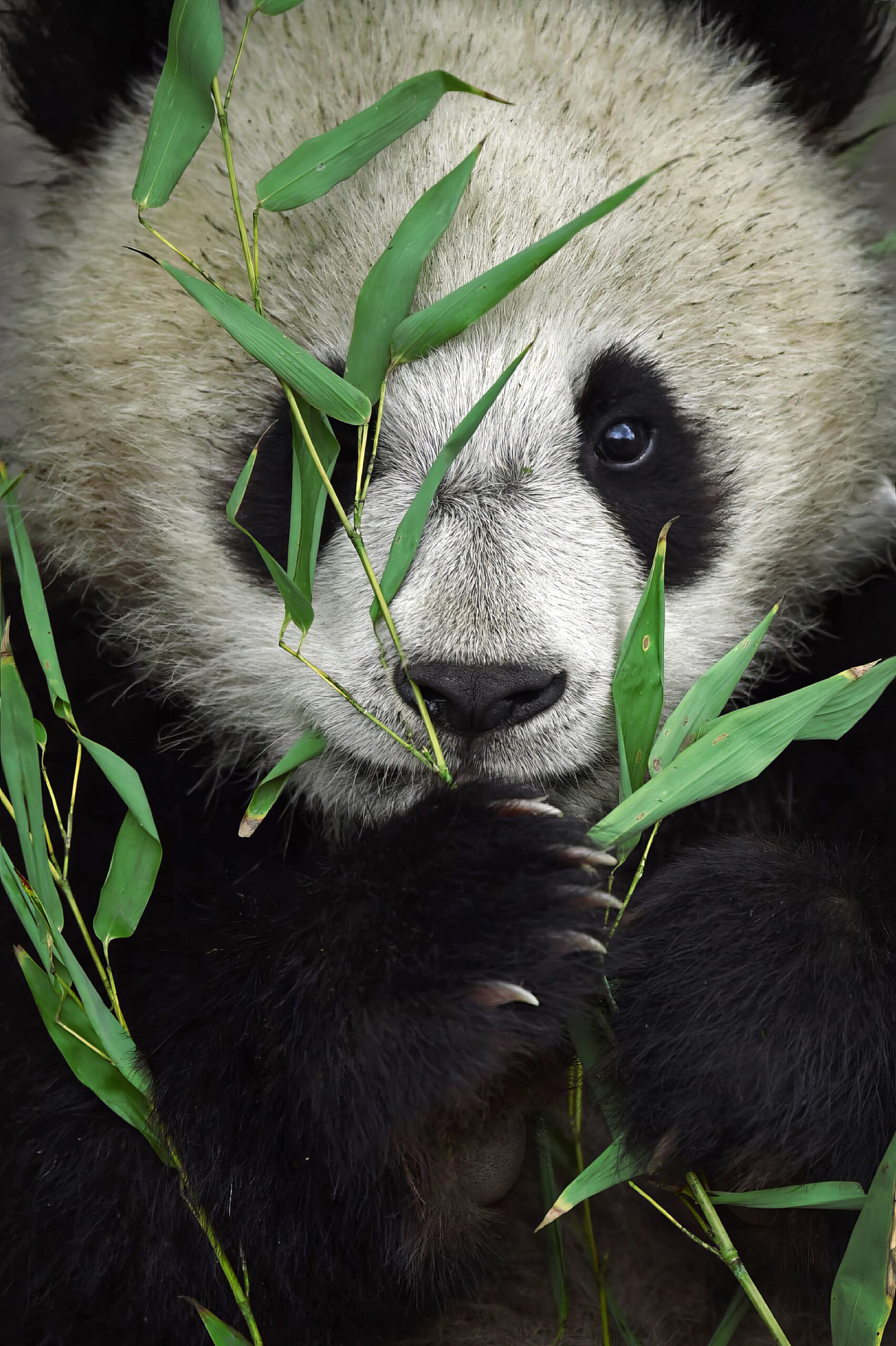
Bifengxia Panda Base, Sichuan Province, China Pandas evolved from meat-eating ancestors, gradually developing adaptations that allowed them to survive almost exclusively on bamboo, abundant in their mountain habitat. Bamboo makes up about 99% of a giant panda’s daily diet.
It turns out that releasing a panda isn’t as simple as opening a door. Before a panda can be released, it must prove that it can survive. Young pandas are raised in increasingly complex forested enclosures where they learn to find bamboo, water, shelter, and to navigate terrain similar to what they will encounter in the wild. Their mothers play an important role in teaching them natural behaviors, while researchers closely monitor their progress and development.
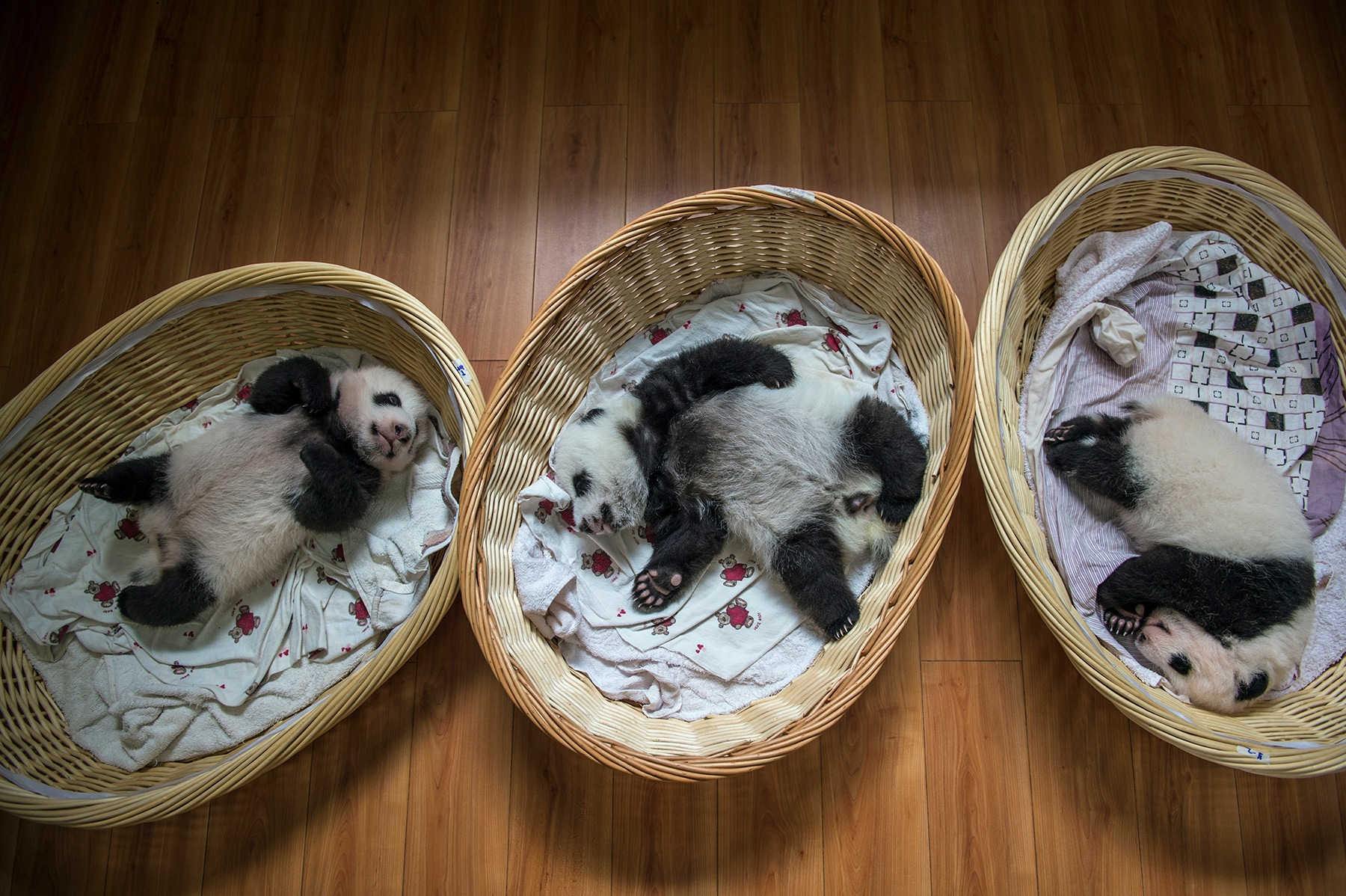
Bifengxia Panda Base, Sichuan Province, China For their first three months, these tiny pandas are in the very best hands! Specially trained panda nannies keep their little bellies full, their bodies warm, and their days filled with plenty of sleep, as they grow.
The Solution
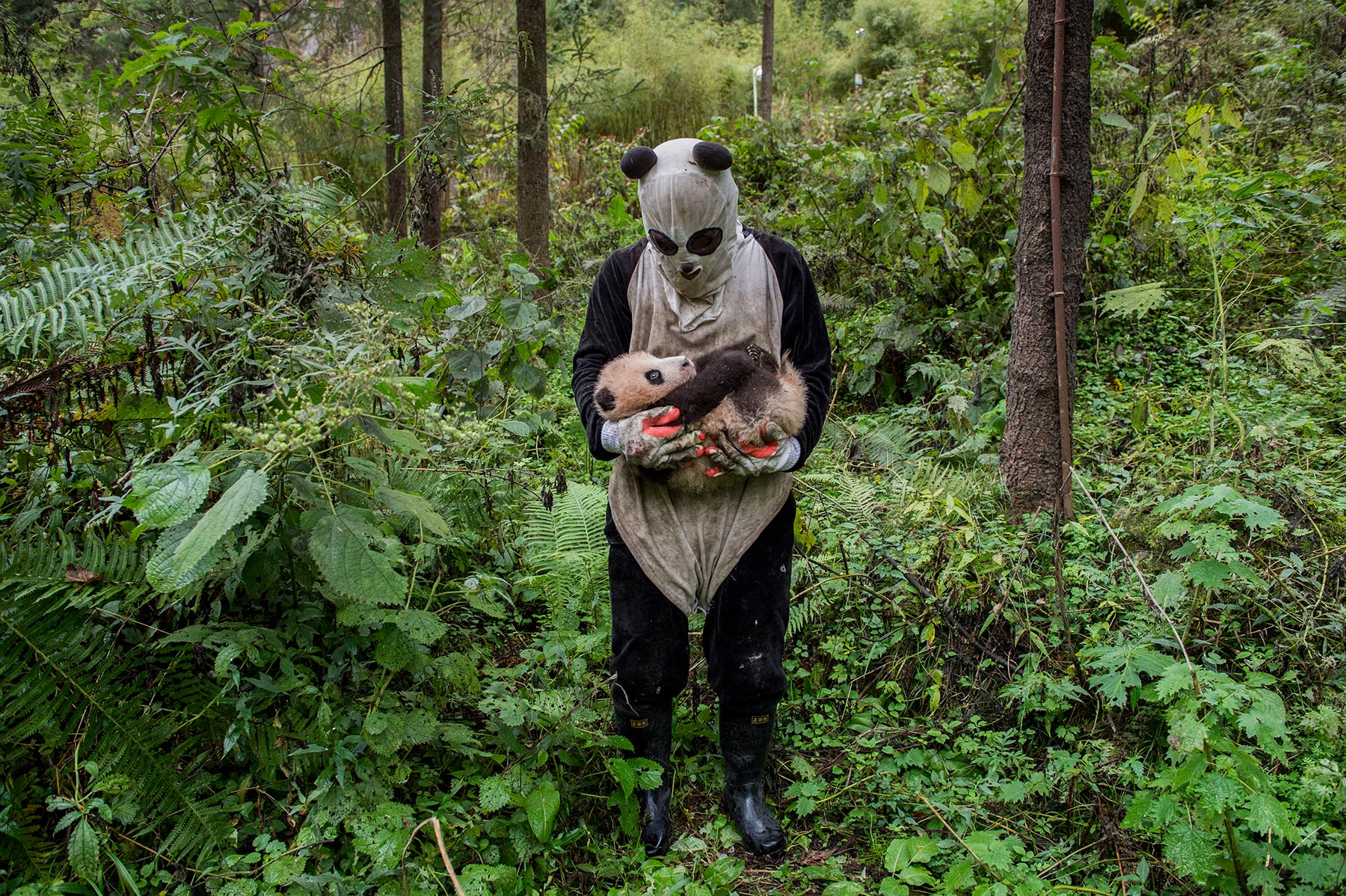
There’s one rule above all others: Pandas must never become habituated to people. How do the keepers accomplish that? The humans working with pandas destined for the wild must become pandas themselves. Only the animals prepared for release received this treatment. Keepers and researchers wear full-body panda costumes so the young pandas wouldn’t associate humans with food, care, or safety. The costumes are scented with panda urine. Pandas rely heavily on smell, so apparently looking like a panda wasn’t enough. You have to smell like one, too.
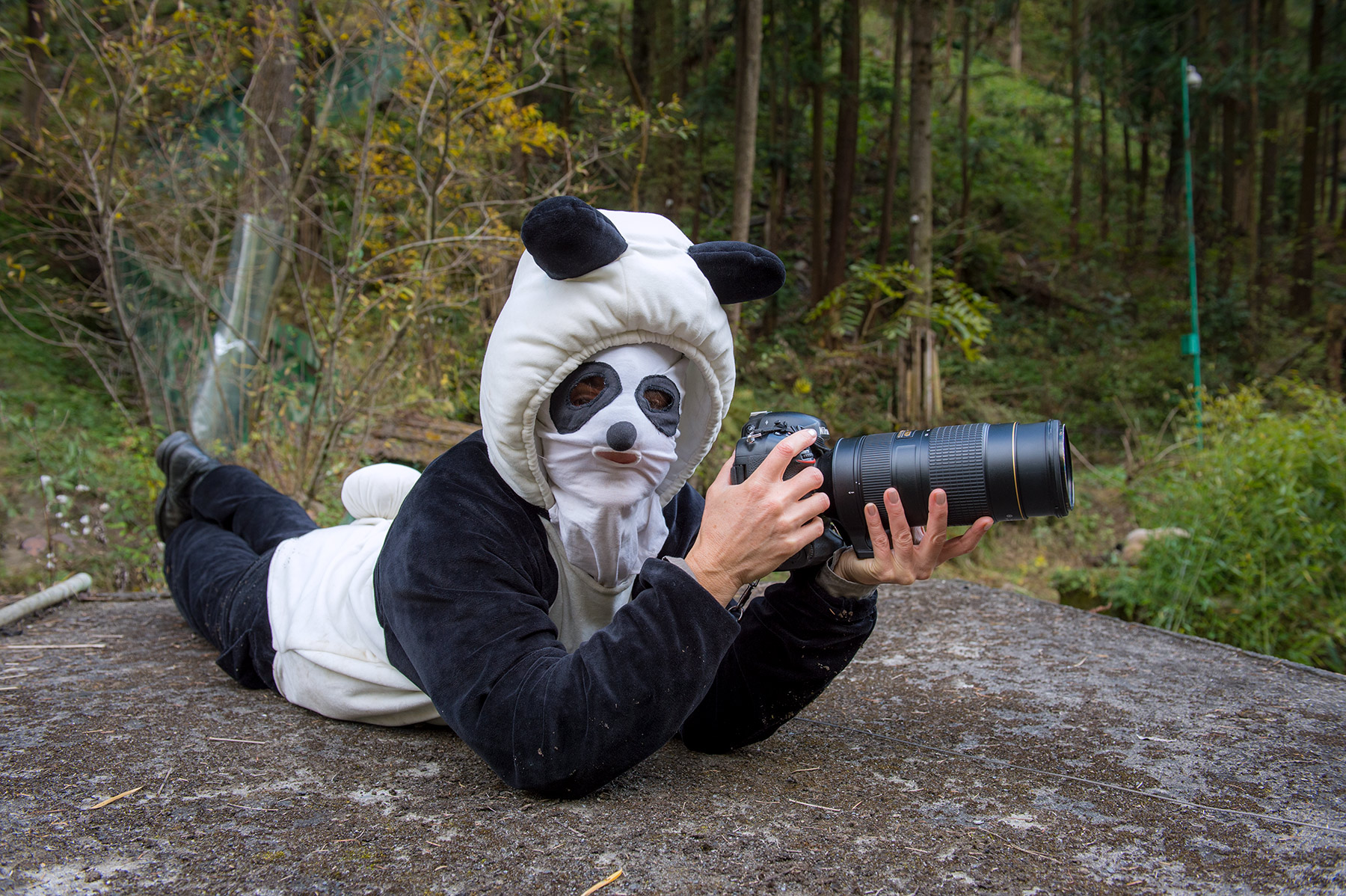
I did what any right-minded photographer would do. I packed away my tree costume and donned a urine-soaked panda costume. Let me tell you, rocking a panda suit is harder than you might think. You can’t see your feet. Your vision is limited. You sweat spectacularly. And walking through the mountains dressed as a giant black-and-white bear while carrying camera equipment isn’t exactly subtle. You look like a bank robber who took a very wrong turn on the way to the getaway car.
Wolong National Nature Reserve, Sichuan Province, China A panda keeper takes advantage of a mother foraging for food to do a quick two-month health check on her cub. Wearing a panda costume prevents the cub from becoming habituated to humans.Wolong National Nature Reserve, Sichuan Province, China Ami Vitale at the ready to photograph pandas being prepared for release into the wild. Photo by Robin Cox.
Beneath the absurdity was a remarkably serious idea. If these animals were ever going to survive on their own, they couldn’t think of humans as their protectors. They weren’t being prepared to become ambassadors. They were being prepared to disappear.
The Result
One of the photographs that took me the longest to make was of Ye Ye, a 16-year-old female whose cub, Hua Yan, was being trained for release.
For nearly a month, I climbed the same mountain day after day dressed as a panda. Then, one morning, she emerged from the mist. For a few fleeting moments, everything came together, and then she was gone.
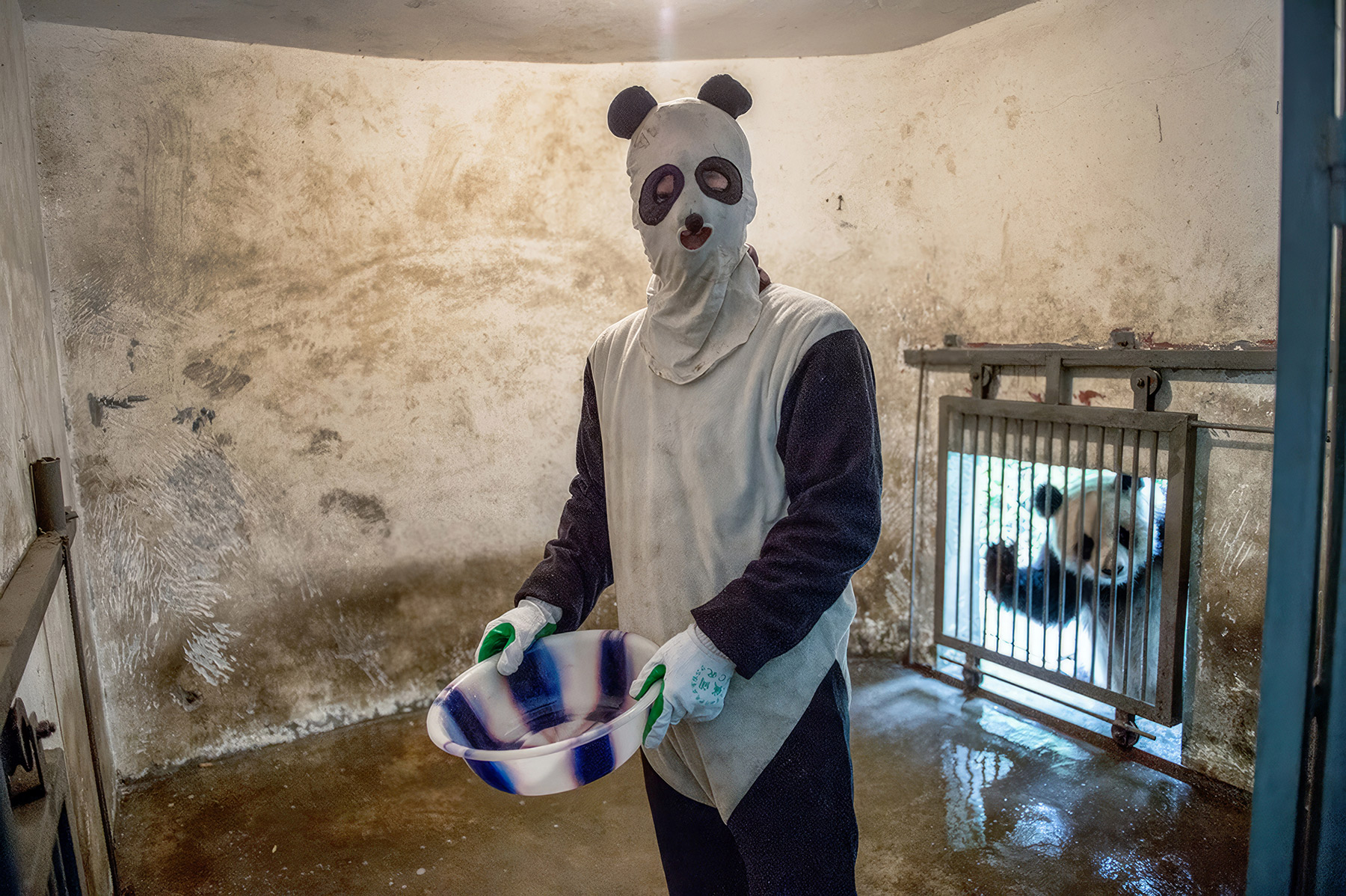
Wolong National Nature Reserve, Sichuan Province, China A panda keeper in disguise cleans and tidies the enclosure where pandas eat while a curious cub watches from outside.
That photograph taught me something I hadn’t expected when I began this story. Wildlife photography isn’t always about getting closer. Sometimes it’s about learning how to step back. We can become so focused on making the picture that we forget we are visitors in their world. The privilege is being allowed into that world at all.
The Message
China’s panda story is ultimately much bigger than cute animals and clever costumes. It is a story about persistence. For more than three decades, scientists, conservationists, and forest workers have worked to breed pandas, protect habitat, reconnect fragmented forests, and develop new ways to strengthen wild populations. There have been setbacks and failures along the way, but the effort is beginning to show results.
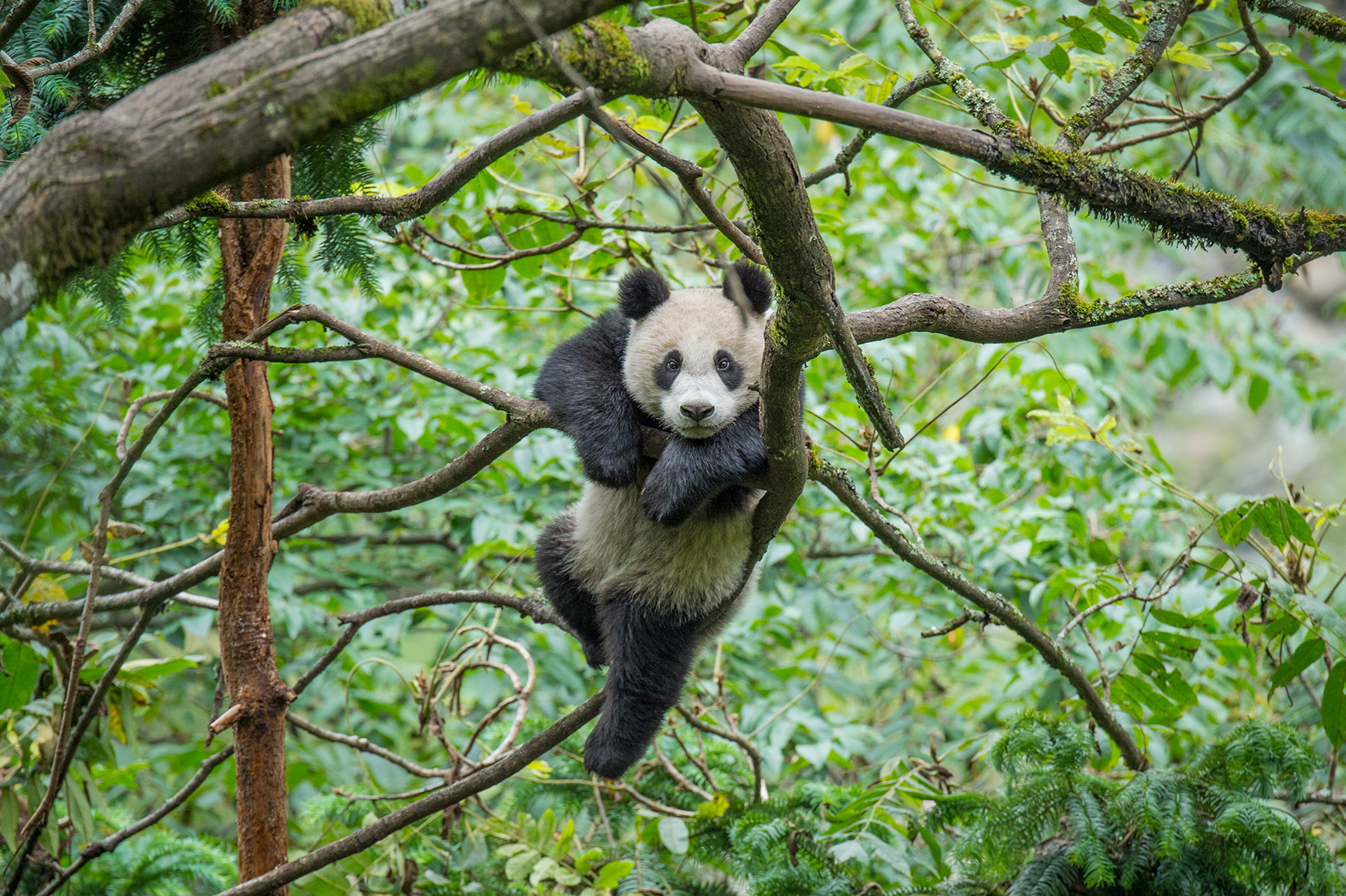
Bifengxia Panda Base, Sichuan Province, China While their mothers spend roughly 15 hours a day eating bamboo, panda cubs can be found climbing trees, where they build strength, learn to sleep safely, and practice predator avoidance.
Today, panda numbers have risen from historic lows. It’s one of conservation’s more hopeful stories — a reminder that protecting a species can take decades of painstaking, often invisible work. And the goal was never simply to save pandas in captivity. It was to give them something much harder and much more important: A life in which they no longer need us. A life in the wild.
To provide the best experiences, we use technologies like cookies to store and/or access device information. Consenting to these technologies will allow us to process data such as browsing behavior or unique IDs on this site. Not consenting or withdrawing consent, may adversely affect certain features and functions.
Functional
Always active
The technical storage or access is strictly necessary for the legitimate purpose of enabling the use of a specific service explicitly requested by the subscriber or user, or for the sole purpose of carrying out the transmission of a communication over an electronic communications network.
Preferences
The technical storage or access is necessary for the legitimate purpose of storing preferences that are not requested by the subscriber or user.
Statistics
The technical storage or access that is used exclusively for statistical purposes.The technical storage or access that is used exclusively for anonymous statistical purposes. Without a subpoena, voluntary compliance on the part of your Internet Service Provider, or additional records from a third party, information stored or retrieved for this purpose alone cannot usually be used to identify you.
Marketing
The technical storage or access is required to create user profiles to send advertising, or to track the user on a website or across several websites for similar marketing purposes.