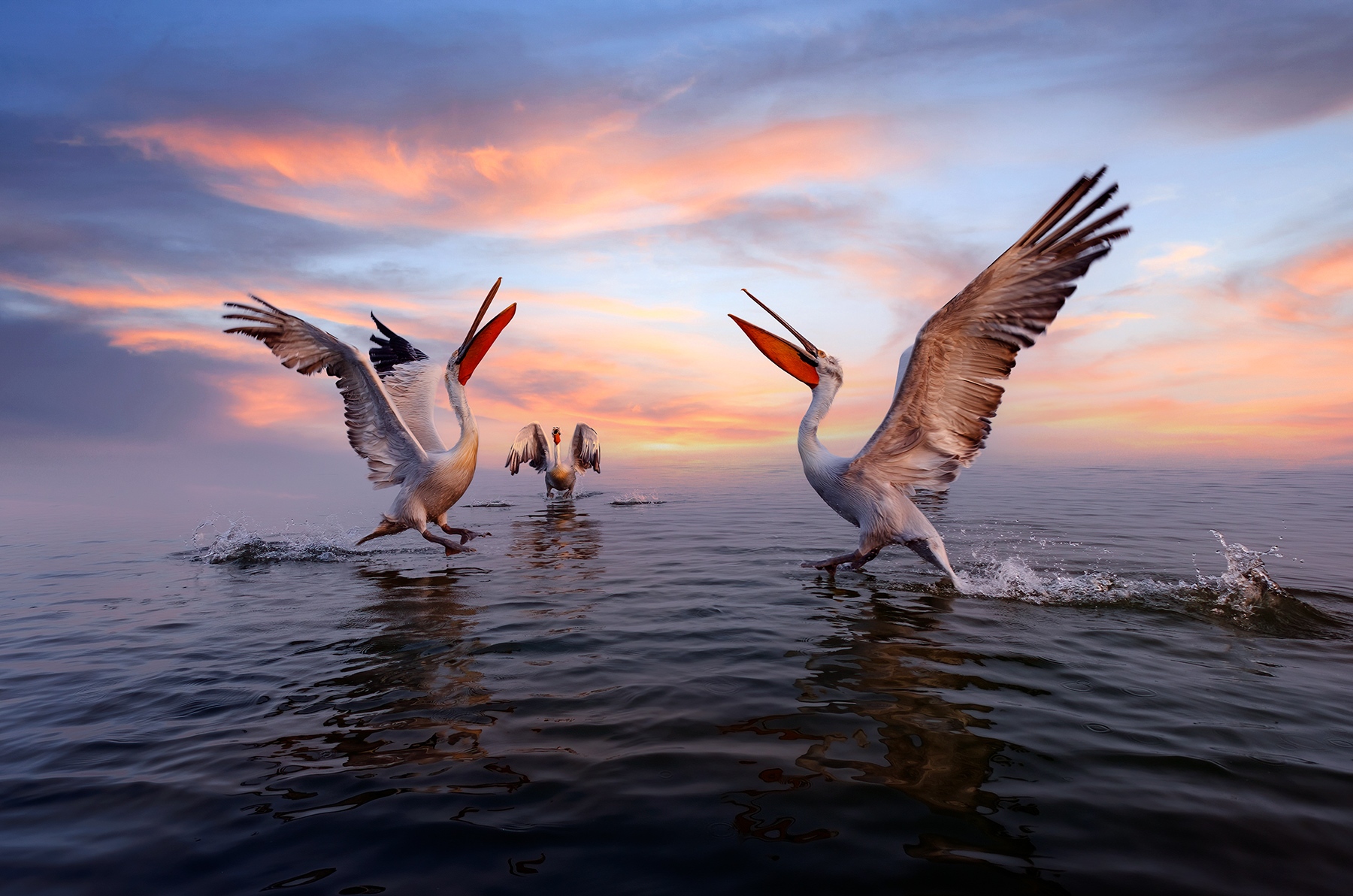
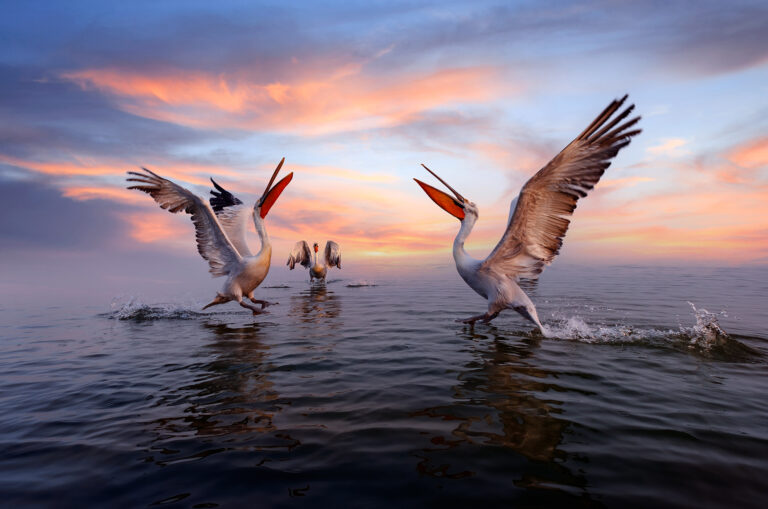
Lake Kerkini, Greece Three Dalmatian pelicans run across the water at sunrise, their open wings and orange bills framed by the softly colored sky. FUJIFILM X-T2, FUJINON XF 10-24mm f/4 R OIS lens. Exposure: 1/640 sec., f/4, ISO 200.
↑ Lake Kerkini, Greece Three Dalmatian pelicans run across the water at sunrise, their open wings and orange bills framed by the softly colored sky. FUJIFILM X-T2, FUJINON XF 10-24mm f/4 R OIS lens. Exposure: 1/640 sec., f/4, ISO 200.
Simone Sbaraglia’s Evolution
Words and Images by Simone Sbaraglia
As I sat in a blind photographing pelicans, I thought about how different my life had become. Twenty years ago, I sat in a windowless office, inside the enormous building that is the IBM Research Center in Westchester, New York. In front of me, numbers and symbols chased one another across a computer screen.
Behind me, a blackboard was covered with mathematical formulas. At the time, I knew almost nothing about photography, animals, or the natural world.
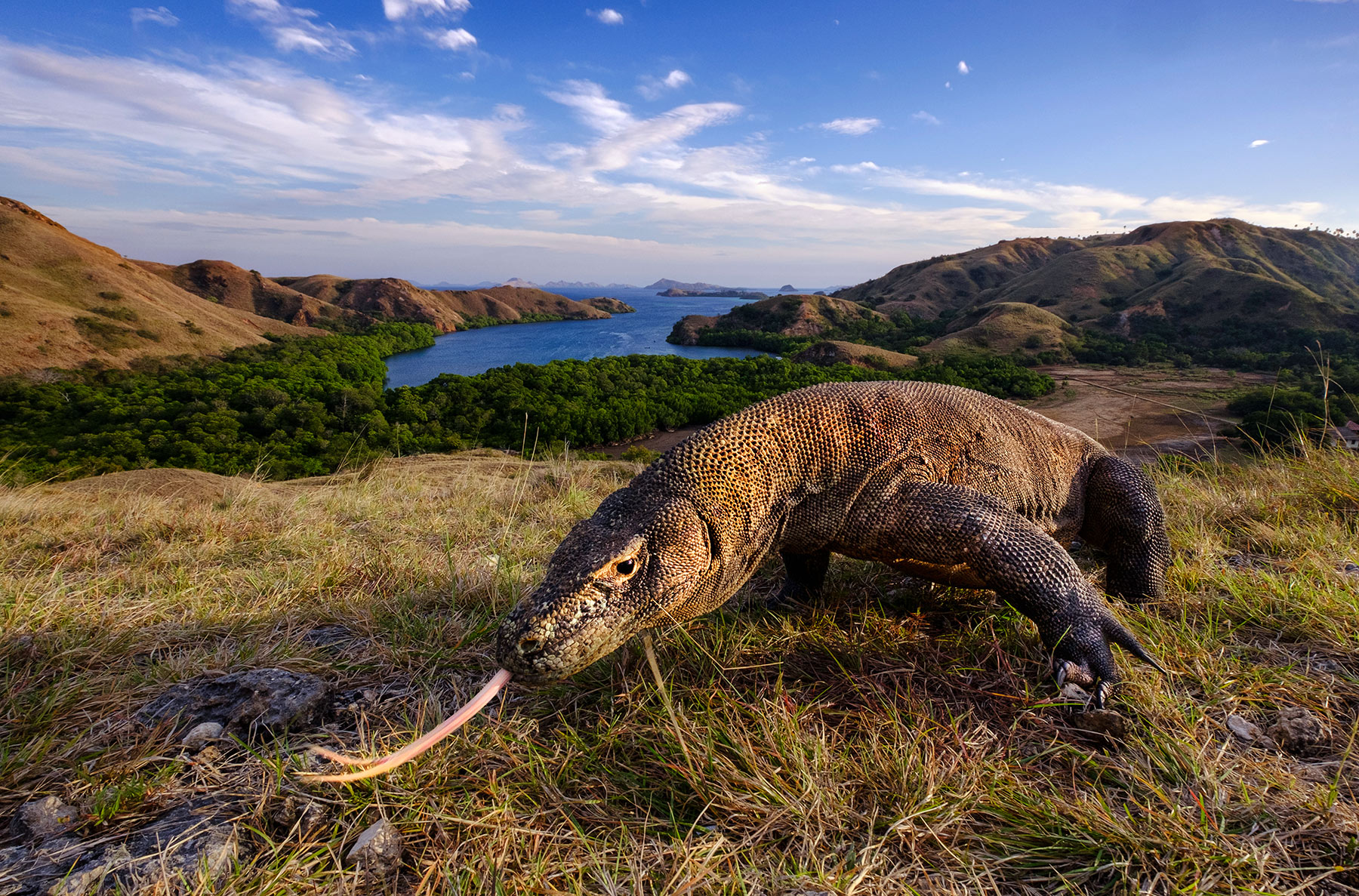
Komodo National Park, Indonesia A Komodo dragon surveys the coastal landscape, flicking its forked tongue as the wide-angle perspective reveals its island habitat.FUJIFILM X-T2, FUJINON XF 10-24mm f/4 R OIS lens. Exposure: 1/125 sec., f/16, ISO 800.
Today, nature and photography have invaded nearly every part of my life. When I’m not traveling, I’m working on images, preparing exhibitions, teaching, or planning my next journey. Somehow, I have lived two lives, although the border between them is much less distinct than I once believed.
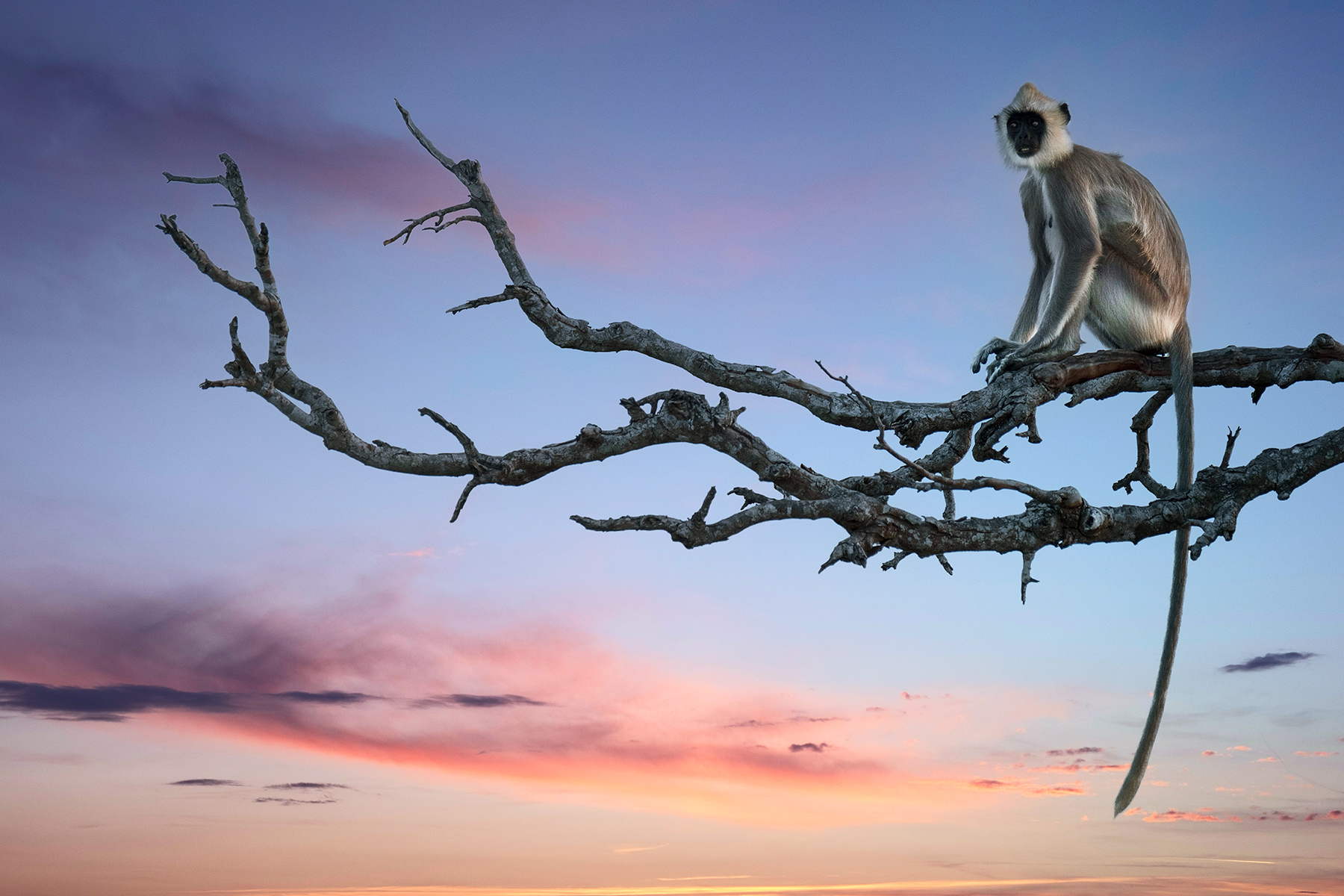
Yala National Park, Sri Lanka A grey langur pauses on the bare branches of a tree, silhouetted against the delicate pink and violet colors of sunset.FUJIFILM X-T2, FUJINON XF 100-400mm f/4.5-5.6 R LM OIS WR lens. Exposure: 1/160 sec., f/5.6, ISO 200.
A Wave of Inspiration
In my first life, I was a mathematician, originating in Rome and finding what I had been looking for in the United States; a place where I could work among some of the finest scientists in the world. In 2003, a spontaneous decision changed my life during a trip through the American Southwest.
Then I saw photos of “The Wave,” an extraordinary formation of sandstone shaped by wind and water over millions of years in Paria Canyon-Vermilion Cliffs Wilderness on the Arizona-Utah border. I was struck by its beauty and had to see it with my own eyes.
Until then, I had used a camera mainly to produce holiday memories. Standing in front of The Wave, I felt emotions surface, and I was struck with inspiration to pick up my camera. The feelings inspired by nature were grounding, and the possibility of sharing them through photography was exhilarating and felt somehow important.
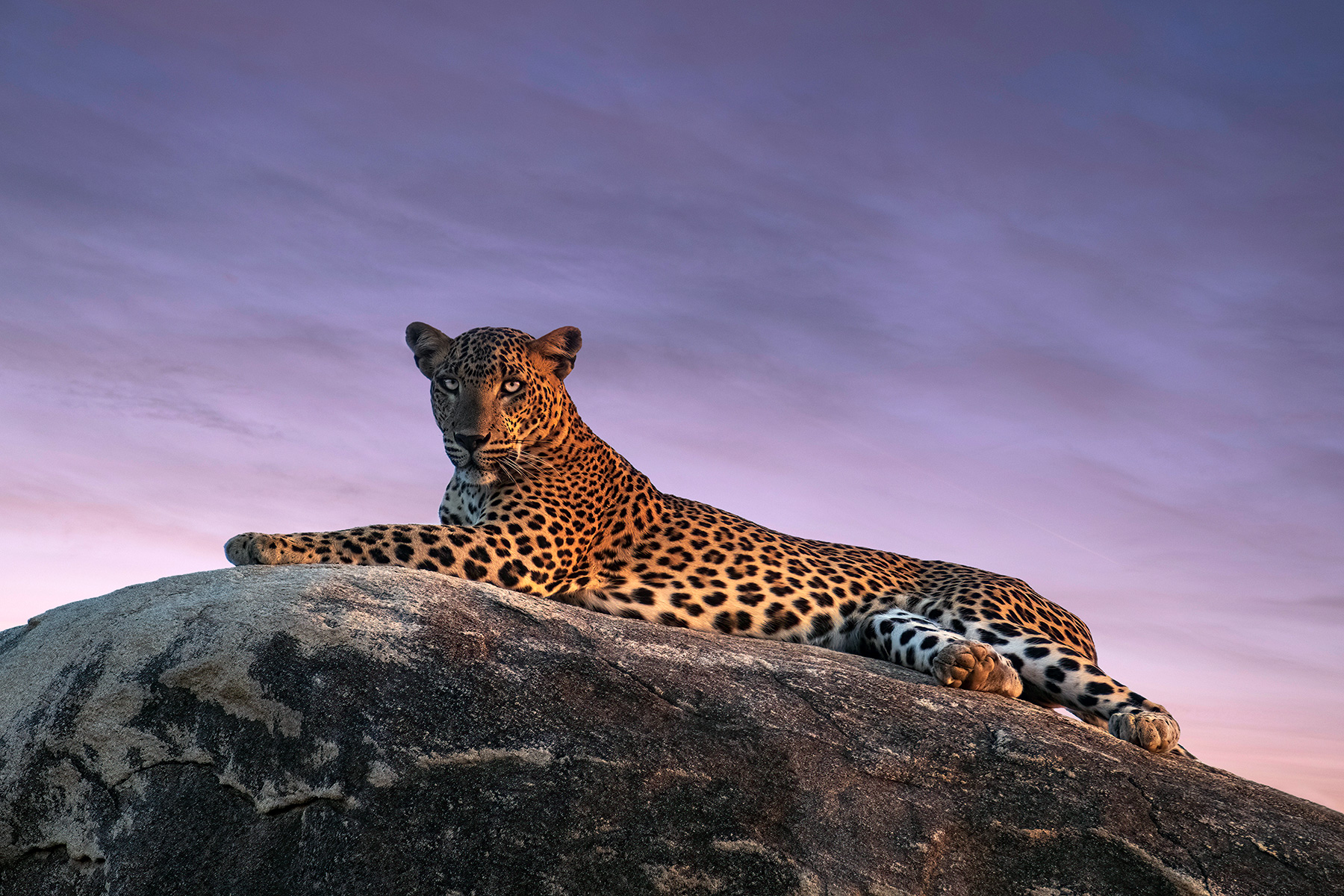
Yala National Park, Sri Lanka A Sri Lankan leopard rests on a granite boulder, one of fewer than 1,000 individuals remaining in the small country.FUJIFILM X-T2, FUJINON XF 100-400mm f/4.5-5.6 R LM OIS WR lens with 2× teleconverter. Exposure: 1/250 sec., f/11, ISO 1250.
In that moment, out in nature, it felt as if a bulldozer had knocked down the walls of my windowless office. I never put my camera down again. I left IBM, returned to Italy, and began what I jokingly refer to as “my second life.” For the past 20 years, I’ve been both a nature photographer and a mathematics professor at a local university.
Shifting Paradigms
With time, however, I realized that mathematics and photography have a commonality. Mathematical research is a purely rational activity, but anyone who has worked through a difficult problem knows how much solving it depends on imagination. A mathematician searches for relationships inside complexity and tries to isolate what is essential, looking for an order that’s present but not immediately visible.
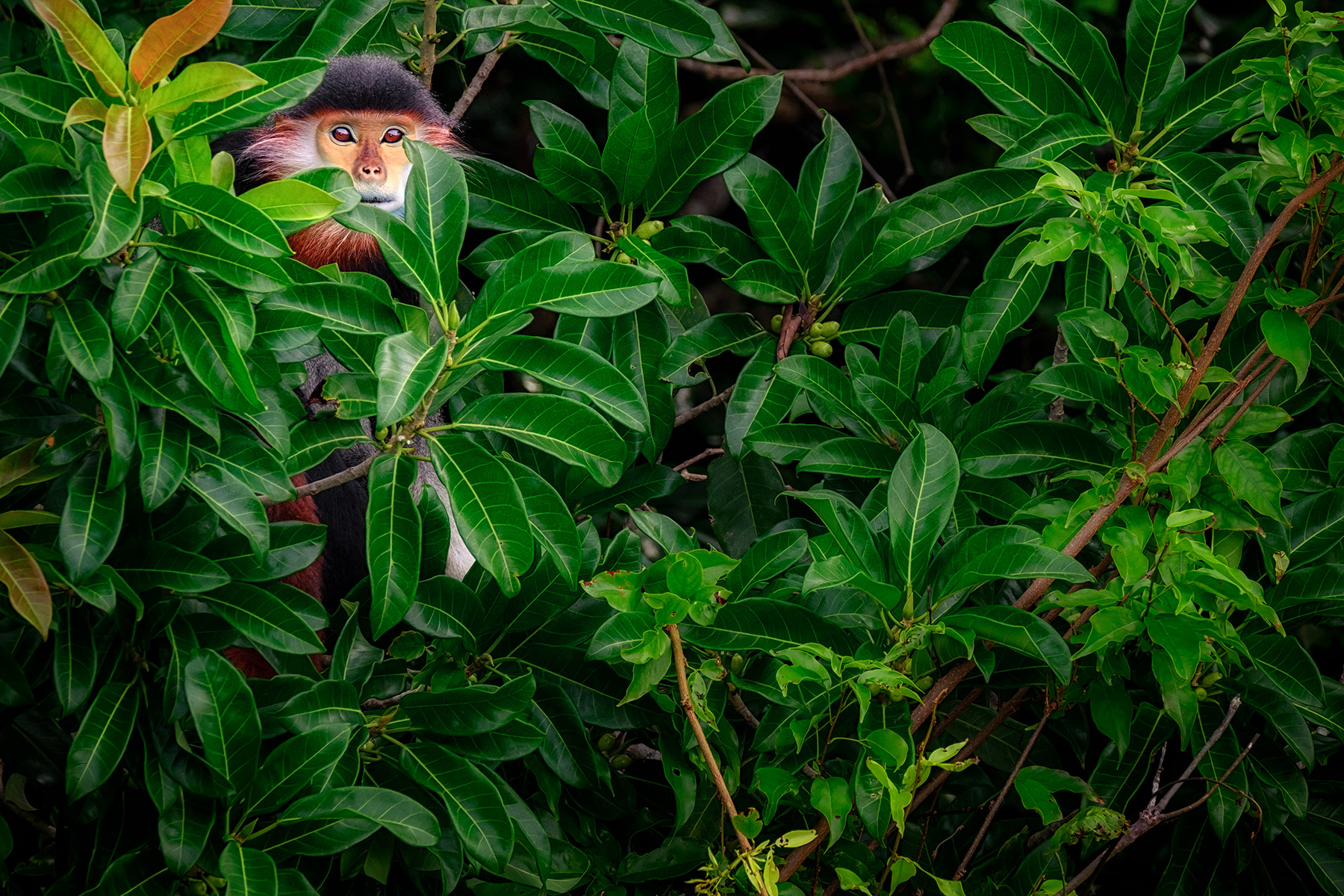
Son Tra Peninsula, Vietnam A red-shanked douc langur peers through dense tropical foliage, its vivid face emerging as a small flash of color among the leaves.FUJIFILM X-T3, FUJINON XF 100-400mm f/4.5-5.6 R LM OIS
WR lens. Exposure: 1/250 sec., f/8, ISO 1600.
Creating a great photograph of nature presents a similar challenge and thought process. There’s complexity in every environment, especially when working with wildlife. Having a vision requires imagination, but isolating the image within the environment requires skill and critical thinking. Harnessing the different elements in the environment — light, color, behavior, and form — is similar to solving a math problem. One must observe the apparent chaos and find order to produce something meaningful.
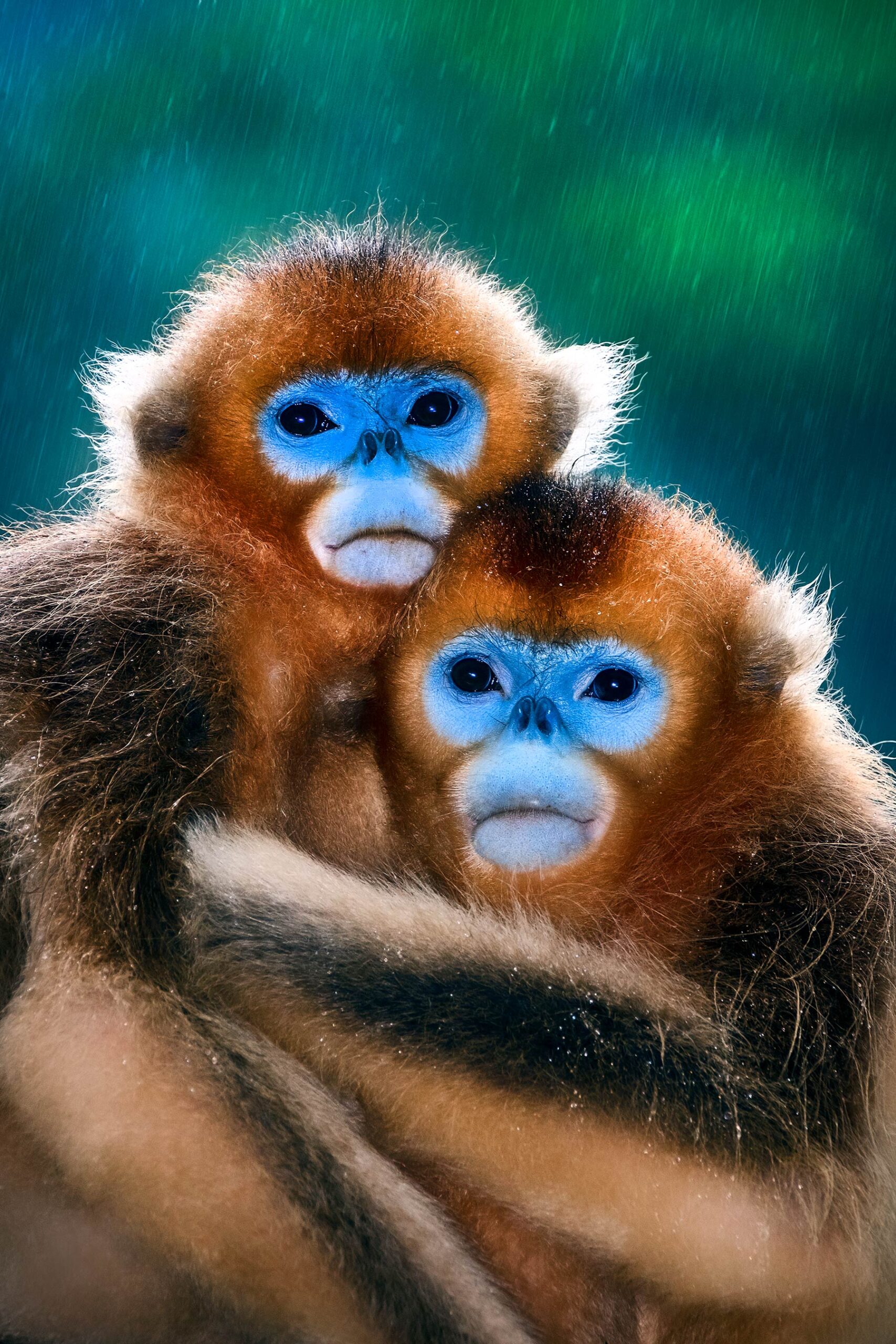
Foping, China Two golden snub-nosed monkeys huddle together in heavy rain. Backlighting catches the falling water and outlines the wet golden fur of this endangered species.FUJIFILM X-T2, FUJINON XF 100-400mm f/4.5-5.6 R LM OIS WR lens. Exposure: 1/160 sec., f/8, ISO 640.
Photography gradually became, above all, a means of understanding. It gave me a reason to explore the world and a window through which to understand it, and myself, more clearly.
I photograph to give a name and form to the emotions I feel in front of an animal or a landscape. Only after I’ve understood the emotion can the photograph become an act of communication.
The message of an image is so often, “Look at what I saw,” but my message is closer to, “Feel what I felt.”
It took me years to arrive at this awareness. At the beginning, I photographed wildlife from a distance with powerful telephoto lenses. I was concerned with finding the animal, recording its behavior, and producing a technically correct image. My photographs documented the natural world quite effectively, but they said very little about me or my experience of being there and bearing witness.
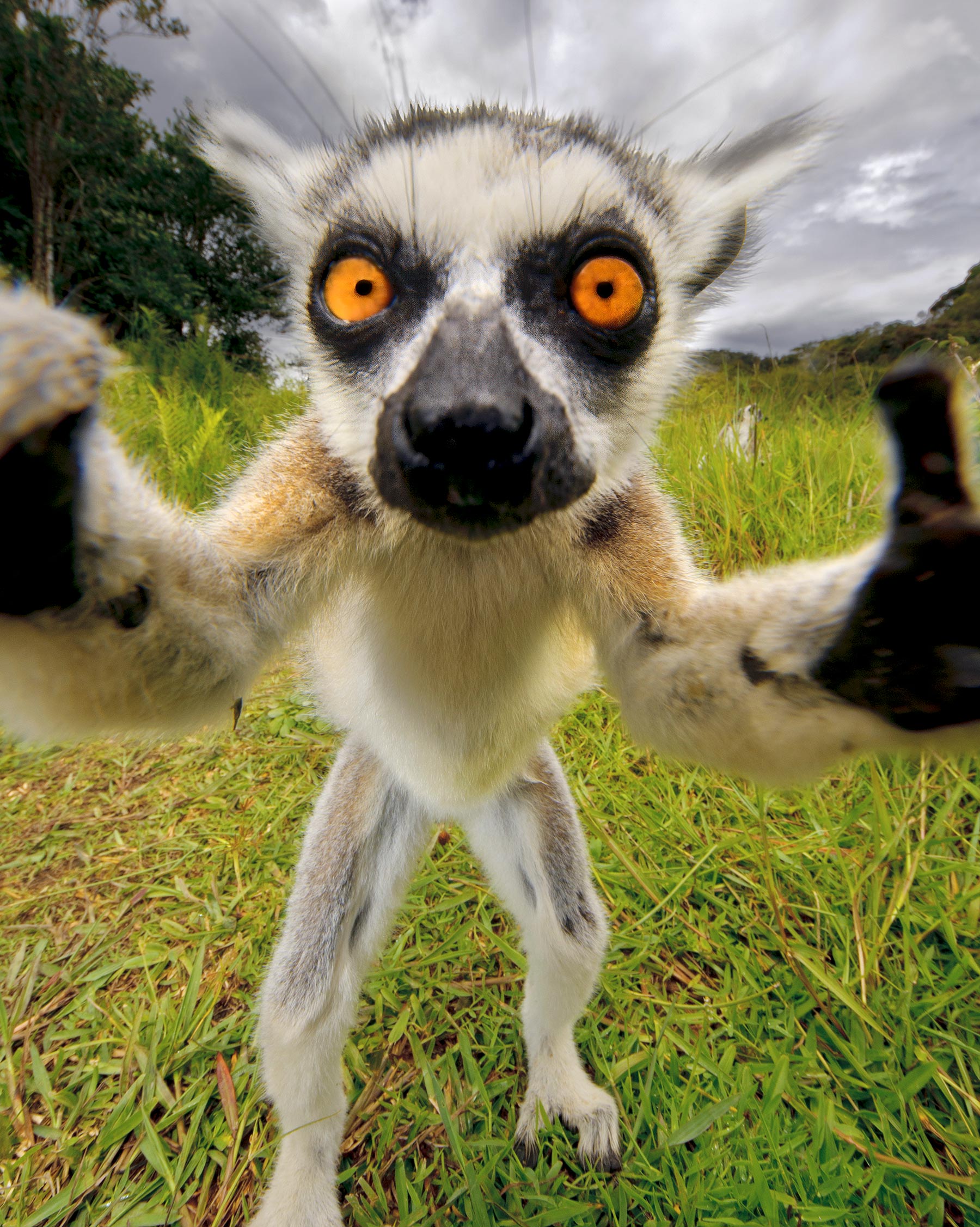
Vakona Reserve, Madagascar A ring-tailed lemur reaches towards my wide-angle lens. Its curiosity and direct gaze transform the close encounter into an intimate portrait.
Then I sent my portfolio to an agency in London. An editor replied that my pictures were technically good, but they were simply documents of nature. Anyone with decent equipment and sufficient technical competence could have taken them. It was a severe judgement and an extraordinarily generous one.
I’ll always be grateful to that editor because those words liberated me. From that moment, I became less concerned with the faithful representation of nature and much more concerned with the faithful representation of my feelings about it.
Investing in a Photo
My own response was to move progressively closer to the animals to capture more intimate portraits of their lives. Distance can easily become detachment. If I remained detached from what was happening, the viewer of the resulting photos might be detached as well.
Physical proximity, however, is only the visible part of this approach. The real purpose is participation. I want the animal to be aware of my presence, to accept me and, eventually, to allow me into a small part of its life. Only then do I feel that I can begin the process of turning my visions into reality. The process requires patience, respect, and a willingness to return without the pictures I had hoped for.
Before every project, I study the species, its behavior, and its environment. On location, I work with guides, rangers, or researchers who know the animals far better than I do. I first spend time with the animals, learning their behaviors and signals, while they learn that my presence isn’t threatening.
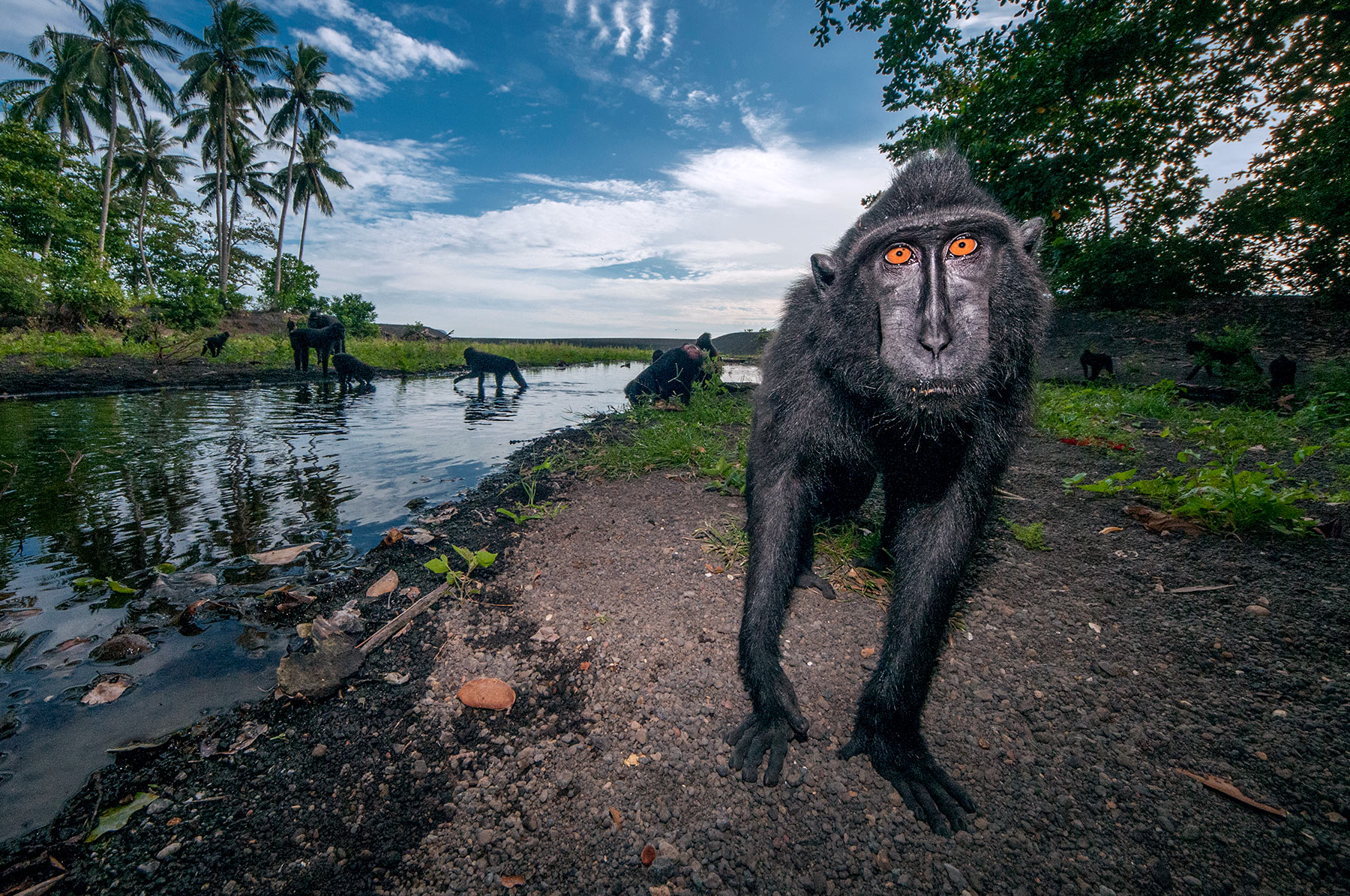
Sulawesi, Indonesia A crested black macaque approaches my wide-angle lens while the rest of the troop moves around a forest pool in the background.
For example, when photographing primates, every day in the jungle involves hours of trekking, crossing streams, enduring insects and tropical rain, and trying not to lose contact with animals that move through the vegetation far more easily than we do. Most of the photographs that matter are made during the final four or five days of each assignment. By then, the animals have grown accustomed to me, and I’ve learned enough about their behavior to anticipate some of their movements. The photographs are thus the last stage of a much longer process. The earned comfort level of the animals allows more intimate photos to be made.
Getting close must never become an act of aggression, however. An animal’s wellbeing comes before an image. I never bait wildlife, and particular care is necessary around nests, young animals, or any situation in which our presence may alter natural behavior. The boundary between helping nature through photography and exploiting it can be thin. I try to remain aware of that boundary, knowing that the simple act of staying near an animal is already a form of disturbance. Showing these creatures at their most beautiful is also my way of thanking them for their patience.
Once the animals accept me, I often work with wide-angle lenses. They create a very different relationship from that of a long telephoto. The animal remains unmistakably present, while the surrounding habitat becomes part of the portrait. Perspective places the viewer inside the scene and gives the sensation of sharing the subject’s space.
Wide-angle photography also requires closeness to be genuine. A telephoto lens can create the appearance of intimacy from far away, while a wide-angle lens cannot conceal the physical distance between photographer and subject. The resulting pictures carry some trace of the time, trust, and mutual awareness that made them possible. I strive to portray the soul of an animal, and it is difficult to see a soul from a great distance.
For example, when photographing primates, every day in the jungle involves hours of trekking, crossing streams, enduring insects and tropical rain, and trying not to lose contact with animals that move through the vegetation far more easily than we do. Most of the photographs that matter are made during the final four or five days of each assignment. By then, the animals have grown accustomed to me, and I’ve learned enough about their behavior to anticipate some of their movements. The photographs are thus the last stage of a much longer process. The earned comfort level of the animals allows more intimate photos to be made.
Getting close must never become an act of aggression, however. An animal’s wellbeing comes before an image. I never bait wildlife, and particular care is necessary around nests, young animals, or any situation in which our presence may alter natural behavior. The boundary between helping nature through photography and exploiting it can be thin. I try to remain aware of that boundary, knowing that the simple act of staying near an animal is already a form of disturbance. Showing these creatures at their most beautiful is also my way of thanking them for their patience.
Once the animals accept me, I often work with wide- angle lenses. They create a very different relationship from that of a long telephoto. The animal remains unmistakably present, while the surrounding habitat becomes part of the portrait. Perspective places the viewer inside the scene and gives the sensation of sharing the subject’s space.
Wide-angle photography also requires closeness to be genuine. A telephoto lens can create the appearance of intimacy from far away, while a wide-angle lens cannot conceal the physical distance between photographer and subject. The resulting pictures carry some trace of the time, trust, and mutual awareness that made them possible. I strive to portray the soul of an animal, and it is difficult to see a soul from a great distance.
Transitions
Working this way demands light and compact equipment. In a forest, following primates that may travel many miles in a day, mobility matters more than carrying every possible lens. My transition to the FUJIFILM X system was a gradual consequence of this way of working. I needed equipment that could follow me through the forest for an entire day without becoming the center of my attention. Its balance of image quality, portability, and direct control allows me to move freely, change position quickly, and work at the animal’s level.
This is particularly important with wide-angle lenses, where a few centimeters can completely alter the relationship between subject, environment, and viewer. The camera didn’t create my desire for proximity, but it made that proximity easier to translate into images. I can stay close to the group and concentrate on behavior instead of thinking about the contents of my camera bag. The equipment must be studied and organized at home so it can almost be forgotten in the field.
After roughly 15 years devoted primarily to wildlife, I began to work more seriously with landscapes. At first the change seemed substantial. A landscape doesn’t observe me, become nervous, or decide whether to accept my presence. There’s no trust to earn in the way there is with an animal. Yet, I soon discovered that my approach remained surprisingly similar.
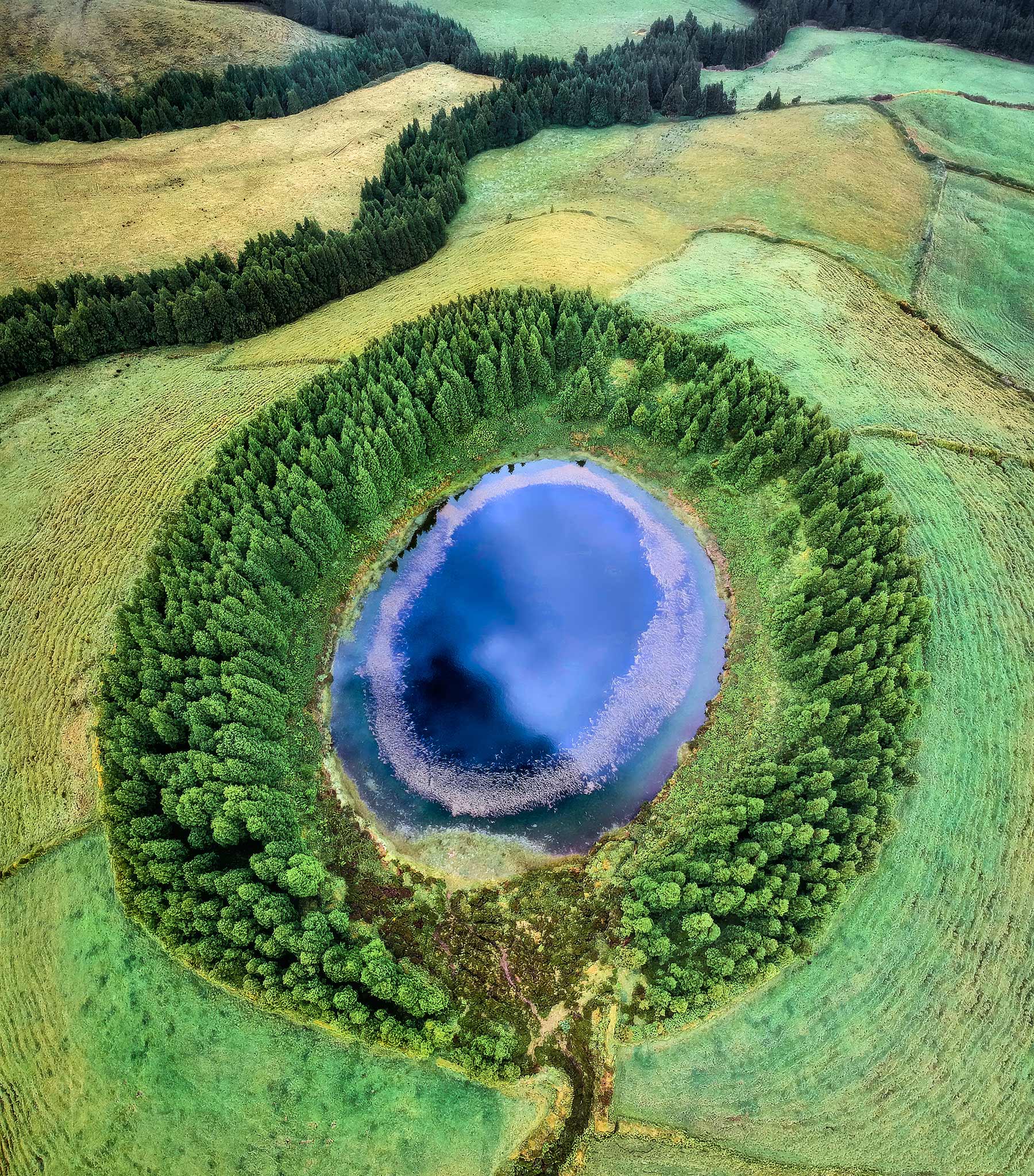
São Miguel Island, Azores, Portugal An aerial view reveals a small crater lake encircled by trees, creating an unexpected eye-like shape within the surrounding fields.FUJIFILM X-T5, 12-24mm manual shift lens. Exposure: 1/25 sec., f/1, ISO 125.
Landscape photography also demands planning, sometimes over months or years. I study the geography, the seasons, the direction of light, the weather, the movement of the moon and stars, and the possible viewpoints.
I envision the image before it exists, then go looking for the conditions that may allow it to take shape.
The landscape still has the final word. Plans often fail, the expected light doesn’t arrive, clouds cover the sky, or the elements collide in an entirely different way from the one I had imagined. As with wildlife, control is always partial.
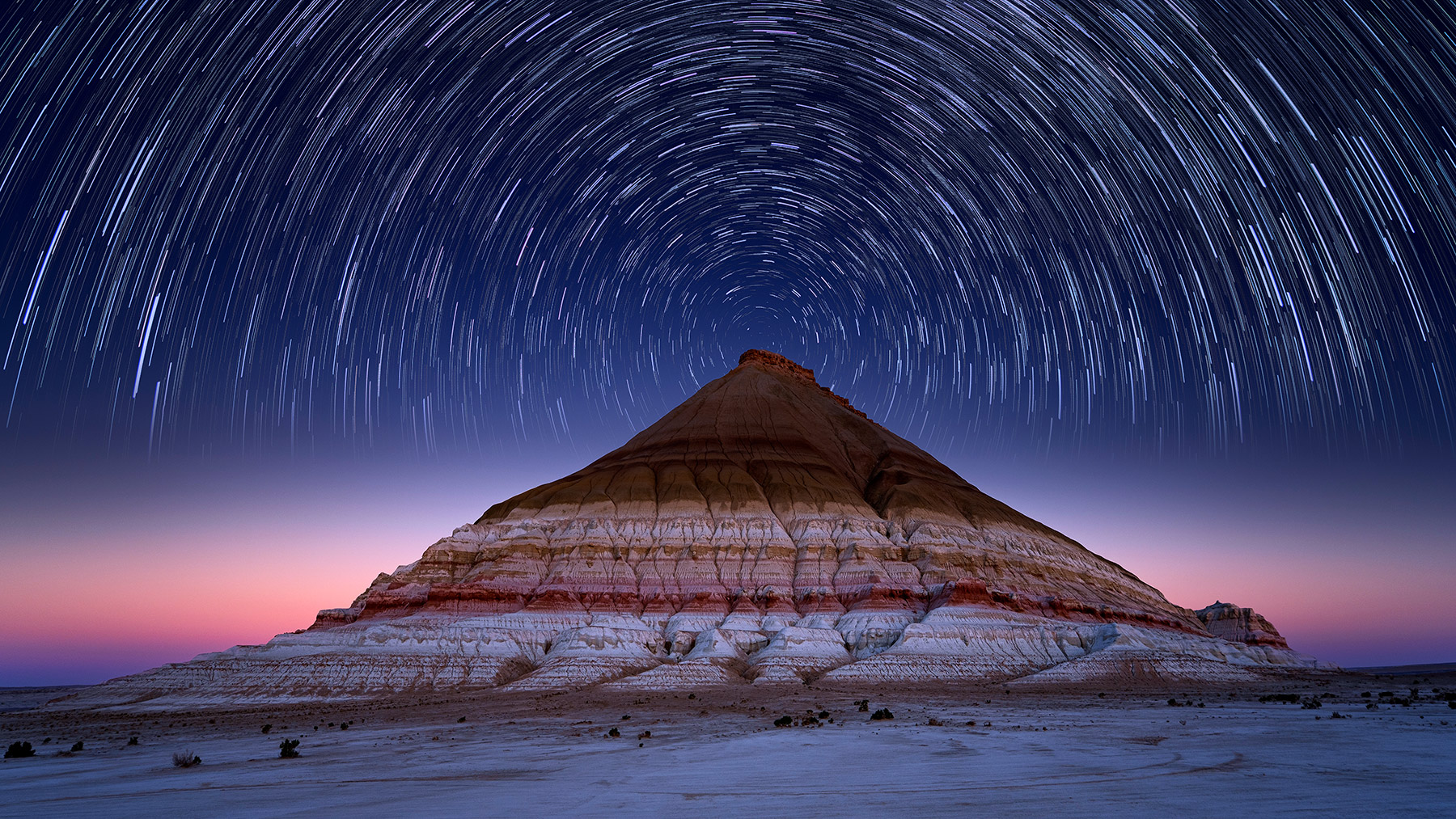
Bokty Mountain, Kazakhstan Star trails circle above the layered slopes of Bokty Mountain, connecting the desert’s geological forms with the movement of the night sky.FUJIFILM X-T5, 12-24mm manual shift lens. Exposure: 1/25 sec., f/1, ISO 125.
The FUJIFILM GFX system entered my work as landscape photography became a more important part of it. Medium format encouraged a different rhythm. Wildlife often asks me to move quickly after weeks of patient preparation. Landscape photography allows me to slow the final act down, refine the position of every element, and study the smallest transitions of light. I have little interest in producing a neutral description of a place. I want to understand what I feel there and build an image capable of conveying that magical feeling.
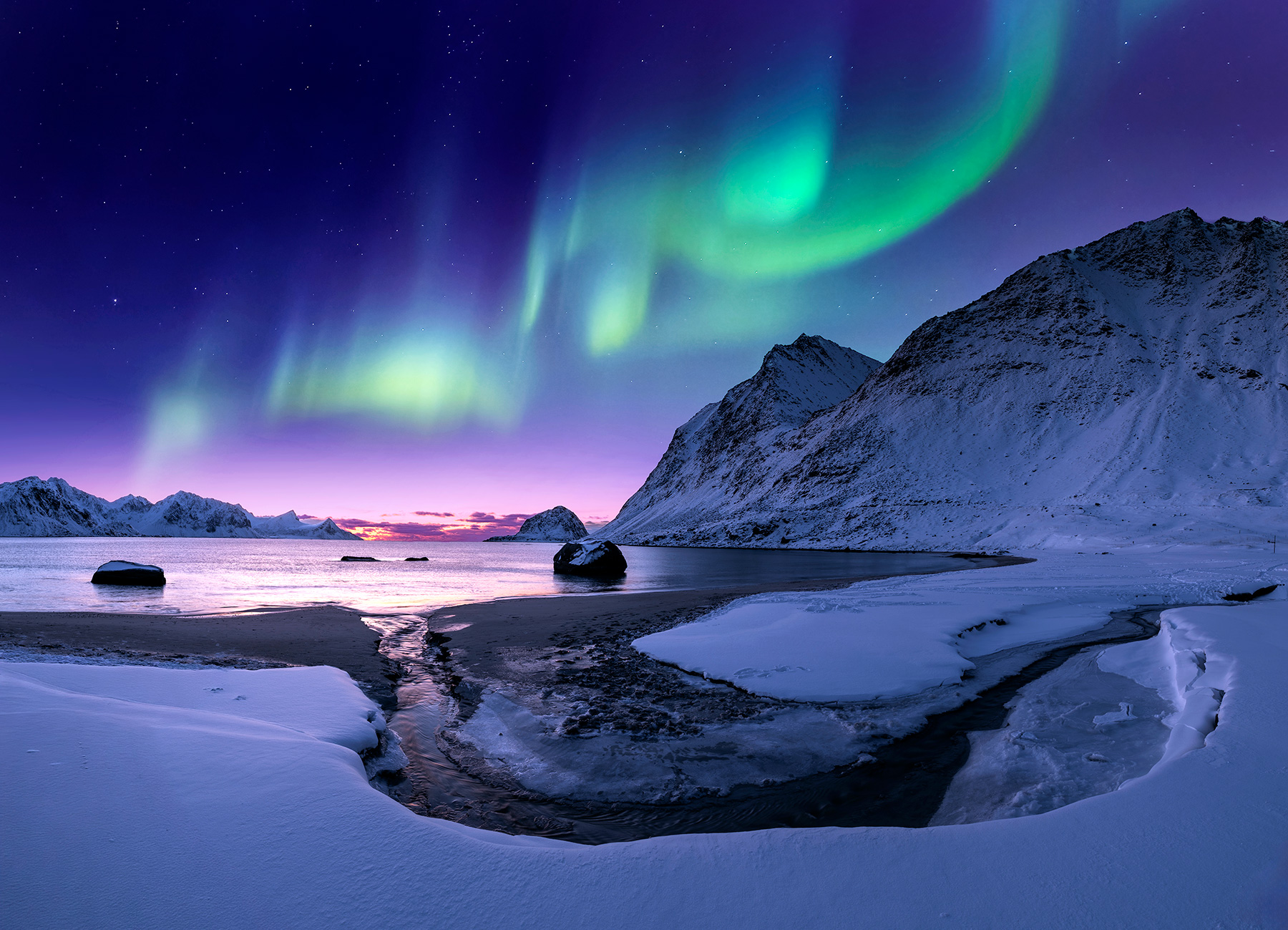
Haukland Beach, Lofoten, Norway The northern lights sweep above a snow-covered bay at twilight, their green forms contrasting with the soft colors along the horizon.FUJIFILM X-T5, FUJINON XF 16-55mm f/2.8 R LM WR II lens. Exposure: 0.6 sec., f/11, ISO 125.
The detail and tonal depth of the larger GFX sensor are important, especially when I print at a large scale. Its greatest influence has been on the way I see. It encourages precision and contemplation, qualities that connect naturally with my mathematical search for structures, proportions, and relationships within apparent chaos. The X and GFX systems accompany two very different working rhythms, yet they serve the same purpose: allowing the equipment to recede so that the experience, the subject, and the emotion can come forward.
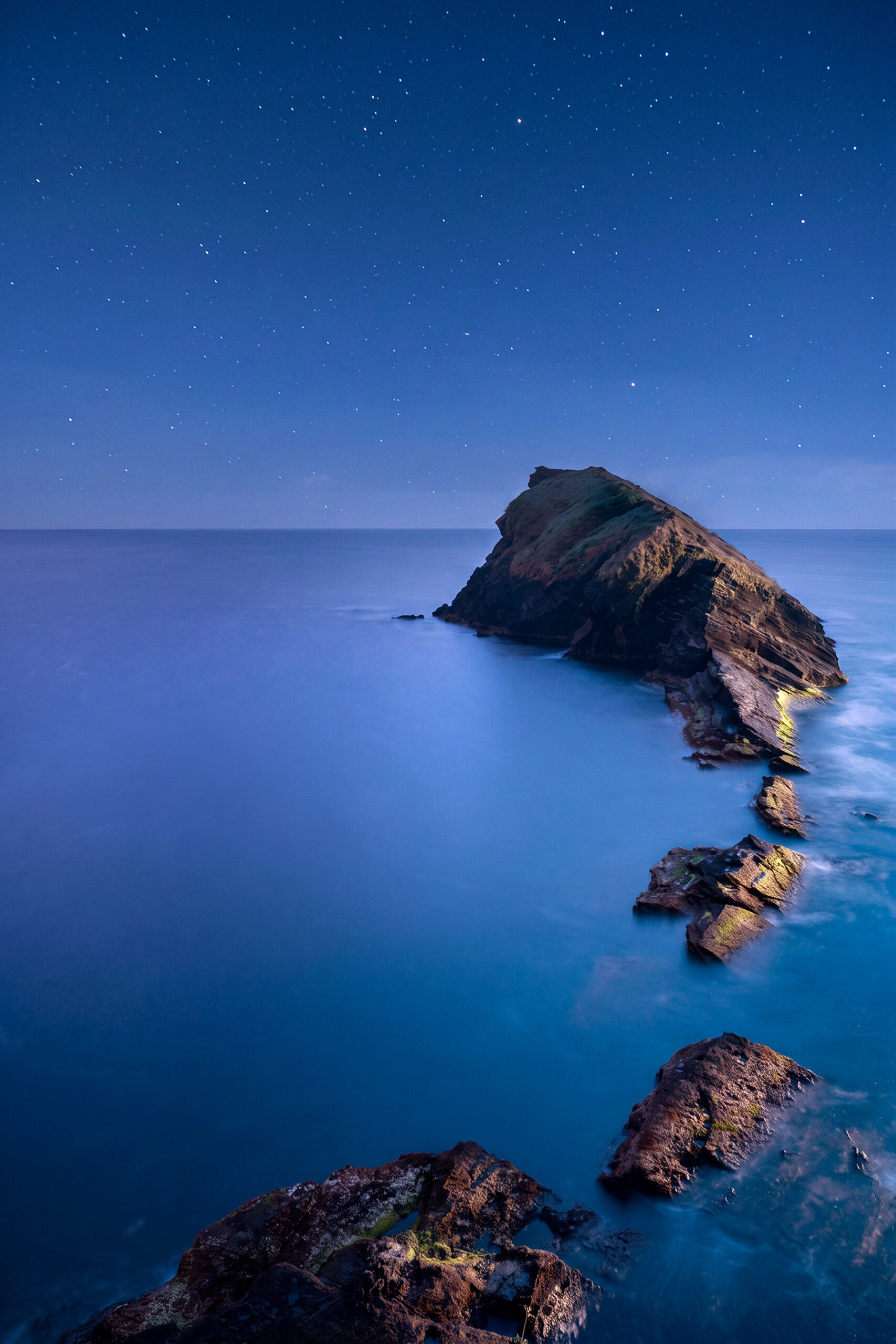
São Miguel Island, Azores, Portugal A rocky islet extends into the Atlantic beneath a star-filled sky. A long exposure transforms the surrounding ocean into a calm surface.FUJIFILM X-T5, 12-24mm manual shift lens. Exposure: 17 sec., f/1, ISO 125.
Rediscovering Roots
Once I have my gear set so I don’t have to overthink it, my mathematical background becomes apparent. In a forest, a mountain range, a volcanic desert, or a coastline, I instinctively look for repetitions, layers, symmetries, curves, intervals, and relationships between masses and empty spaces.
Nature is immersed in apparent chaos, yet within that chaos there’s order, elegance, and perfection.
Composition allows me to isolate this order and turn a complex place into a clear emotional statement.
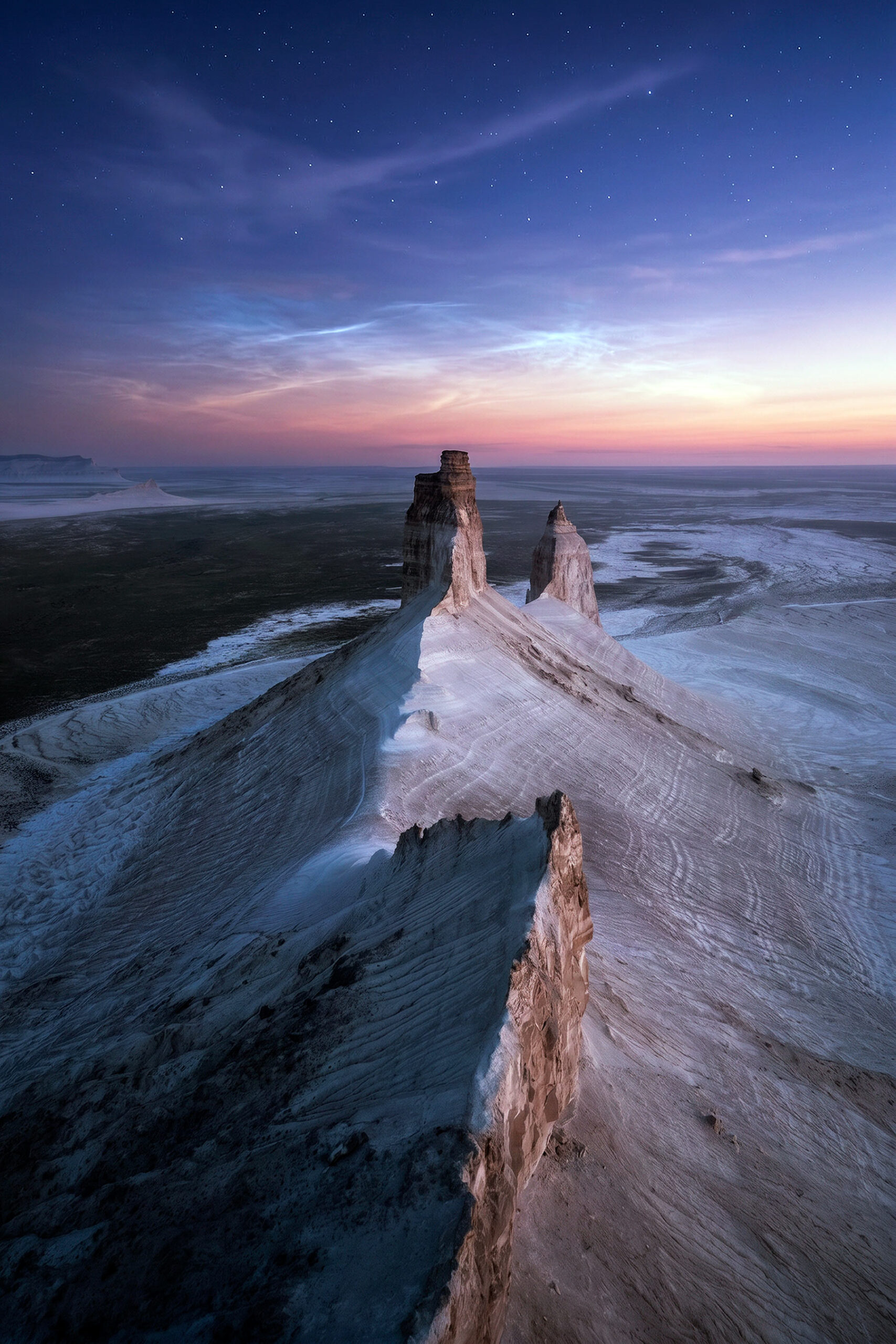
Boszhira, Kazakhstan The pale spires known as the “Fangs,” rise from the desert at twilight, their sculptural forms catching the final pink light.FUJIFILM X-T5, 12-24mm manual shift lens. Exposure: 1/55 sec., f/1, ISO 125.
Long exposures can change the consistency of water and clouds, while an elevated viewpoint may transform geological formations or vegetation into abstract shapes. Color creates atmosphere and directs the emotional reading of the scene. None of these choices is neutral. As Richard Avedon observed, once a fact becomes a photograph, it becomes an opinion. The position of the camera, the moment of exposure, and everything excluded from the frame are already interpretations.
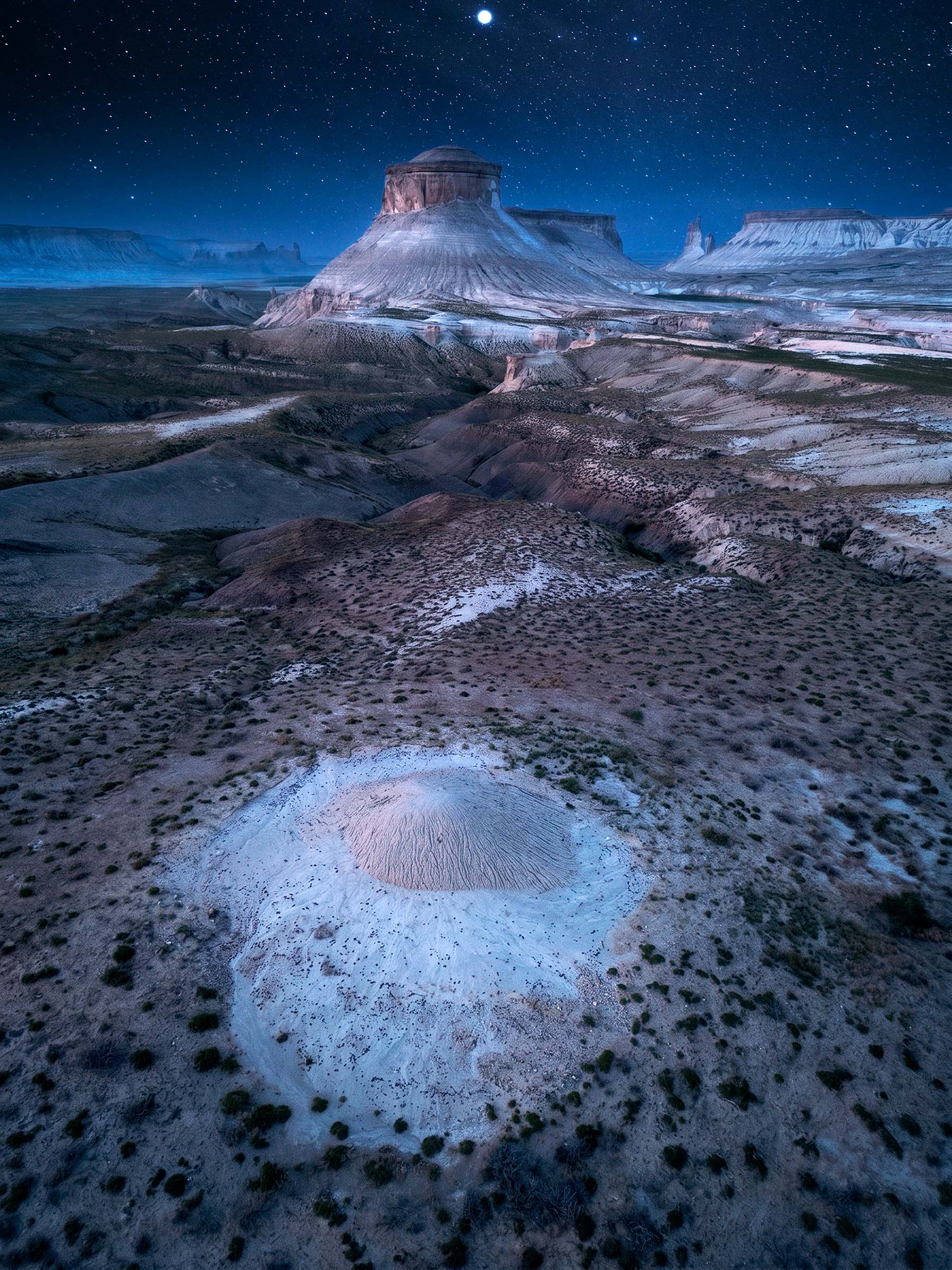
Mangystau Region, Kazakhstan Moonlight and a star-filled sky transform the eroded desert formations into an otherworldly landscape resembling the surface of another planet.
Wildlife and landscape photography eventually meet in the same place. Both ask me to observe patiently, move beyond the first impression, and decide what’s essential. Both require knowledge and imagination. With animals, I build a relationship of trust. With landscapes, I build a relationship with place, light, and time. In either case, the finished photograph must allow another person to enter that relationship.
As the years passed, my sensitivity to the fragility of the natural world grew. I started out calling myself “a nature photographer.” As I witnessed environmental degradation, almost without deciding to do so, I became a photographer of species and environments at immediate risk of disappearance. Again and again, I’d photograph an animal and later discover how uncertain its future had become. Sometimes I fear that my images may serve only as a memorial to a world that’s vanishing.
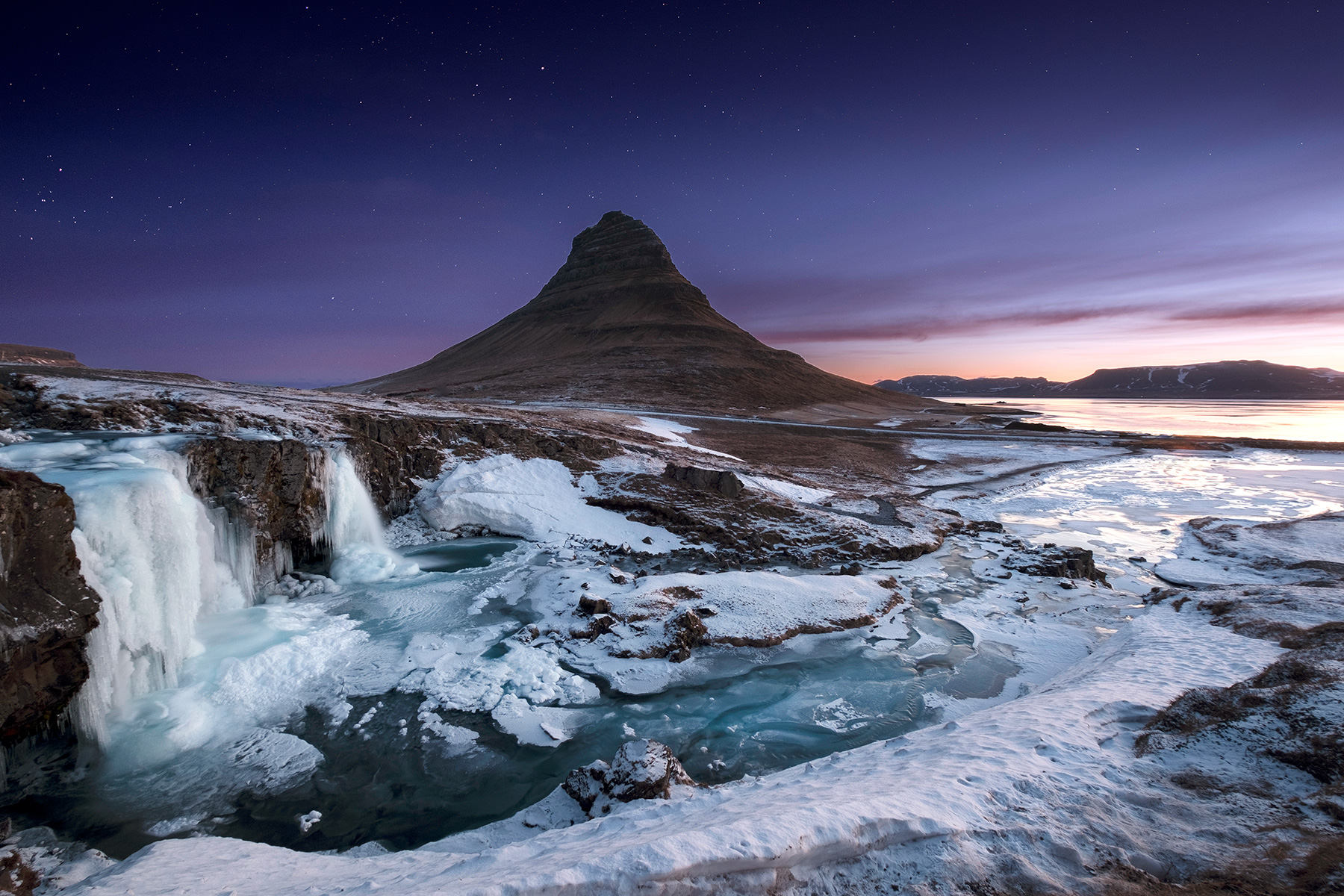
Kirkjufell, Iceland Kirkjufell rises above a frozen waterfall during blue hour, when the first stars appear at twilight.FUJIFILM X-T2, FUJINON XF 10-24mm f/4 R OIS lens. Exposure: 2.5 sec., f/8, ISO 200.
In more optimistic moments, I believe they can do something else. Scientific information can explain ecosystem destruction, measure a population, and demonstrate the consequences of our actions. These facts are indispensable, but facts alone don’t always move people. We protect what has entered our emotional life. My goal is to turn threatened species and places into emotional portrayals to inspire the viewer to take action.
If a primate is perceived as an individual, with a gaze, a character, sentiments, and social relationships, its disappearance ceases to be an abstract statistic. If a landscape inspires wonder, its destruction becomes a personal loss. Beauty grabs attention, and attention can beget empathy, attachment, responsibility, and even action.
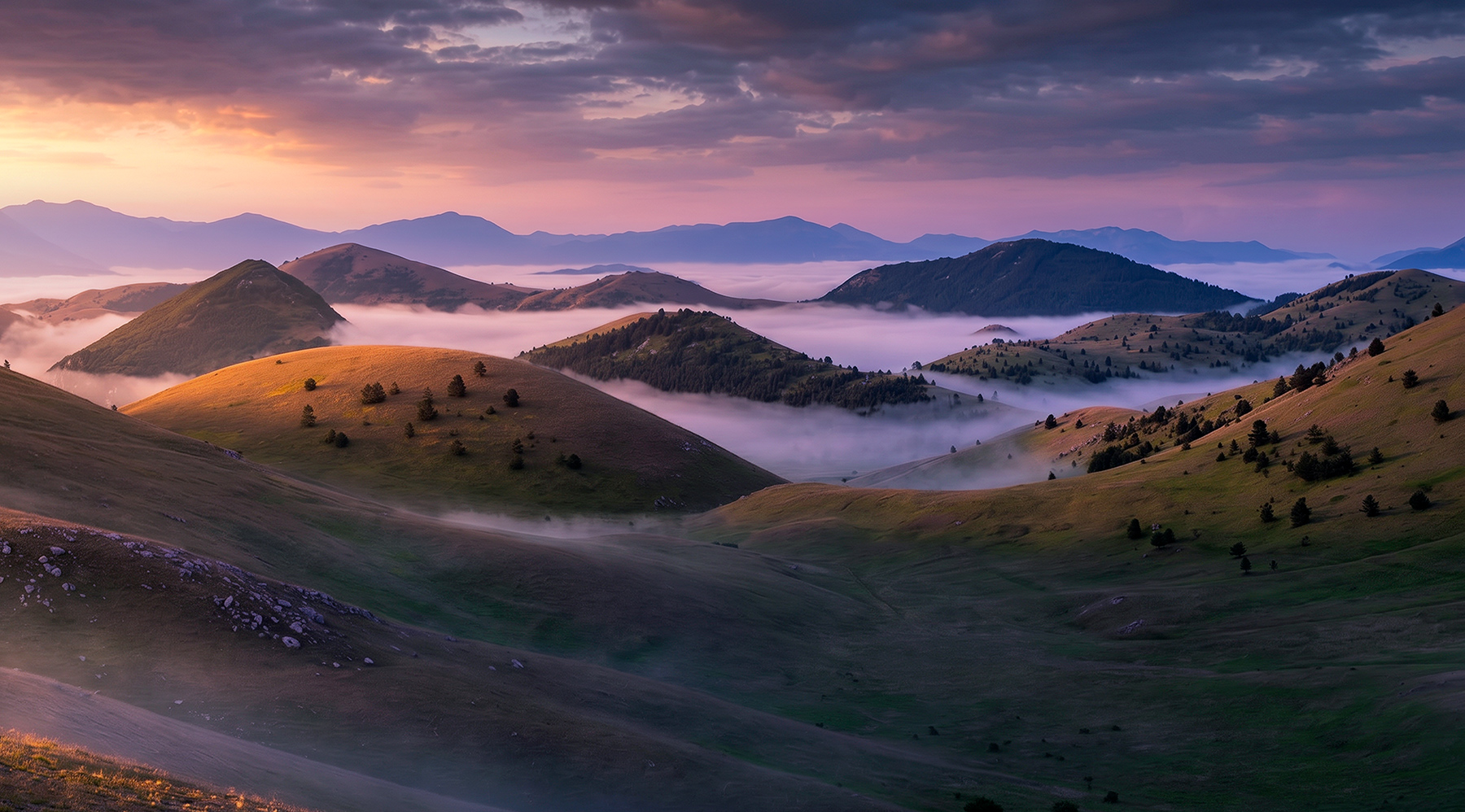
Campo Imperatore, Italy At sunrise, low clouds flow between the rounded Apennine hills while the first warm light picks out a single grassy ridge.FUJIFILM GFX100RF, FUJINON GF 35mm f/4 lens. Exposure: 0.4 sec., f/8, ISO 80.
George Orwell wrote that in a time of universal deceit, telling the truth is a revolutionary act. I’ve come to believe that in a time surrounded by destruction, spreading beauty can also be revolutionary. My ambition is modest but persistent: to contribute, image after image, to a revolution of beauty.
To provide the best experiences, we use technologies like cookies to store and/or access device information. Consenting to these technologies will allow us to process data such as browsing behavior or unique IDs on this site. Not consenting or withdrawing consent, may adversely affect certain features and functions.
Functional
Always active
The technical storage or access is strictly necessary for the legitimate purpose of enabling the use of a specific service explicitly requested by the subscriber or user, or for the sole purpose of carrying out the transmission of a communication over an electronic communications network.
Preferences
The technical storage or access is necessary for the legitimate purpose of storing preferences that are not requested by the subscriber or user.
Statistics
The technical storage or access that is used exclusively for statistical purposes.The technical storage or access that is used exclusively for anonymous statistical purposes. Without a subpoena, voluntary compliance on the part of your Internet Service Provider, or additional records from a third party, information stored or retrieved for this purpose alone cannot usually be used to identify you.
Marketing
The technical storage or access is required to create user profiles to send advertising, or to track the user on a website or across several websites for similar marketing purposes.