Gear
↑ Courtesy of Apple
By Jason Bradley | September 2026
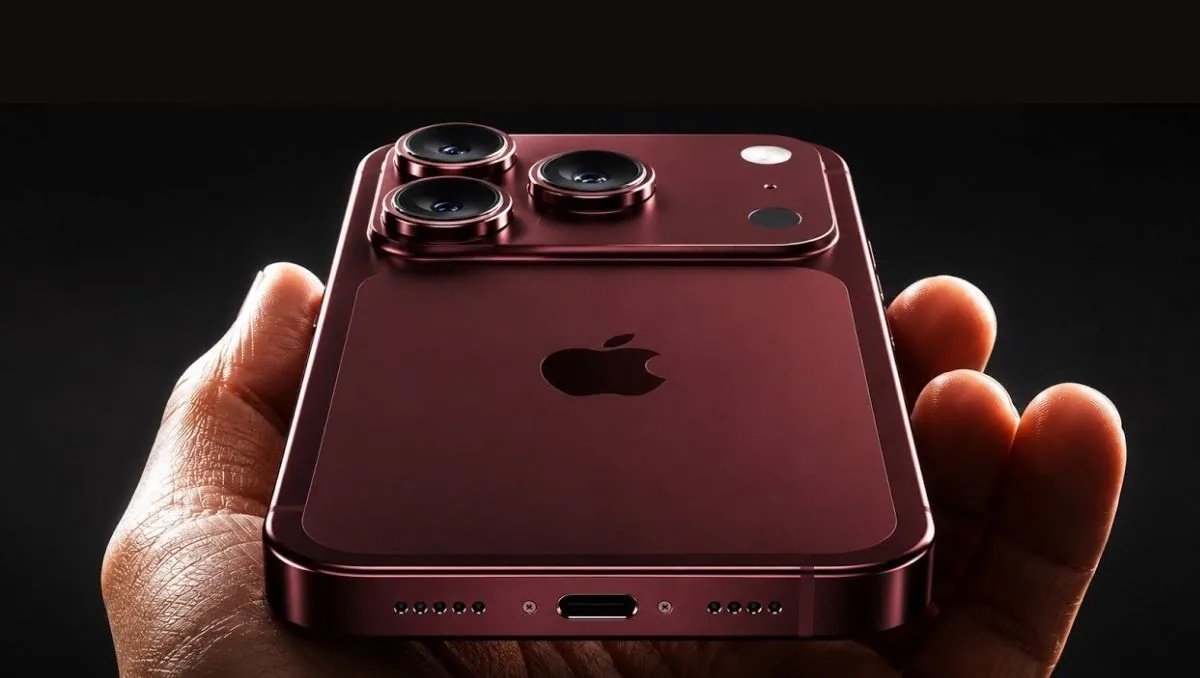
When Apple announced the iPhone 18 Pro, one of the features that initially made me laugh was the addition of a mechanical aperture. Really?
After all these years of computational photography, machine learning, increasingly sophisticated image processing, and now AI, one of the big new features is … an aperture? You know, that little mechanical thing photographers have been using forever? But the more I thought about it, the less funny it became.
Apple didn’t just add an aperture. With the iPhone 18 Pro and Pro Max, Apple has given photographers manual control over aperture and shutter speed in its native Camera app. There’s white balance control and a histogram now, too. And while none of this suddenly turns an iPhone into a full-size interchangeable-lens camera, something important has changed. Apple has put a little more visual storytelling back into the hands of the photographer. (Apple)
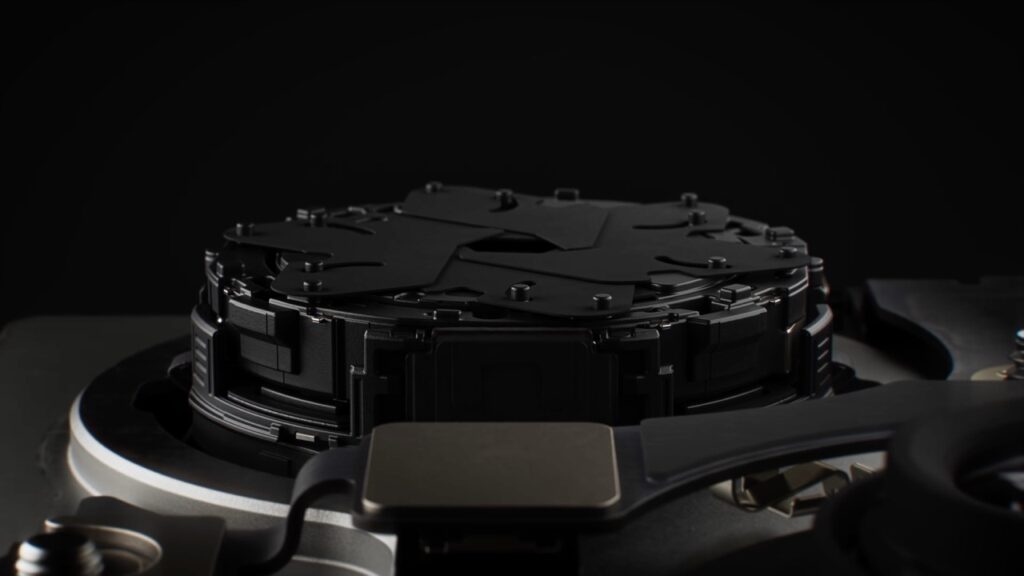
The new 48MP main camera can physically move between f/1.48, f/1.8, f/2.8, and f/4. (Apple). Now, let’s put the right lens on this conceptually (sorry, low-hanging pun fruit intended). This is still a very small camera with a small sensor and an extremely short focal-length lens. Moving from f/1.48 to f/4 isn’t suddenly going to produce the dramatic changes in depth of field we might expect from a full-frame camera and a fast telephoto. But it does matter.
At f/1.48, we can prioritize light. That matters when we’re photographing wildlife near dawn, working beneath a forest canopy, or trying to make a photograph when the light is simply disappearing.
Stop down to f/2.8 or f/4, and we can begin prioritizing depth instead. Maybe the animal isn’t the whole story. Maybe the environment around it matters just as much.
For nature photographers, that’s an important distinction.
Sometimes I want the bird.
Sometimes I want the bird in the forest.
Those aren’t the same photograph.
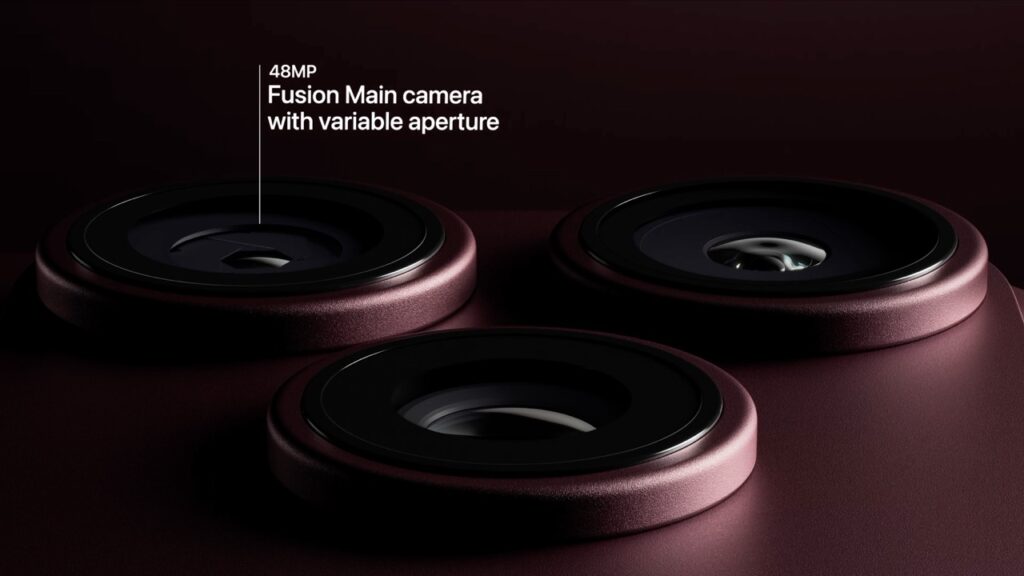
The addition I’m perhaps even more interested in is manual shutter-speed control. Apple specifically demonstrated the new Pro controls being used to create motion blur while holding another part of the scene sharp. (Apple)
That opens another door entirely. Shutter speed determines what time looks like in a photograph. Do I freeze every feather of a bird in flight or allow the wings to blur? Do I photograph water as a collection of individual droplets or let it become a soft ribbon moving through the landscape? Do I pan with an animal and let the world streak behind it?
Those aren’t simply technical decisions. They’re narrative decisions. A fast shutter can communicate precision, energy, and a fraction of a second that our own eyes could never isolate. A slow shutter can communicate movement, softness, chaos, passage, and time.
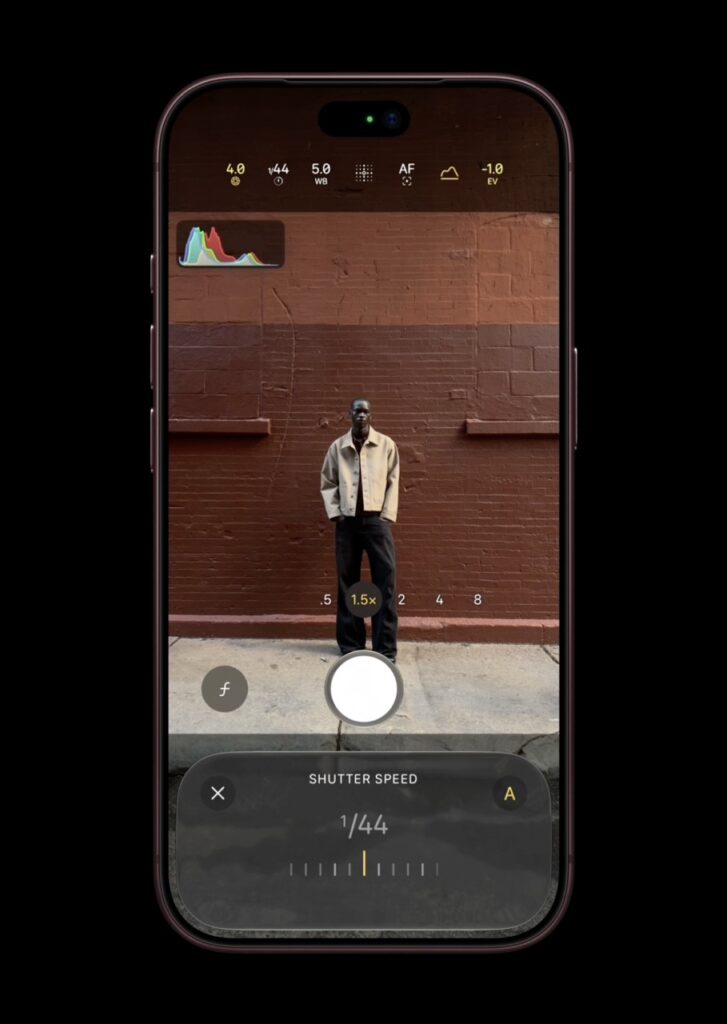
That is the part I find significant. For much of the smartphone era, the philosophy has been wonderfully simple: Point the camera at something and let increasingly sophisticated technology figure out what the photograph should look like. There’s tremendous value in that. Computational photography has made photographs possible that would have been unimaginable from a camera this small even a decade ago. I don’t see technology as the enemy of photography. I never have.
Technology changes the art. It expands it. It occasionally disrupts it. But it doesn’t eliminate the need for ideas, intention, curiosity, or vision.
The iPhone 18 Pro is interesting because Apple isn’t abandoning computation at all. In fact, there’s probably more computation happening inside this camera than ever. But alongside all of it, Apple has given us something surprisingly old-fashioned: Choice.
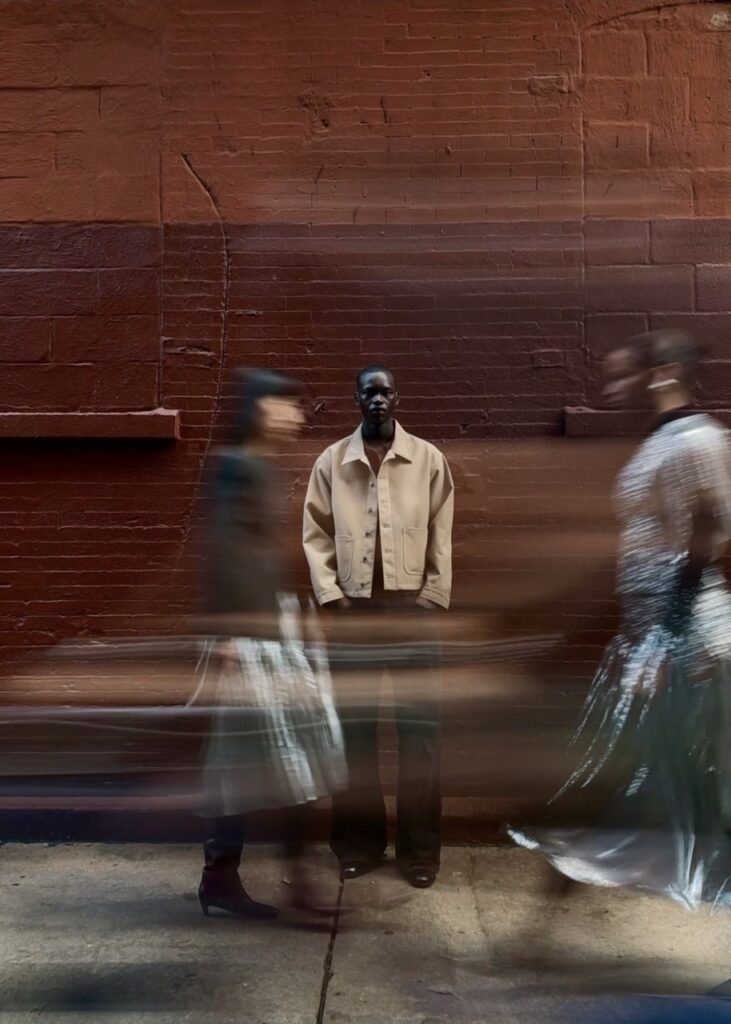
We can choose how much light enters the camera. We can choose how time is rendered. We can make slightly more deliberate decisions about what deserves emphasis and how the scene should feel. Those controls may be modest compared with the cameras many of us carry into the field. But the larger idea isn’t modest at all. Photography has always lived somewhere between technology and intention.
With this iPhone, Apple has moved the needle, just a little bit, back toward intention.