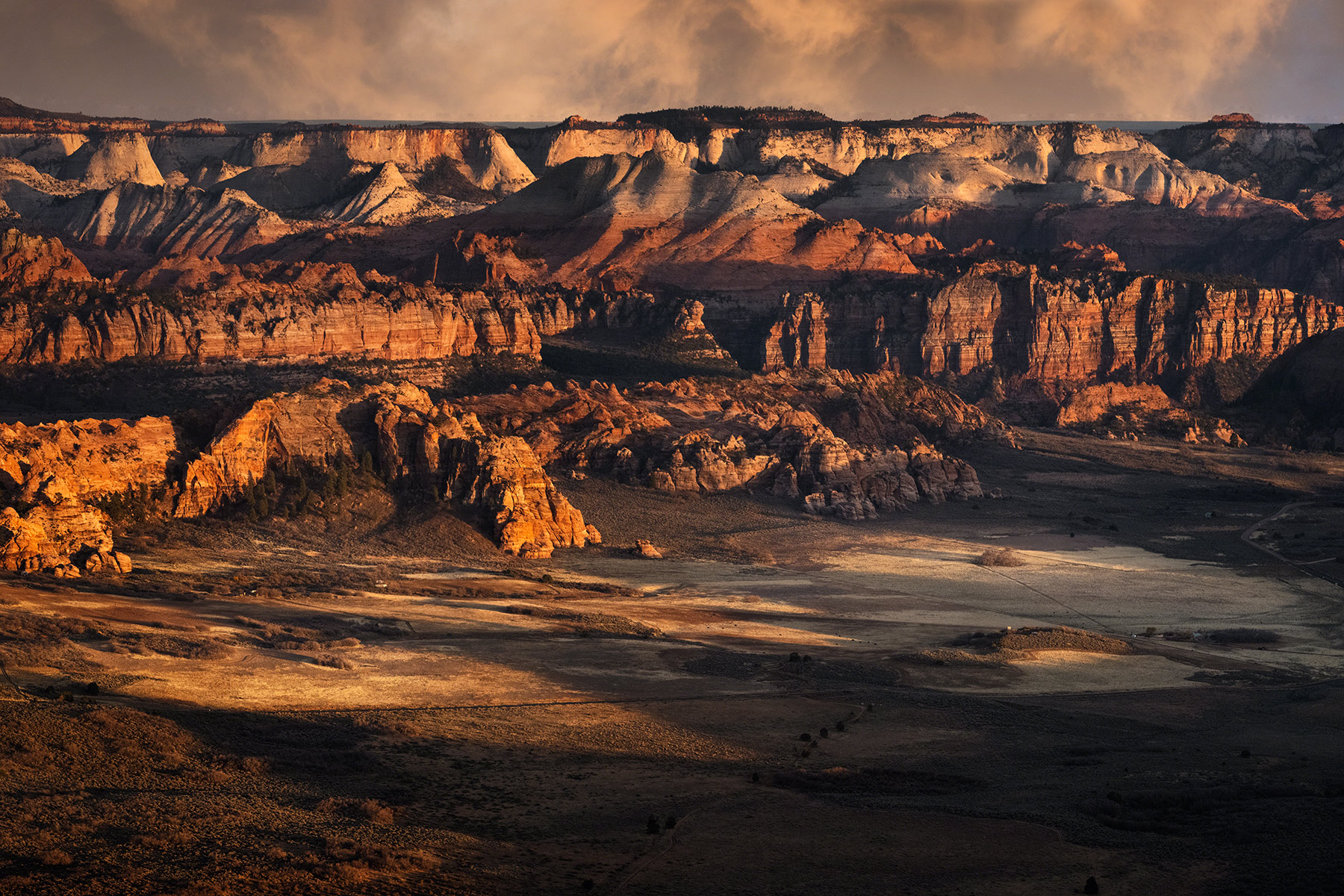
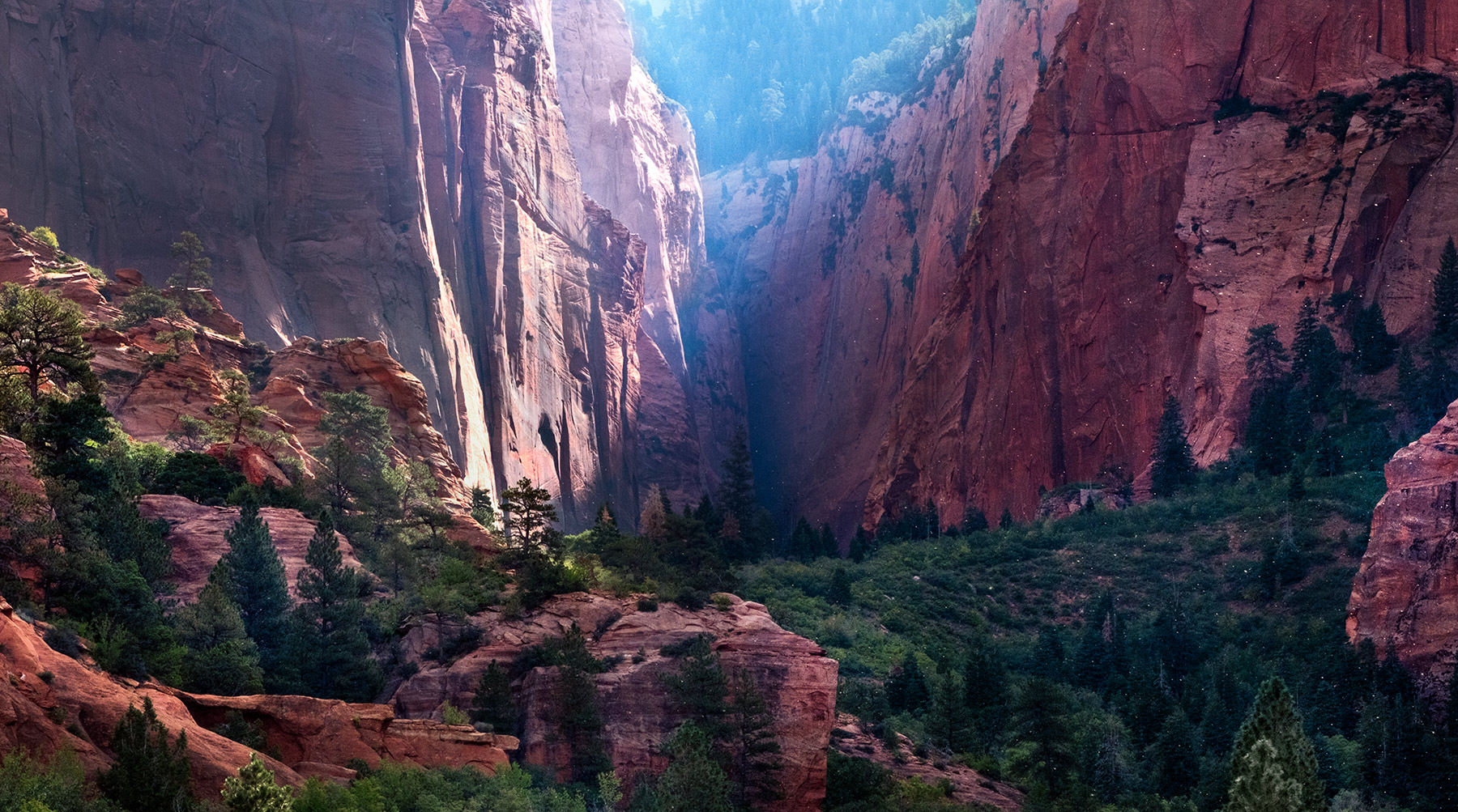
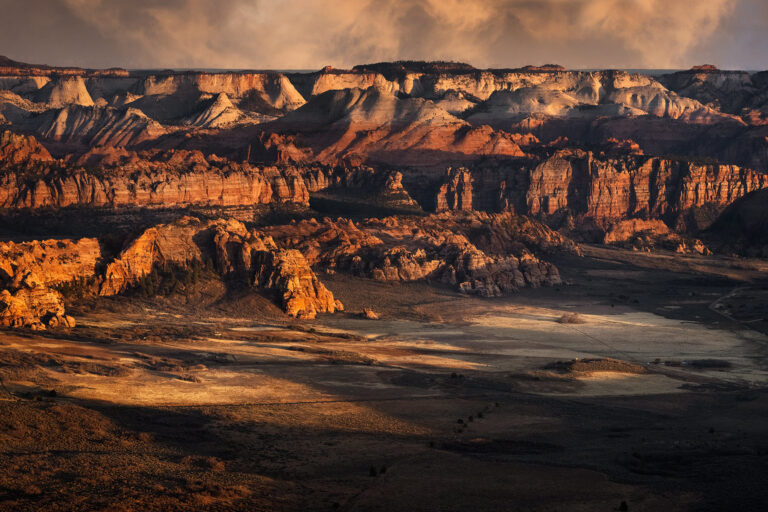
Evening light reveals the layers of sandstone formations and the immense scale of Kolob Terrace. FUJIFILM GFX100S, FUJINON GF 120mm f/4 Macro R LM OIS WR, f/8, ISO 2500
↑ Evening light reveals the layers of sandstone formations and the immense scale of Kolob Terrace. FUJIFILM GFX100S, FUJINON GF 120mm f/4 Macro R LM OIS WR, f/8, ISO 2500
Chasing the Magic
Words and Images by Karen Hutton
Real conservation begins when a place stops being scenery. That realization followed me home from Zion National Park in Utah after a FUJIFILM assignment for a project called “The Great American Road Trip.” I had chosen Zion because I’d only driven through it once before, during the national park closures, and even then, I could feel something in the landscape tugging at me.
I wanted to return and really explore it. To listen for its voice.
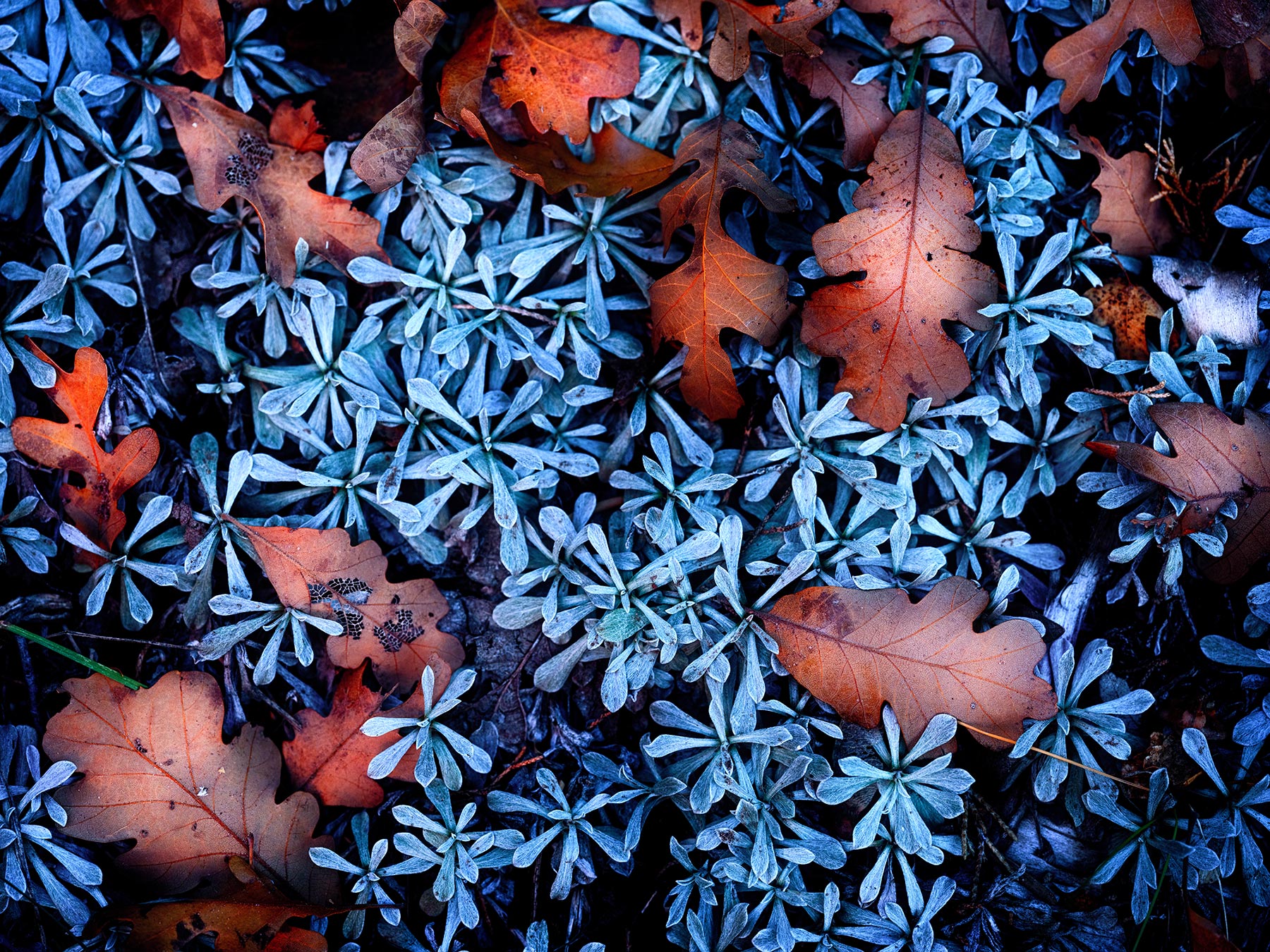
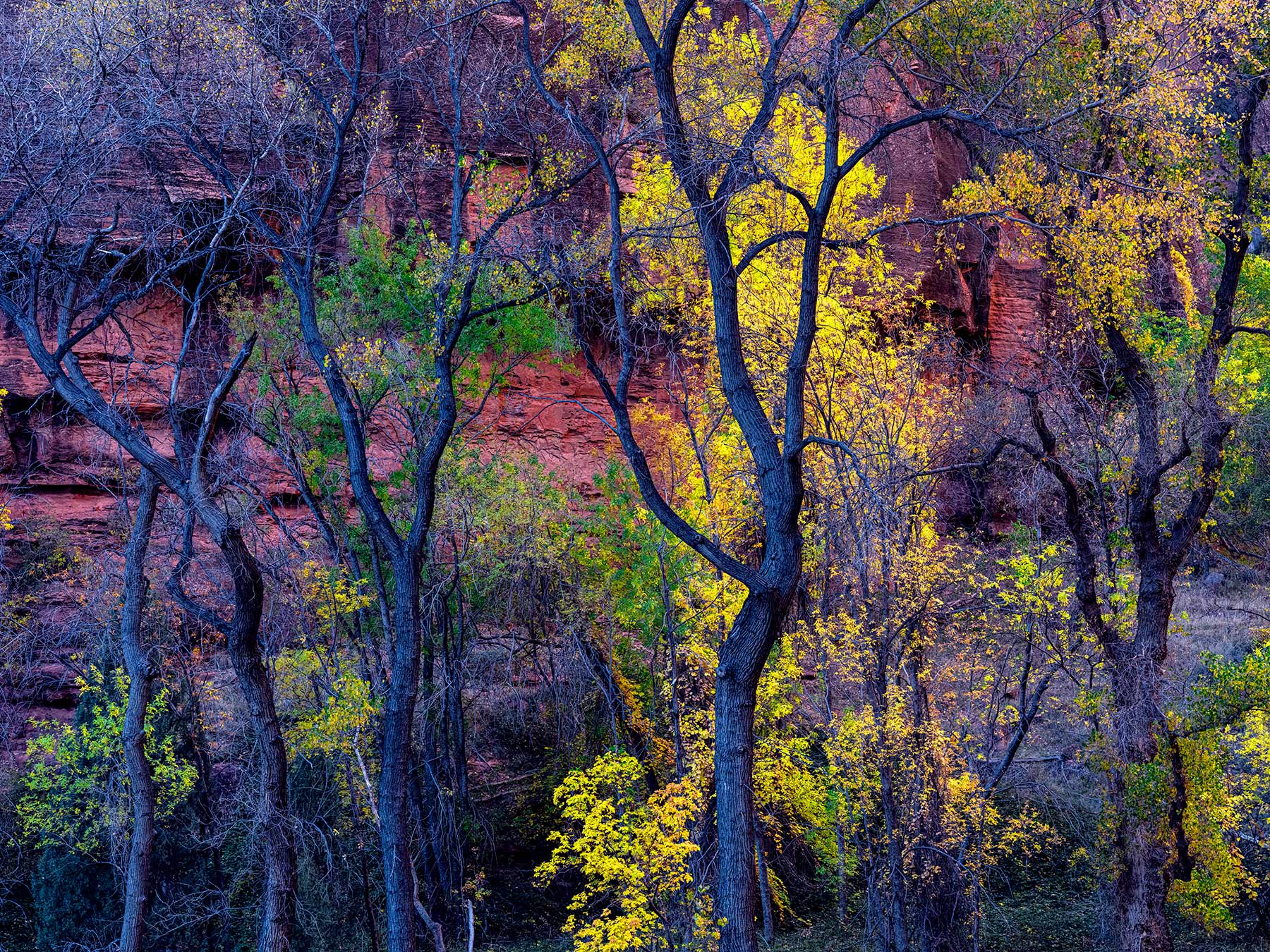
Autumn leaves and blue ground cover create an intricate conversation on the forest floor of in Kolob Canyons.FUJIFILM GFX100S, FUJINON GF 120mm f/4 Macro R LM OIS WR, f/5.6, ISO 800
The Challenge
Then FUJIFILM came up with a project. The company assigned me the FUJIFILM GFX 100s and FUJINON GF120mm macro lens, and the genre of landscape, and sent me out to see what I could create. I got to choose the park.
This assignment was already challenging — landscape photography in a national park with a macro lens. But hey, why not raise the bar a bit more? I planned my trip to Zion.
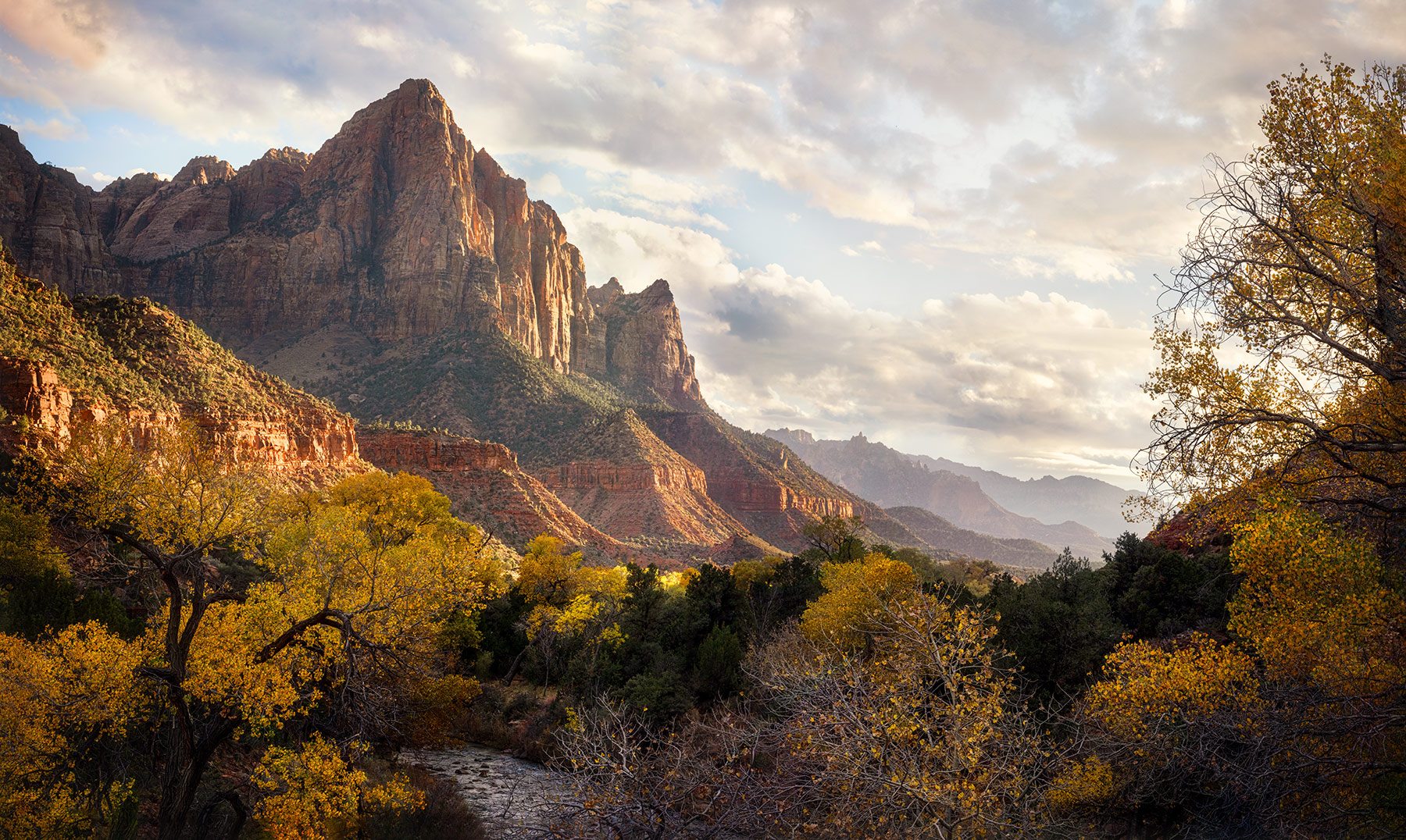
Evening light colors the peaks and forest with golden autumn, in this 6-image panoramic of Canyon Junction.FUJIFILM GFX100S, FUJINON GF 120mm f/4 Macro R LM OIS WR, F/11, ISO 500
Zion is one of the grandest landscapes in the American West — towering sandstone walls, immense canyons, sweeping geological drama stretching back roughly 150 million years. Most people associate macro photography with tiny subjects and close-up detail work, not vast national parks.
To most, the pairing of macro and grand landscape seemed contradictory, but to me, that was where the fun began. I’ve always enjoyed pushing perceptions of what a lens is “supposed to do” into the realms of “what else can it do?” What can it let me see differently? I was excited to see this iconic place through this completely unexpected lens choice. I knew it would bring the unexpected, and I welcomed it.
Recalibrating My Vision
Naturally, the first few days in Zion required a complete recalibration. Out went any pre-conceived ideas of typical Zion compositions. Forget anything I had ever seen online or in magazines. I thought I had cleansed my inner palette of those, but looking through that macro brought me back to ground zero.
I had to find a whole new way to orient myself. Not just physically within the park, but perceptually. The GF120 saw the park nothing like my eyes did. Places like the Court of the Patriarchs and some of the larger canyon scenes called for an entirely different visual conversation.
Technically, distances compressed differently. Layers stacked into one another. The camera’s sensor itself created these extraordinary planes of detail and depth that felt almost three-dimensional.
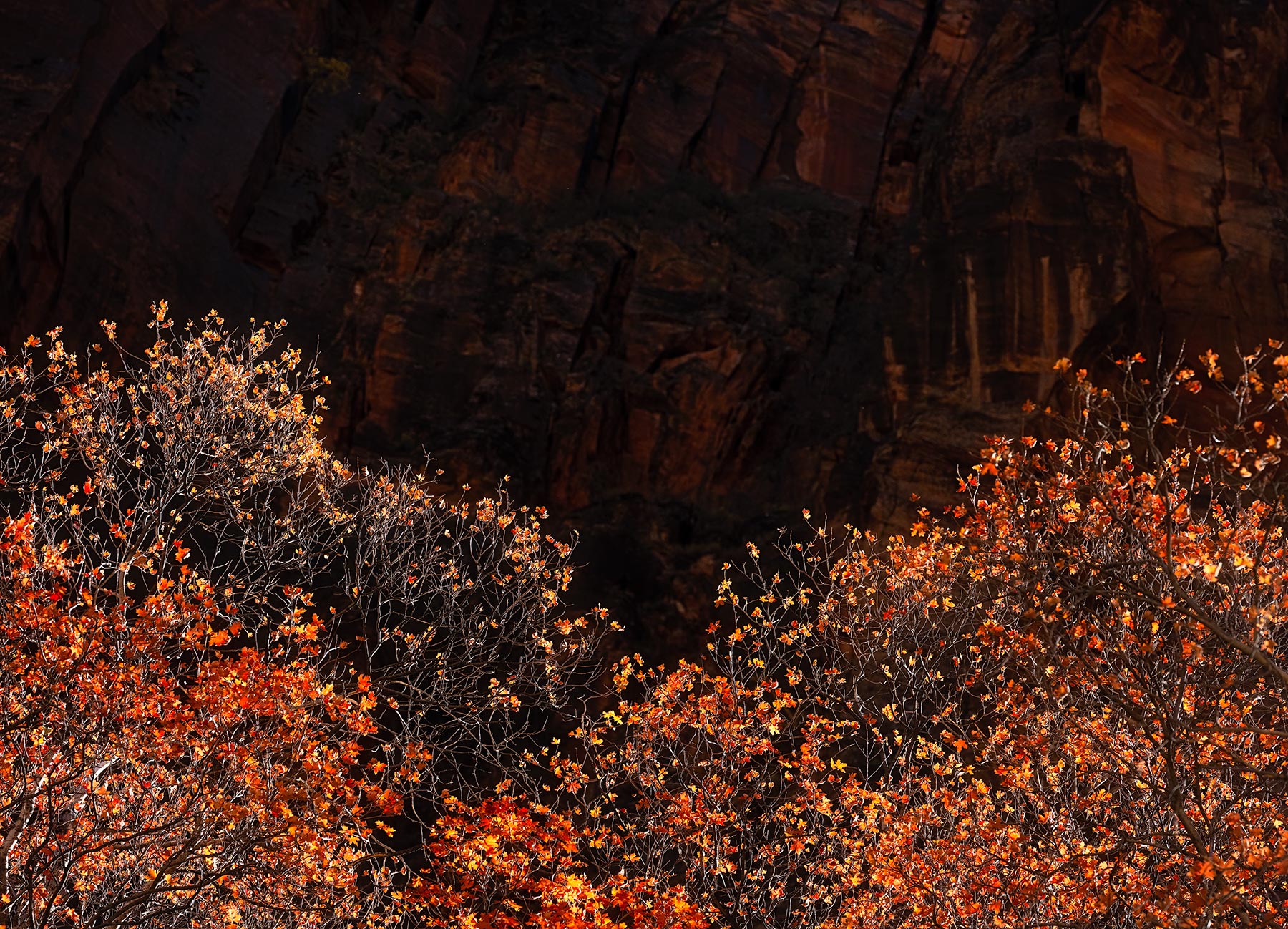
Autumn foliage glows in reflected light beneath the darkened walls of Zion Canyon.FUJIFILM GFX100S, FUJINON GF 120mm f/4 Macro R LM OIS WR, f/8, ISO 640
The crowds thinned. The pace softened. The landscape seemed to exhale.
So, clearing my mind of as many pre-conceived ideas as I could sweep out, I began asking questions as I peered through the lens. (The brain loves to answer questions; it’s hard-wired for it.) “Where’s the story? What do YOU see?”
One of my favorite things to do is talk to my gear. Doing this always helps me discover ideas, angles, and storylines I’d have never noticed otherwise.
It took a bit to find my stride, but once I surrendered the assumption that I already knew how to photograph the park, something shifted inside. My pace changed — it slowed and became more assured at the same time.
Weathered sandstone patterns carve winding paths across the surface of Checkerboard Mesa.FUJIFILM GFX100S, FUJINON GF 120mm f/4 Macro R LM OIS WR, f/20, ISO 640
I began to experience an entirely new level of awe. I found myself gasping at the beauty and poignancy pouring through my lens. The stories, the juxtapositions — suddenly the voice of the place became unmistakable.
That was the moment everything fell into place. No more seeking out iconic vistas and capturing them. Now I was being drawn into them. Receiving what they had to say. That changed the game entirely.
Spilling through the top of the canyon, light illuminates layers of sandstone and trees deep within the park.FUJIFILM GFX100S, FUJINON GF 120mm f/4 Macro R LM OIS WR, f/14, ISO 400
Fresh Eyes
One of the gifts of choosing a park I’d never visited before was that I had very little muscle memory to rely on. There were no favorite overlooks. No established routines. No mental catalog of shots I needed to come home with. Just curiosity. And a macro lens. As the days unfolded, I began to realize that Zion isn’t a single experience. It’s a collection of distinct voices.
The main canyon has one rhythm. The east side speaks another language entirely. The pale Navajo Sandstone catches light differently there, giving the landscape a brighter, more textured feel. Bighorn sheep move through the terrain as if they belong to the rock itself. More people find their way there, too.
Kolob Terrace feels different still. The Kolob Canyons area, which quickly became a favorite, possessed a quieter, more contemplative presence than some of the park’s more heavily visited areas.
The crowds thinned. The pace softened. The landscape seemed to exhale. Each section asked different questions. Each required a different kind of attention.
Autumn shadows and light soften the layers and textures of sandstone and trees within Zion Canyon.FUJIFILM GFX100S, FUJINON GF 120mm f/4 Macro R LM OIS WR, f/10, ISO 1600
Part of the challenge was practical. My husband was filming the project while dealing with a bad knee, so every day became a balancing act between finding the photographs I wanted to make and identifying locations where we could realistically capture video footage.
I scouted two stories at once: one through the viewfinder and one through the camera filming me. Sometimes that meant hiking. Sometimes it meant driving. Sometimes it meant finding creative ways to move through the landscape while conserving both time and energy.
One of our best decisions was renting electric bikes to explore Zion. Suddenly, we weren’t locked into shuttle stops or parking areas. We could move slowly. Stop whenever something caught our attention. Turn around. Wait for light. Follow curiosity.
That slower pace became the director of experience. The canyon became less of a place to photograph and more of a place to listen.
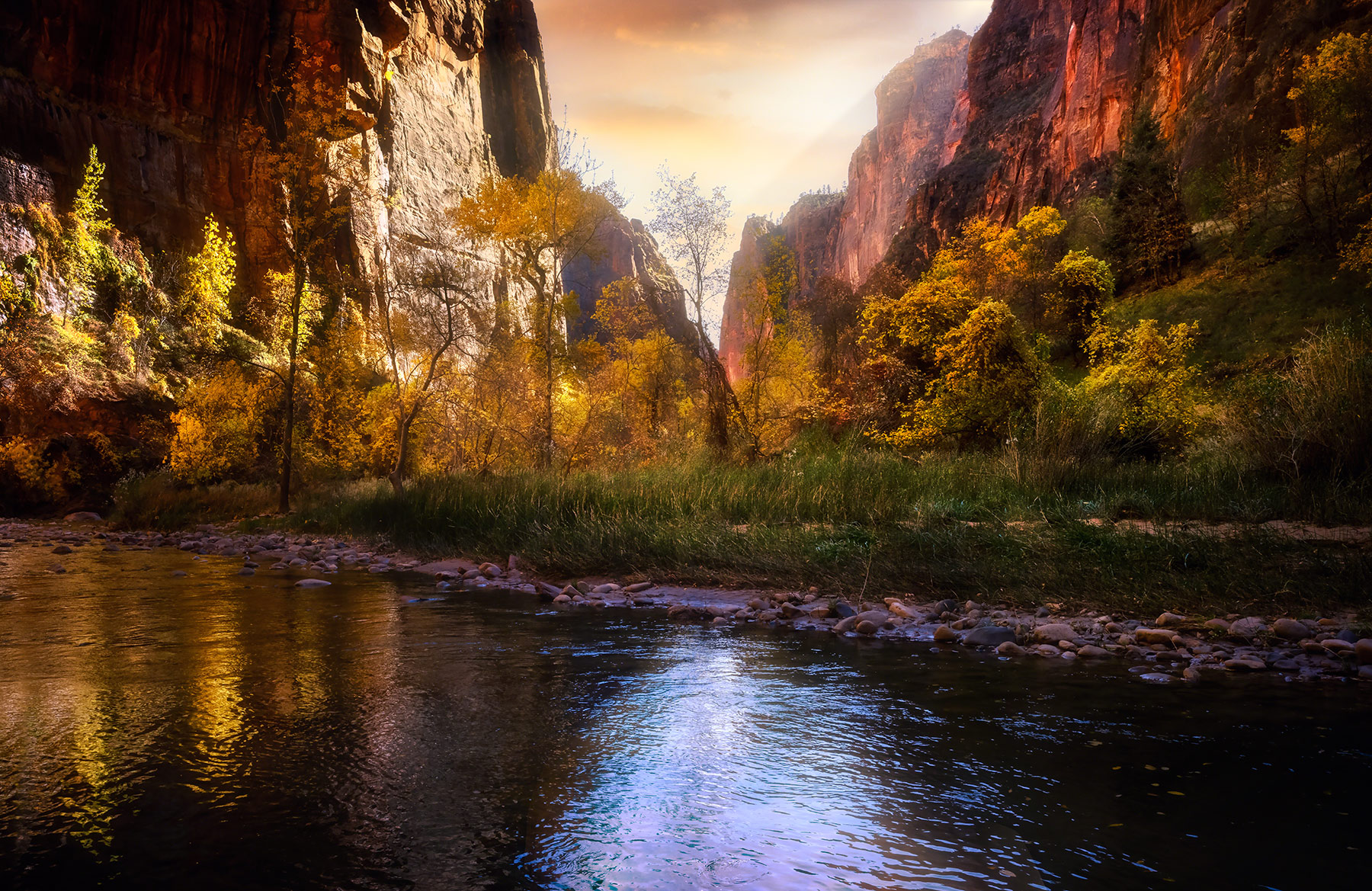
Autumn sunset highlights trees along the Virgin River beneath the canyon walls of the Temple of Sinawava.FUJIFILM GFX100S, FUJINON GF 120mm f/4 Macro R LM OIS WR, f/20, ISO 800
The Direction of Light
What fascinated me most was how differently the GF120 interpreted distance. A lens like this doesn’t simply magnify details. It reorganizes relationships. Distances compressed gently. Depth of field sharpened the stories. Subjects that might have felt disconnected with a wider lens suddenly became part of the same visual sentence.
The longer I worked with it, the more I stopped thinking about what the lens couldn’t do and became fascinated by what it could do. The assignment had started as a constraint, but now it felt like an invitation.
I found myself lingering over things I might otherwise have walked past. Patterns in Navajo Sandstone that looked like frozen waves. Leaves stamped into wind-shaped sand. Tiny trees growing from impossible cracks in sheer rock walls. The way autumn color transformed entire sections of canyon into intricate tapestries of gold, rust, green, and red. The way reflected light could completely redefine a scene. That last one became a particular obsession.
Light reveals an intricate outline within weathered Navajo Sandstone on Kolob Terrace.FUJIFILM GFX100S, FUJINON GF 120mm f/4 Macro R LM OIS WR, f/26, ISO 320
In many landscapes, light arrives directly from the sky. In Zion, light often arrives indirectly. It bounces, reflects, breathes. It spills from unexpected directions and illuminates parts of the landscape that seem impossible until you’re standing there watching it happen.
The canyon walls themselves become participants in the light. At times, they seemed less like stone and more like enormous reflectors, gathering sunlight and redistributing it throughout the landscape.
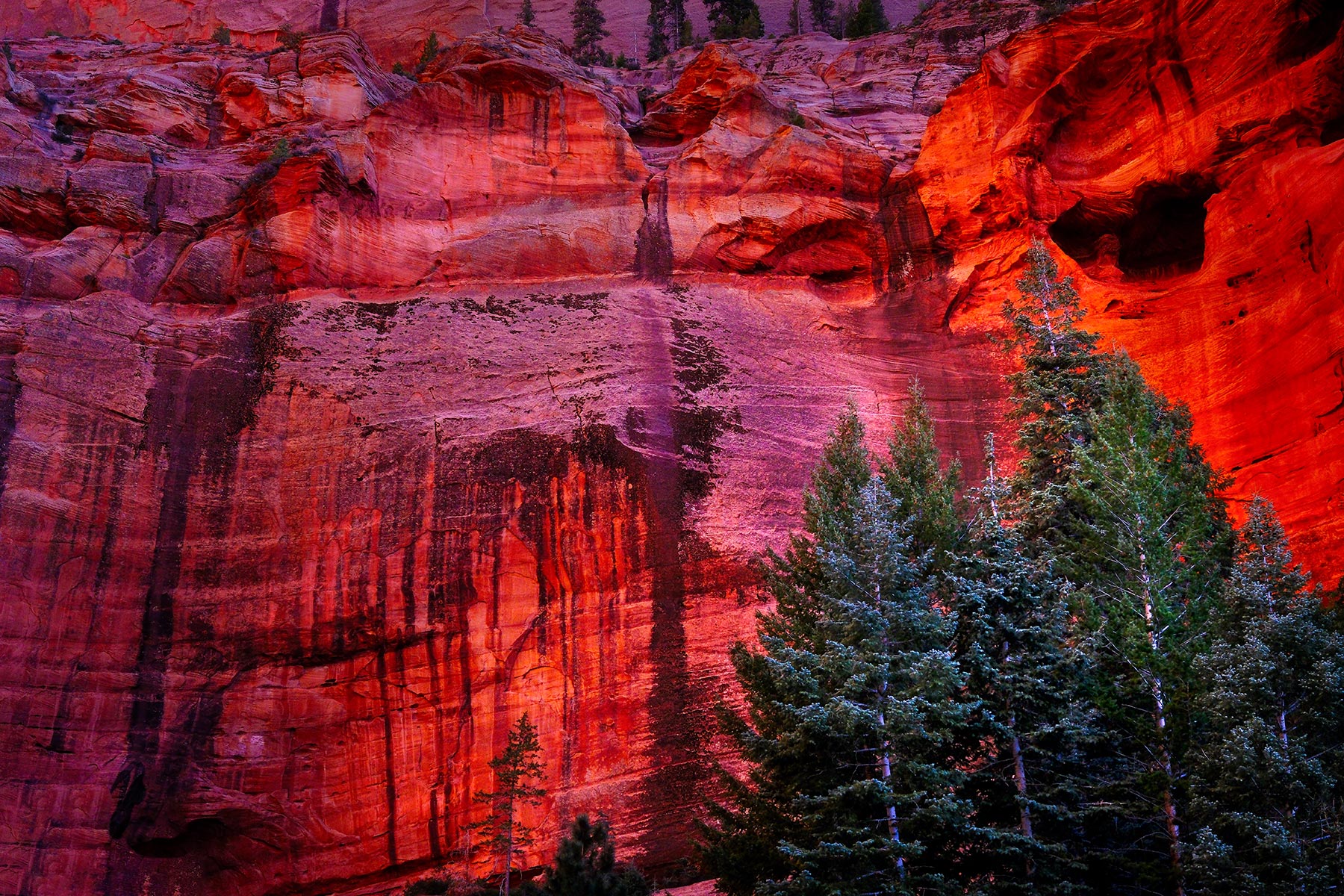
Reflected light colors Kolob Canyons a fiery red, revealing layers of color that contrast with evergreen trees.FUJIFILM X-T5, FUJINON XF 30mm f/2.8 R LM WR Macro, f/11, ISO 1000
You experience shifting distances, reflected light, textures, curves, shadow rhythms, and weathered sandstone patterns.
Entire worlds emerged from those interactions. A wall that appeared flat suddenly revealed texture and depth. A shadowed grove began to glow. A solitary tree became the focal point of an entire canyon. The park kept teaching me the same lesson over and over again: Pay attention. Then pay more attention.
What struck me most wasn’t how much there was to see. It was how much became visible once I stopped trying to direct the experience and simply participate in it. The lens had altered my pace. That altered my attention. And attention altered my relationship with the place itself.
By then, I had stopped worrying about whether I was making the kinds of photographs people expected from Zion. The park had become far more interesting than my expectations of it.
I was no longer looking for proof that a macro lens could photograph a grand landscape. I was discovering how a grand landscape could reveal itself through a macro lens. That distinction changed everything. What began as a technical challenge had quietly become an exercise in attention. The more closely I looked, the more the park revealed.
Not just details, but relationships. Conversations between light and stone, weather and time, color and texture. The photographs were simply where those conversations became visible.
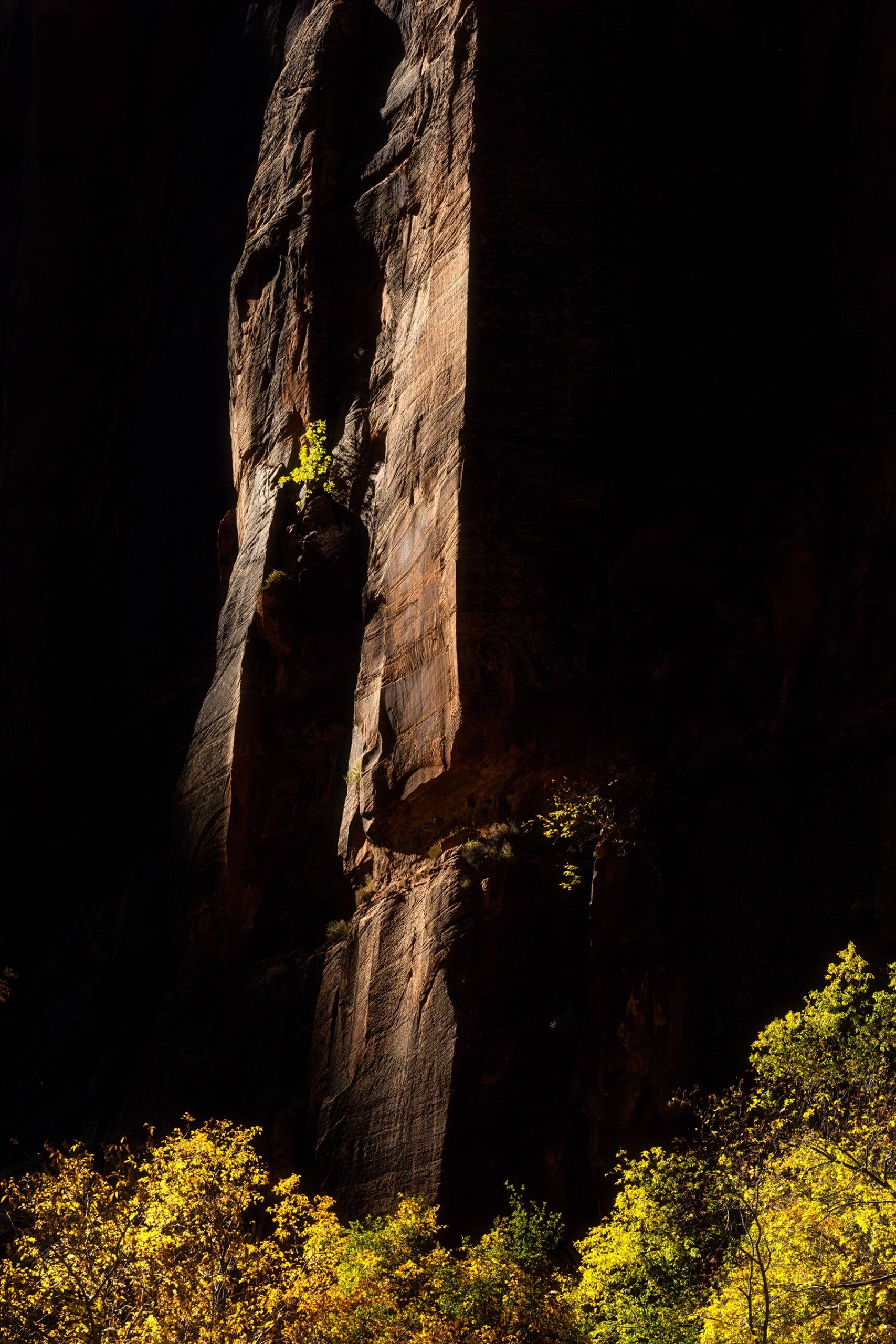
Light and shadow carve through Zion’s sheer walls, illuminating a lone tree high within the canyon.FUJIFILM GFX100S, FUJINON GF 120mm f/4 Macro R LM OIS WR, f/16, ISO 500
Zion is fascinating because of its scope and grandeur, but what most people miss is that it’s also deeply intimate. You’re often inside the canyons looking up rather than looking down into them.
You experience shifting distances, reflected light, textures, curves, shadow rhythms, and weathered sandstone patterns. The park reveals itself in layers. And the macro lens amplified that feeling. Scale stopped being the dominant organizing principle. Intimacy replaced spectacle.
The more time I spent with the lens, the more I realized that I was learning to see relationships differently. Light against texture. Curves against shadow. Evergreen against impossibly red stone. Fall leaves grasping their branch for one more ray of light. Reflected glow spilling across canyon walls. Epic, I realized, isn’t a matter of size. It’s a matter of design.
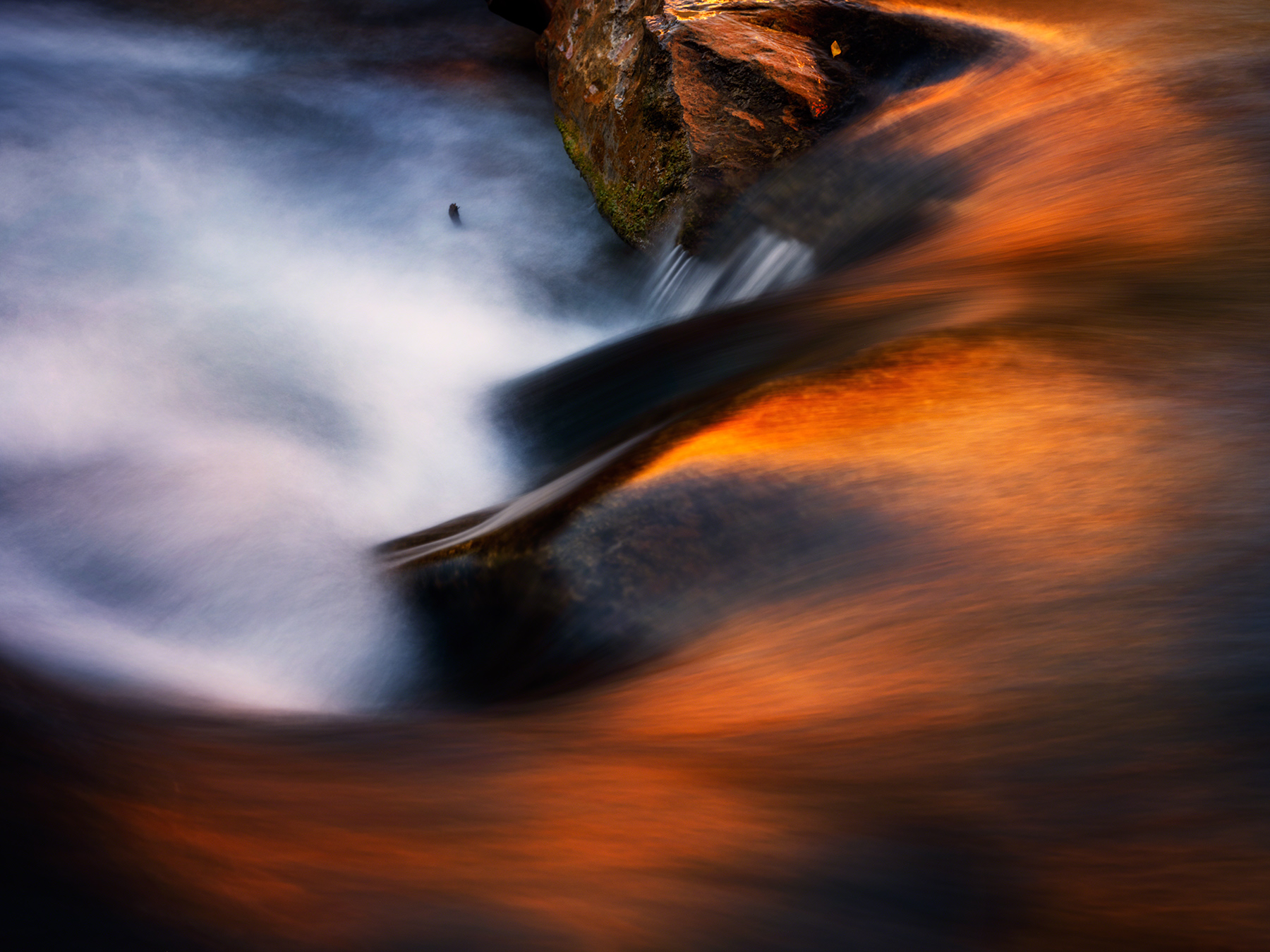
Reflected light and flowing water reveal abstract patterns along the canyon floor at Court of the Patriarchs.FUJIFILM GFX100S, FUJINON GF 120mm f/4 Macro R LM OIS WR, f/11, ISO 200
One of the biggest surprises was Zion’s light. I expected dramatic canyon light, of course, but I didn’t expect the sheer amount of reflected light constantly bouncing through the park.
Canyon walls themselves become luminous, but not from direct light — from the reflection of it. The way light spills through crevices and canyon openings, ricocheting across sandstone and illuminating entire worlds within worlds.
At the Temple of Sinawava, if you arrive at exactly the right moment, the reflected light becomes almost theatrical. Miss that window, and it’s as if someone shut the whole thing off. The difference can be astonishing. Timing in Zion isn’t just important — it’s everything.
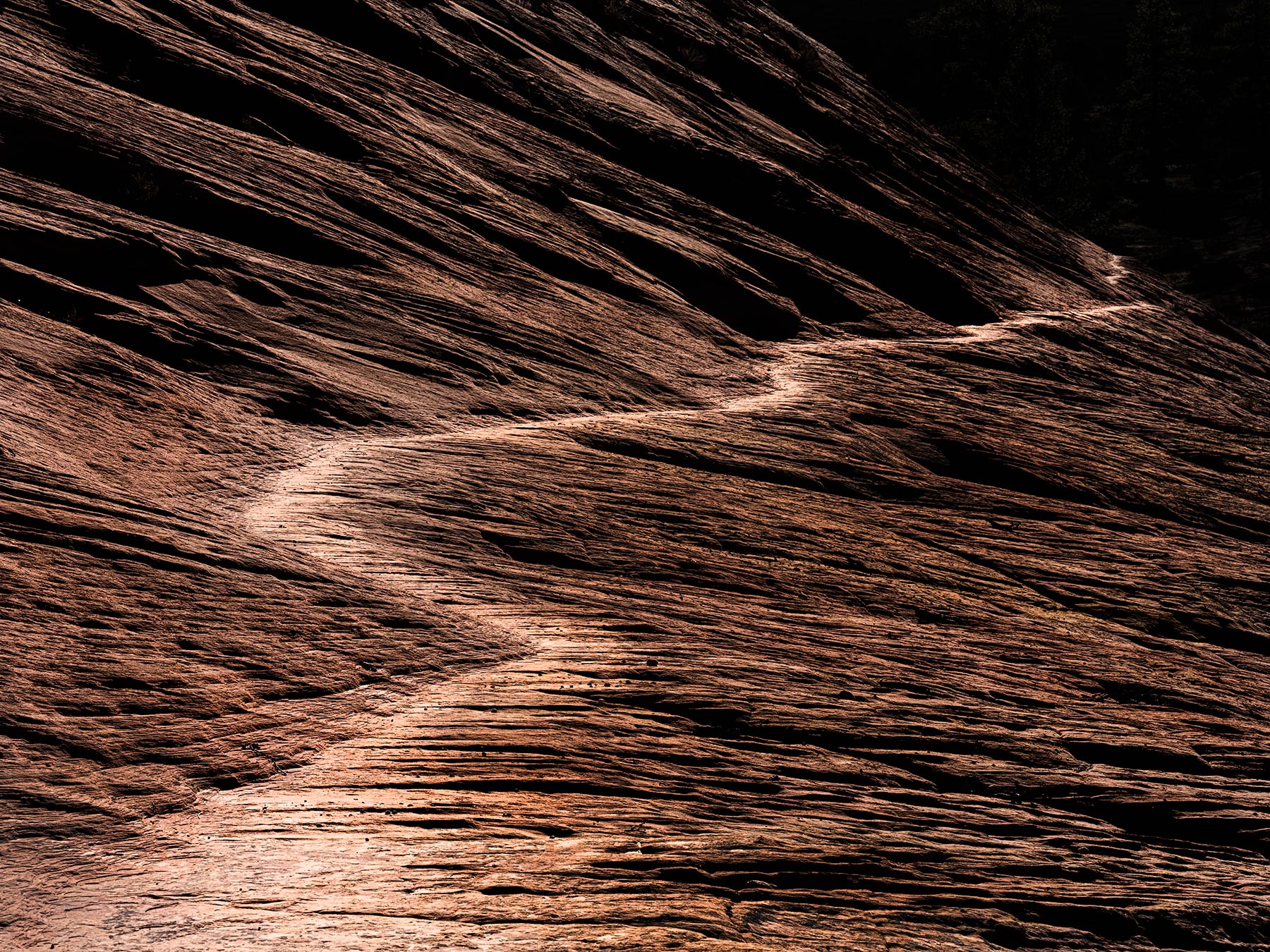
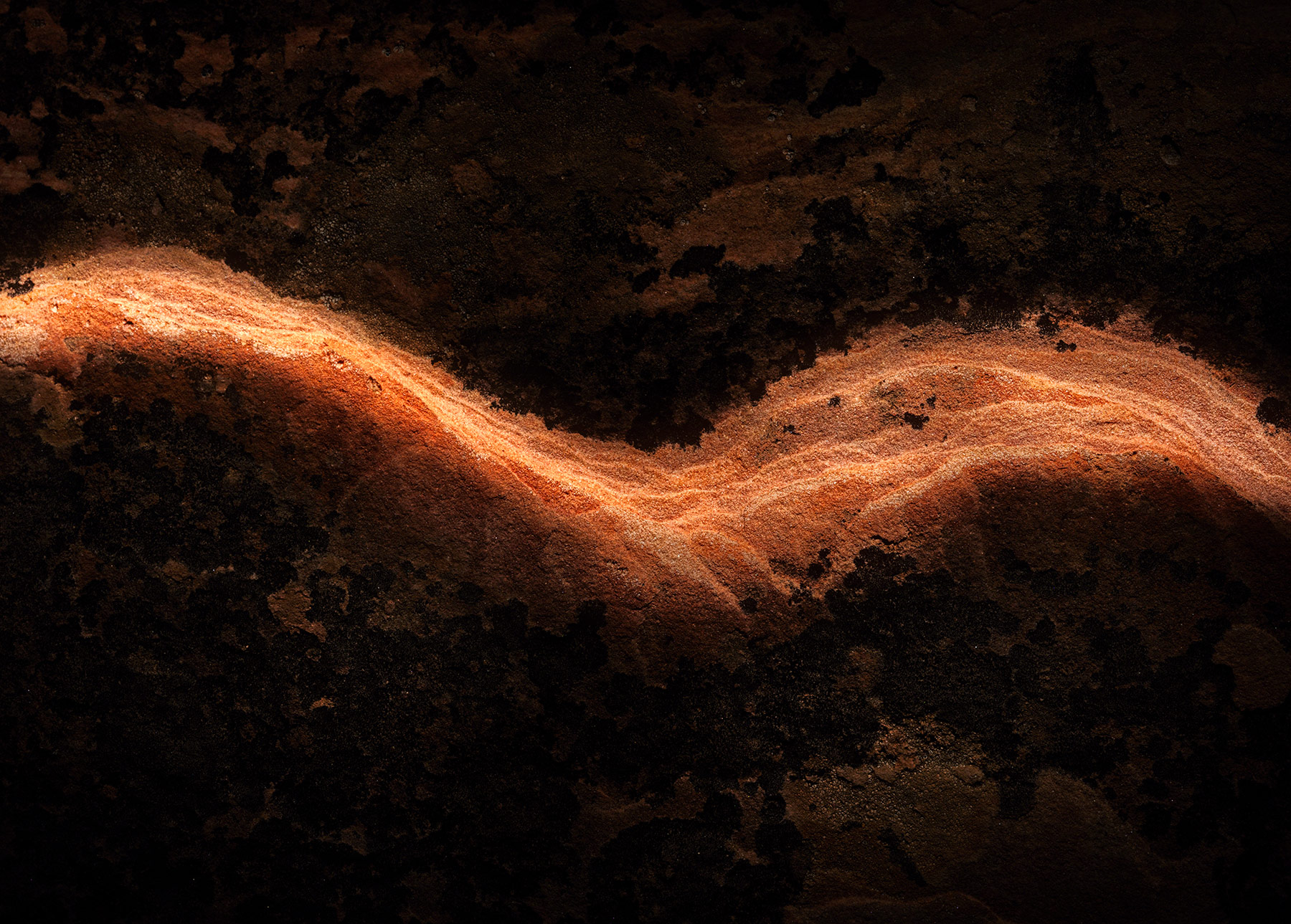
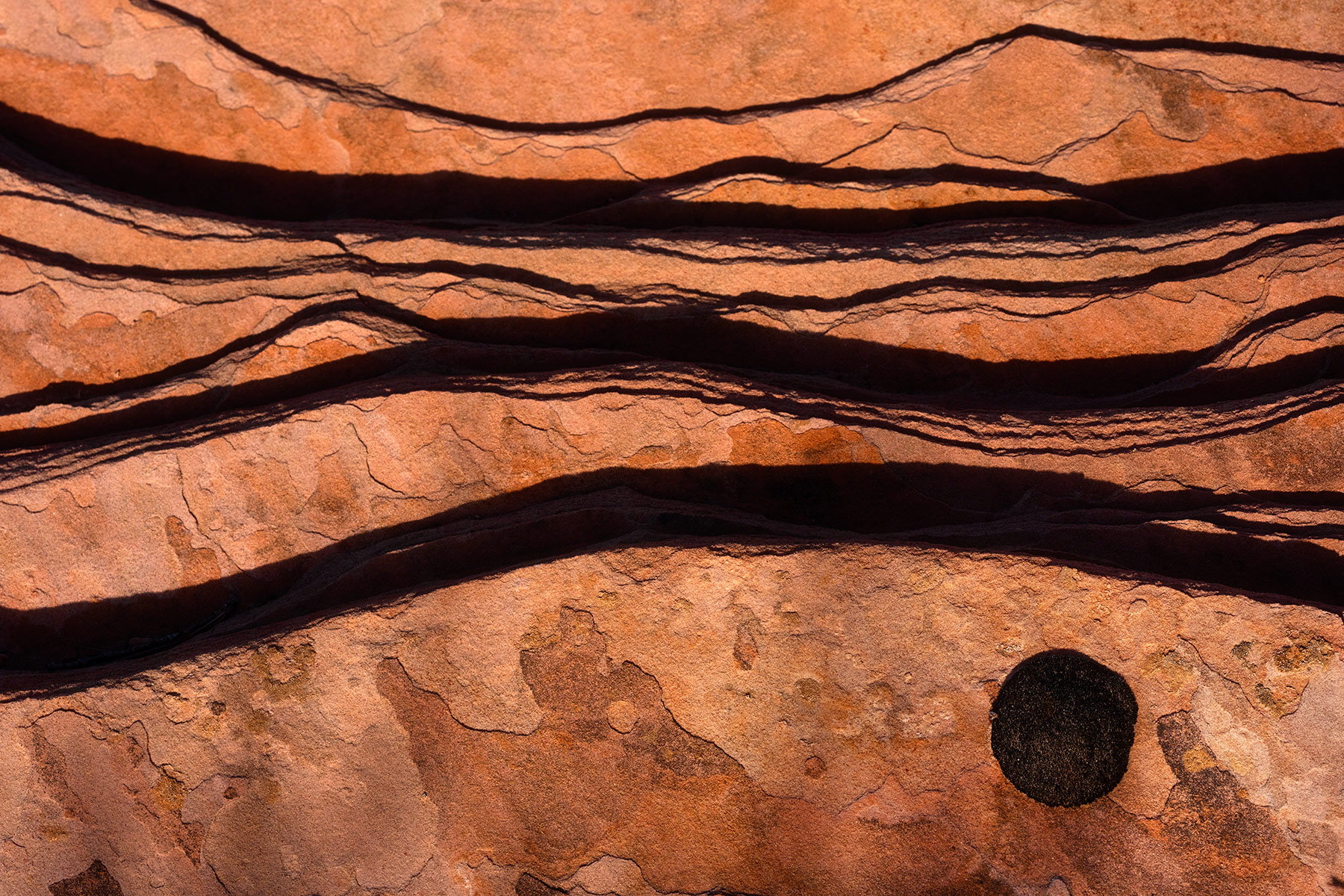
Light and shadow define flowing patterns of weathered paths carved into Navajo Sandstone on Kolob Terrace.FUJIFILM GFX100S, FUJINON GF 120mm f/4 Macro R LM OIS WR, f/14, ISO 640
I became obsessed with those transitions. The way light hummed through smoke and atmosphere in Kolob Canyons. The way shadow carved rhythm into sandstone. The way distant layers compressed softly into one another through the wizardry of the GFX 100s/ GF120 combination. The way weather and erosion had sculpted patterns into Navajo Sandstone that looked like frozen waves.
Learning From a Lens
Everywhere I looked, the landscape felt expressive. Not scenery. Expression. The formations looked almost hand-carved, though they were entirely natural. Wind, water, time, pressure. Nature drawing slowly across stone over unimaginable spans of time. Those moments didn’t feel separate from the larger landscapes. They were the larger landscapes. That was the revelation.
The macro lens never diminished Zion’s grandeur. If anything, it deepened it by inviting me into a closer, more rarified relationship with it. The park’s massive scale remained fully present, but it stopped dominating my attention. Instead, every detail became part of a larger living conversation — texture, light, distance, atmosphere, silence, shape, rhythm.
This wasn’t about me solving a visual challenge. I was inhabiting the landscape differently, and that matters. Photography influences not only what we see but how connected we feel to a place. People protect what they feel connected to.
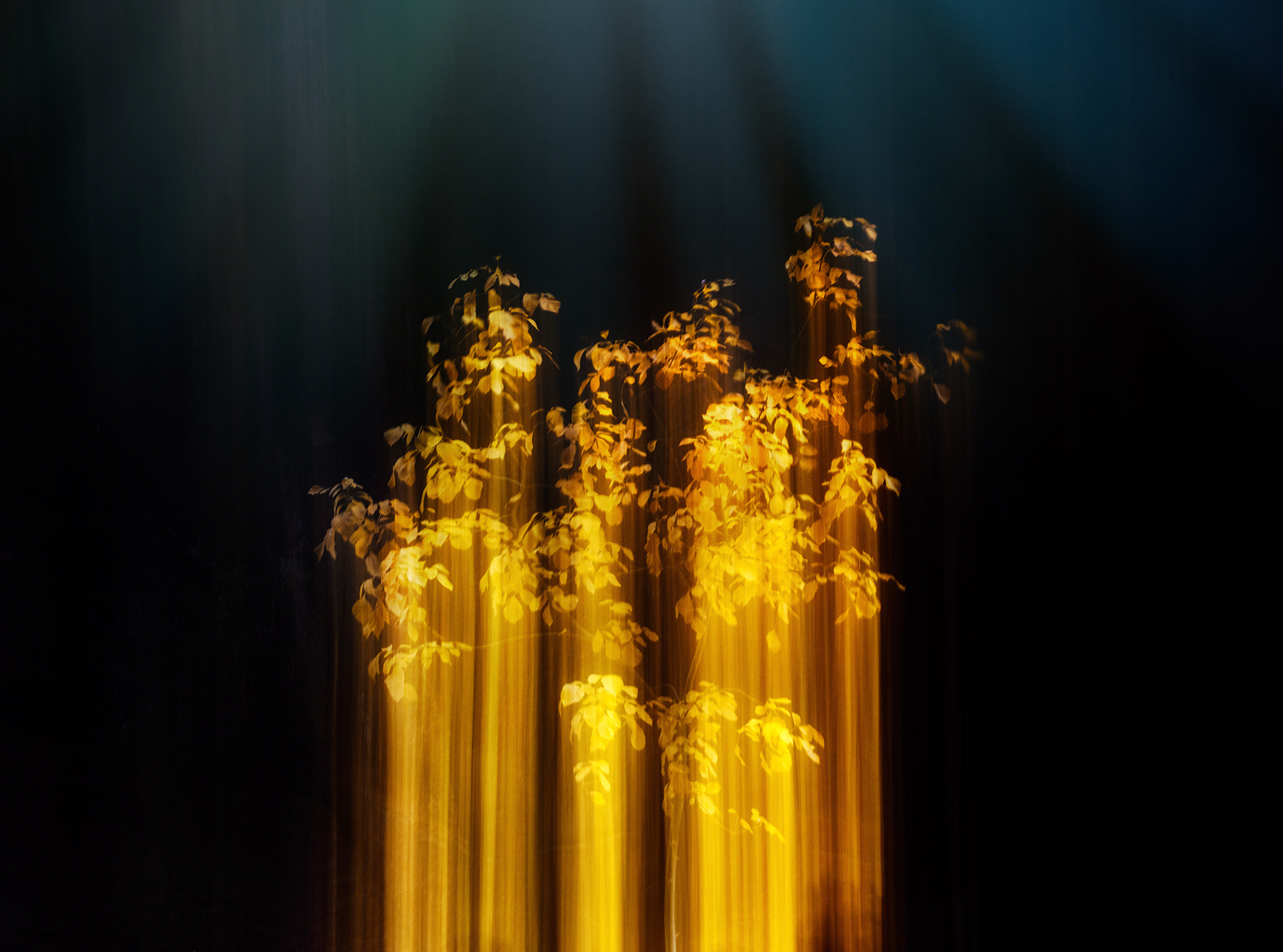
A moment of light captured shining on yellow leaves, put in motion by intentional camera movement.FUJIFILM X-T5, FUJIFILM XF 18-135mm f/3.5-5.6 R LM OIS WR, f/14, ISO 400
Conservation doesn’t begin with data, warnings, or even beautiful photographs. It begins when a place stops being a backdrop and becomes a relationship. When attention deepens enough that the land no longer feels decorative or distant —but alive with presence, detail, and meaning — it becomes personal.
For me, Zion became all that through constraint. Through curiosity. Through slowed attention. Through allowing the lens to draw me into another way of seeing.
I went willingly. I entered the park knowing I was going to photograph a famous landscape. I left feeling like I’d been in a personal conversation with it. And somewhere in that shift — from spectacle to relationship, from hunting to receiving — the experience became something larger than photography itself.
To provide the best experiences, we use technologies like cookies to store and/or access device information. Consenting to these technologies will allow us to process data such as browsing behavior or unique IDs on this site. Not consenting or withdrawing consent, may adversely affect certain features and functions.
Functional
Always active
The technical storage or access is strictly necessary for the legitimate purpose of enabling the use of a specific service explicitly requested by the subscriber or user, or for the sole purpose of carrying out the transmission of a communication over an electronic communications network.
Preferences
The technical storage or access is necessary for the legitimate purpose of storing preferences that are not requested by the subscriber or user.
Statistics
The technical storage or access that is used exclusively for statistical purposes.The technical storage or access that is used exclusively for anonymous statistical purposes. Without a subpoena, voluntary compliance on the part of your Internet Service Provider, or additional records from a third party, information stored or retrieved for this purpose alone cannot usually be used to identify you.
Marketing
The technical storage or access is required to create user profiles to send advertising, or to track the user on a website or across several websites for similar marketing purposes.
To provide the best experiences, we use technologies like cookies to store and/or access device information. Consenting to these technologies will allow us to process data such as browsing behavior or unique IDs on this site. Not consenting or withdrawing consent, may adversely affect certain features and functions.
Functional
Always active
The technical storage or access is strictly necessary for the legitimate purpose of enabling the use of a specific service explicitly requested by the subscriber or user, or for the sole purpose of carrying out the transmission of a communication over an electronic communications network.
Preferences
The technical storage or access is necessary for the legitimate purpose of storing preferences that are not requested by the subscriber or user.
Statistics
The technical storage or access that is used exclusively for statistical purposes.The technical storage or access that is used exclusively for anonymous statistical purposes. Without a subpoena, voluntary compliance on the part of your Internet Service Provider, or additional records from a third party, information stored or retrieved for this purpose alone cannot usually be used to identify you.
Marketing
The technical storage or access is required to create user profiles to send advertising, or to track the user on a website or across several websites for similar marketing purposes.