The Cost of a Changing Arctic
Few photographers working today navigate the intersection of visual storytelling and science with as much clarity and conviction as Katie Orlinsky.
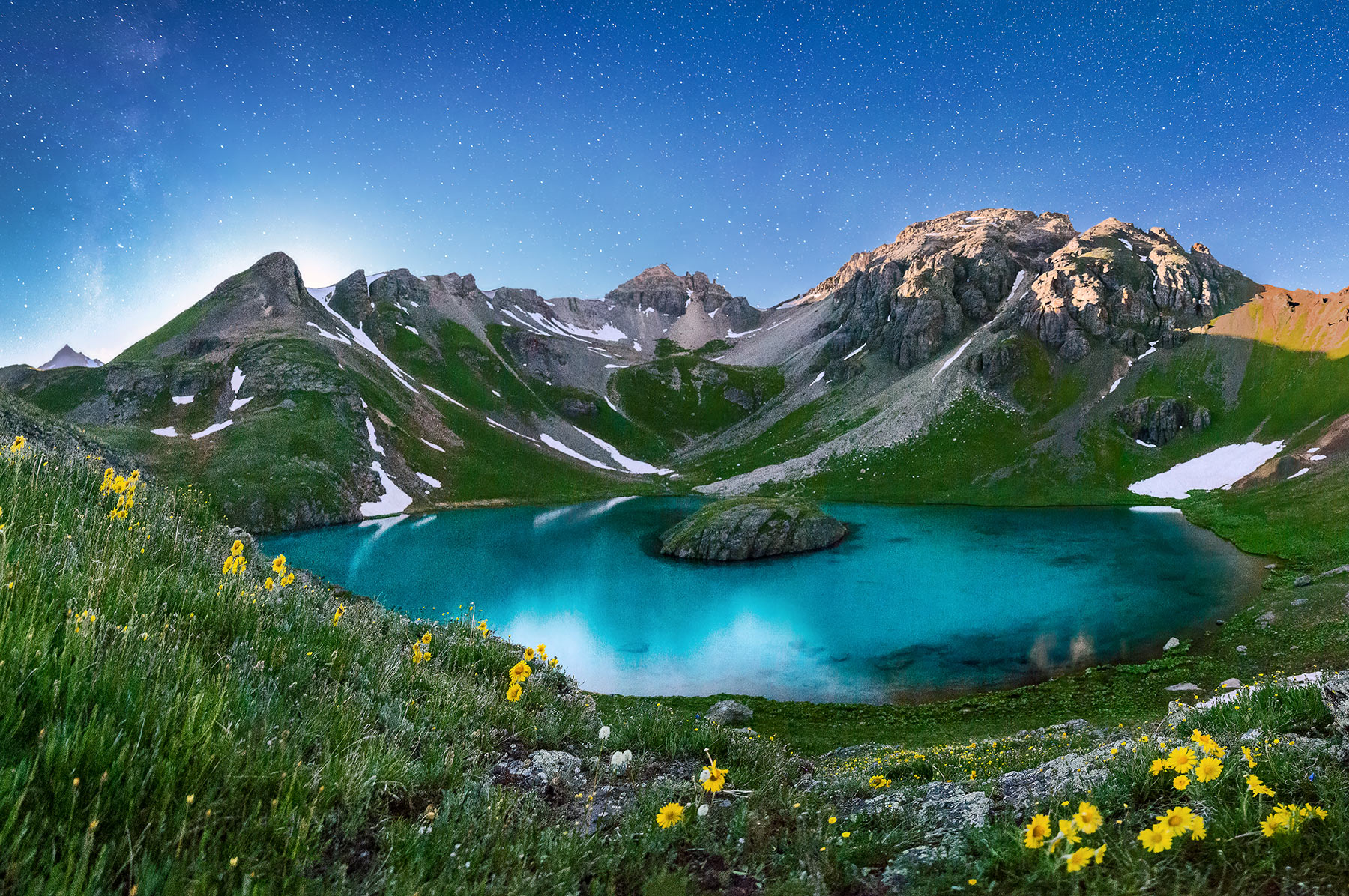
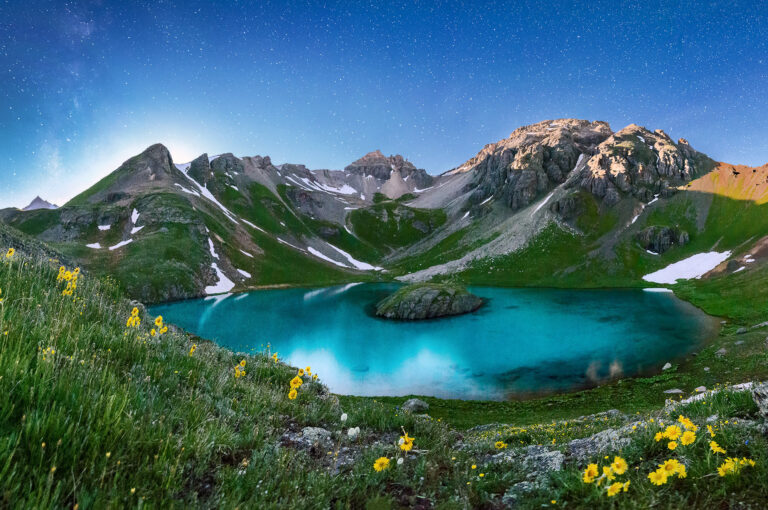
↑ Ice Lake Basin, Colorado Upon my first visit to Ice Lake, I was inspired to capture the lake under moonlight, surrounded by stars and wildflowers. What the image can’t show is the eroded and illegal campsites that now ring the basin, one of the most documented cases of geotag-driven overuse in Colorado.
Words and Images by Matt Payne
On an ordinary July weekend morning in 2013, I hiked into Ice Lake Basin in Colorado and found myself completely alone.
No headlights at the trailhead before dawn, no line of hikers climbing the switchbacks, no drones humming over turquoise water.
Just wind moving through alpine tundra and the quiet shock of color when the basin finally revealed itself. I remember standing there, unsure whether to photograph first or simply sit. It felt less like arriving at a destination and more like being admitted into something sacred. It was a transformative experience in my landscape photography journey and really connected me to the place I now call home in the San Juan Mountains of Colorado.
Just three years later, in 2016, when I returned on another summer weekend, the experience was different. The basin was still beautiful, but the silence had been replaced by a steady procession of people with selfie sticks, each chasing a version of the image they had already seen online. Years ago, reaching a place like this required curiosity, research, wrong turns, map-reading skills, and a certain amount of stubbornness. The effort shaped the experience. It created reverence.
Today, the trailhead often fills before sunrise. Lines form along the fragile lakefront. Drones buzz. Social media has accomplished what maps, guidebooks, and whispered local knowledge never could: It has collapsed the distance between discovery and arrival. The landscape once stood unchanged, but our relationship to it shifted, and over time, the evidence of that shift became visible on the ground, gradually reshaping the experience of being there.
This isn’t an argument against sharing beauty. It’s an examination of how beauty travels now, of how attention scales, of what happens when conflict arises, and of the responsibility that follows. If there’s a thesis to this conversation, it’s simple: It starts with us.
Photography has long been intertwined with exploration. It’s one of the things I love about landscape photography. You never know what beautiful scene you might stumble upon if you simply allow yourself the freedom to explore.
Historically, discovering a compelling location involved layers of effort, such as studying topographic maps, listening to local advice, returning repeatedly in different seasons, and occasionally failing outright. The benefits of that effort weren’t merely logistical; they were psychological. Research in social psychology, particularly Leon Festinger’s 1957 theory of cognitive dissonance, suggests that humans assign greater value to outcomes earned through effort. When we work for something, we tend to protect it.
The rise of Instagram and similar platforms has altered this dynamic profoundly. A single compelling image or reel can now redirect thousands of people to a location within days. Algorithms amplify what performs well, and dramatic natural beauty performs exceptionally well. This creates a feedback loop: Striking images attract attention, attention drives visitation, visitation produces more images, and the cycle repeats.
A more recent shift has accelerated this dynamic — the race to produce constant short-form content. Many creators now feel pressure to generate as many reels as possible in pursuit of viral reach, fleeting recognition, and modest payouts through platform monetization programs such as Meta’s. Volume, not reflection, becomes the metric, and visibility becomes the reward. When income and validation are tied to engagement, the incentive quietly shifts away from stewardship, towards spectacle.
Sometimes this encourages behavior that prioritizes dramatic footage over ethical judgment, whether that means approaching wildlife too closely, revealing sensitive locations, or staging moments that place fragile environments under strain. The issue isn’t that people seek to share their work. It’s that systems rewarding speed, quantity, and virality can normalize decisions that, in another context, most of us would recognize as careless. If we’re honest, this is less about technology itself and more about the values we allow it to reinforce.
Photographers, me included, helped build this system. We celebrated the reach, appreciated the exposure, and participated in the digital democratization of imagery. But as amplification intensified, something subtle shifted. In many places, the experience of discovery gave way to the consumption of location coordinates.
The consequences of digital amplification aren’t confined to one basin in Colorado. They form a recognizable pattern across ecosystems and cultures.
In Thailand, Maya Bay’s coral reefs were devastated by extreme tourism pressure, leading authorities to close the site for ecological recovery. In Iceland, Fjaðrárgljúfur Canyon experienced severe vegetation damage following a surge in visitation tied directly to social media exposure. Temporary closures became necessary to protect fragile moss and soil. In Colorado, Conundrum Hot Springs was overwhelmed to such an extent, that human waste management became a crisis, a situation documented by land managers and public radio alike.
Elsewhere, the impacts have been cultural and infrastructural. Hallstatt, Austria, a village of fewer than 1,000 residents, began receiving up to 10,000 visitors per day after being dubbed “the most Instagrammable town in the world.” Tourists wandered into private homes seeking photographs. In Paris, residents of Rue Crémieux requested gates to block relentless photo traffic that disrupted daily life.
In Kyoto’s historic Gion district, city officials in 2024 restricted tourist access to private alleys after geishas faced paparazzi-like behavior from visitors intent on capturing viral content. In Hokkaido, Japan, farmers responded to mass visitation by cutting down trees that had become photo backdrops after repeated busloads of tourists overwhelmed their private property, leaving trash, waste, and disruption in their wake.
Trolltunga in Norway saw visitation skyrocket from approximately 800 hikers in 2010 to 80,000 within six years, resulting in long lines on exposed cliffs and frequent rescue operations for unprepared hikers. In Yellowstone National Park, visitors seeking dramatic wildlife selfies have caused dangerous encounters, including the widely reported euthanization of a bison calf after human interference.
Local communities have begun pushing back. Jackson Hole launched a “Tag Responsibly” campaign, urging visitors not to geotag fragile sites. Across parts of Spain in 2024, residents protested tourism pressures exacerbated by viral exposure. Bali implemented a tourist levy designed specifically to fund environmental protection and cultural preservation in response to overtourism.
These examples differ in geography and culture yet share a common thread: rapid amplification without proportional stewardship.
Gated content.
Explore this Issue