Features, Landscape
By Jon McCormack | November 2026
As a photographer, my job is to make the world look beautiful … or should it be to show people what the world really looks like (even if that’s far from pretty). Sometimes I get confused.
This confusion comes from an inner conflict. I believe our world is wondrous, and I want my photographs to show that. I also see environmental damage almost everywhere I go.
Ultimately, every photograph I take has the exact same message: “Look, our planet is amazing; we really should care more about it.” Every image starts with a decision on the best way to make this statement. Sometimes it’s as simple as just framing the evident beauty. Increasingly, it’s about presenting loss in a way that is both engaging and informative. The latter often needs accompanying text, which is why I’ve been more actively writing on Substack.
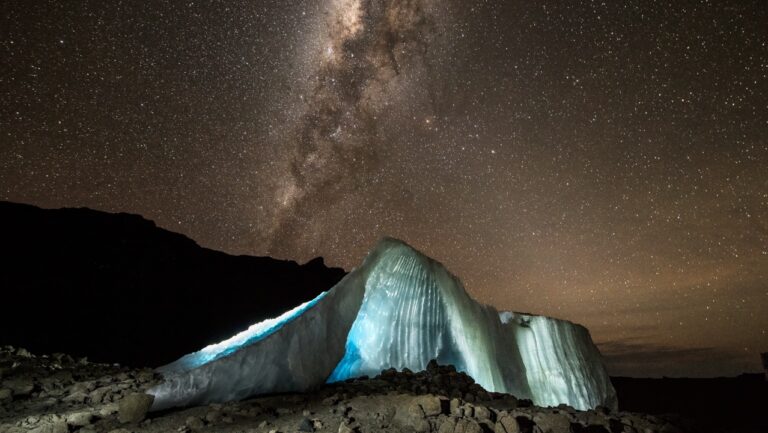
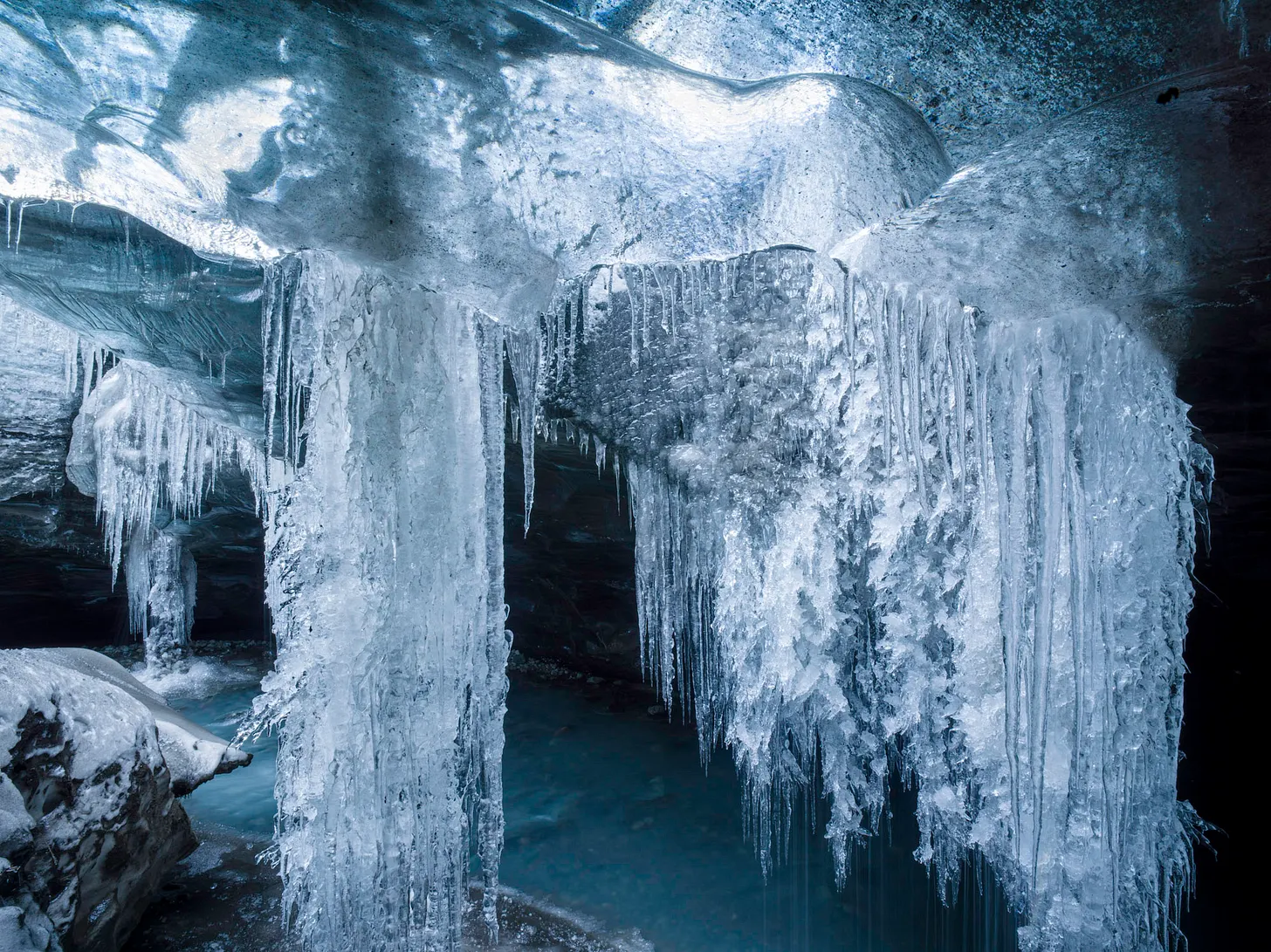
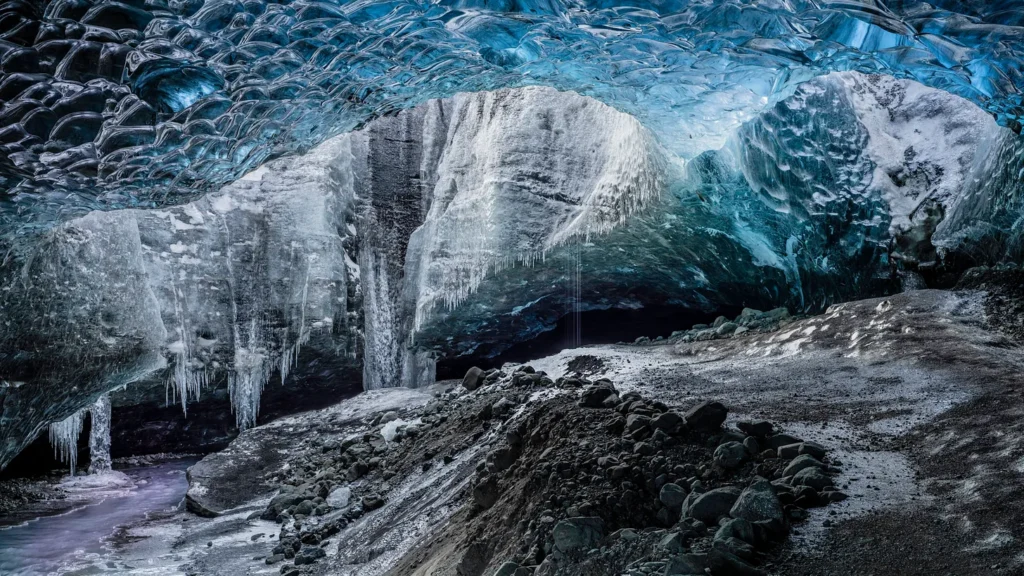
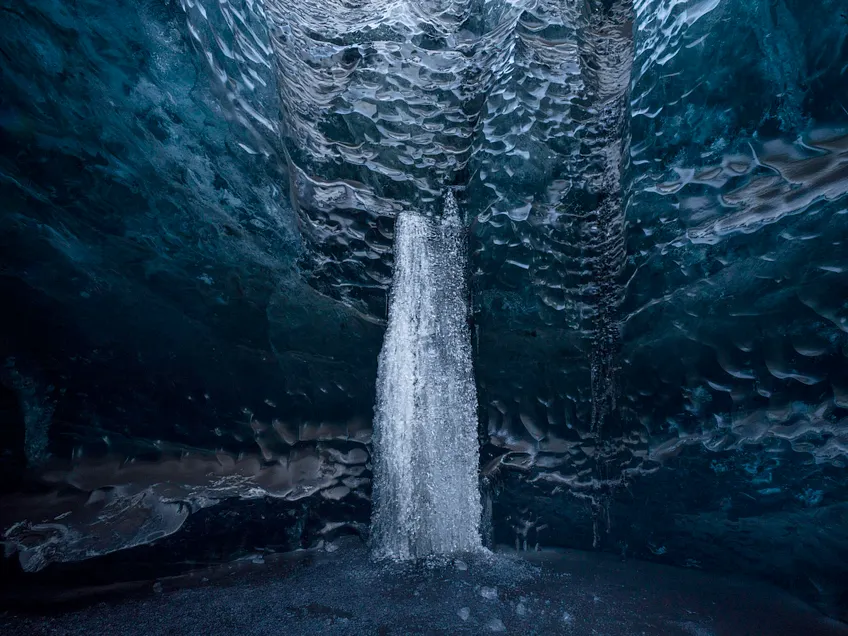
Ice caves are a great example of this dilemma. They are unspeakably beautiful. They are also vanishing. The wall of Iceland’s largest glacier, Vatnajökull, is receding at over 50 meters a year, so every ice cave I’ve ever photographed there is gone. Photographically, what should I show? If I show the gravel pile that used to be an ice cave, it’s just a picture of dirt. Noone’s going to look at that. If I show the incredible beauty of ice caves, I risk letting their extinction go unacknowledged. Worse, a casual view on social media might lead someone to believe the ice is thriving.
That last outcome troubles me most. It makes me wonder if, or when, beautiful images of a dying world are misleading.
When faced with quandaries like this, I often turn to the work of like-minded photographers and filmmakers. Here are two that inspire me:
Both of these examples are powerful and profound. Neither of them feels like me. Invariably, I will choose to portray nature’s beauty. I readily admit that most viewers will never learn the story behind my photographs. They’ll see an extraordinary ice cave, perhaps pause for a moment, and scroll on. But some will wonder where it is. Some will discover that it no longer exists. And perhaps a few will start to see the world around them differently.
I can’t make everyone care. But I can give them a reason to look.
See more of Jon McCormack’s work at jonmccormack.com or on Instagram, @jonmccormackphoto.
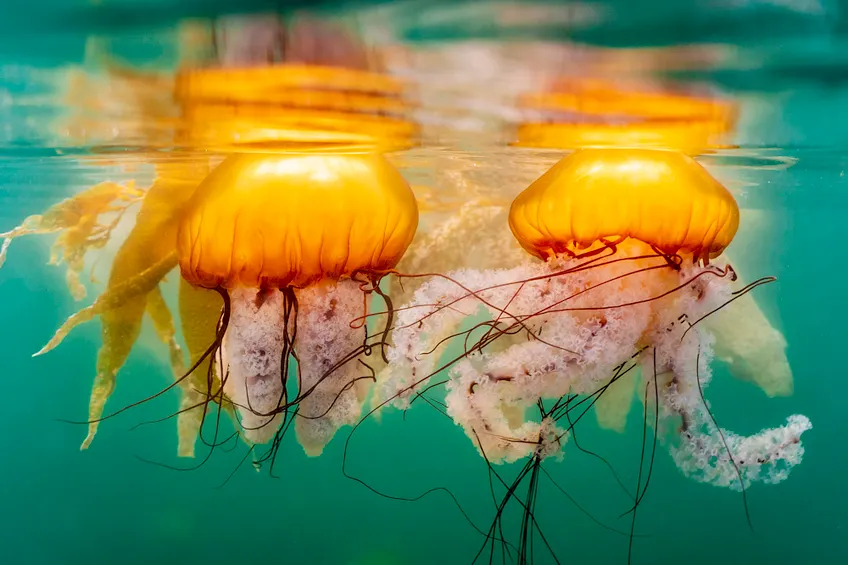
Every now and then, Monterey Bay fills with sea nettle jellyfish (chrysaora fuscescens). This becomes a siren call for underwater photographers with more vision than sense (i.e. me) to get in the water with them. I found a thick patch of jellies, rolled into the water, and rolled in. Moments after I hit the water, my face exploded in pain. A jellyfish had become entangled in my regulator (scuba mouthpiece), and its tentacles latched onto my face. For the next 2 days, I looked and sounded like I’d had a stroke.