Landscape
Words and Images by Jon McCormack | November 2026
What recent science has taught us about what nature does to our brain.
There is a strange moment that happens when you look at something in nature long enough.
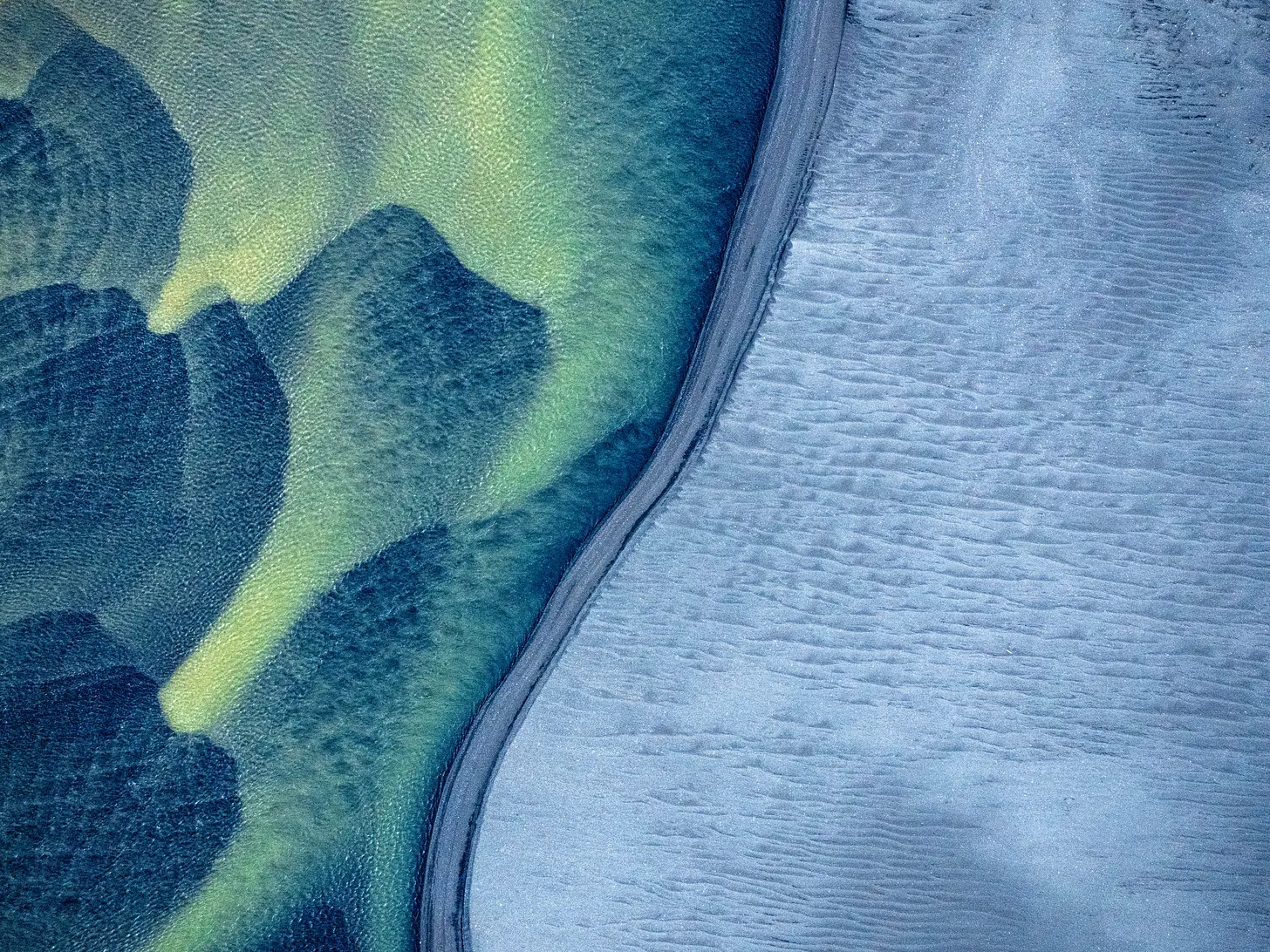
At first, you see the thing itself. Then, if you stay with it, the object begins to loosen. It stops being only itself. The beach becomes a map. The river becomes a vein. The mineral becomes a landscape.
A tree does not insist that you look at it. But if you do, it rewards you.
You begin with the trunk. Then the branching. Then the smaller branching. Then the pattern of leaves. Then the gaps between the leaves. Then the way light moves through them. Then the shadows. Then the wind. Then the realization that the tree is not a thing, but a set of relationships: soil, water, air, sunlight, fungus, time.
The brain loves this. Not because it is simple, but because it is coherent.
That coherence matters. Natural patterns often sit in a special zone between order and surprise. They are neither monotonous nor chaotic. Repetition is not decorative. It is a clue.
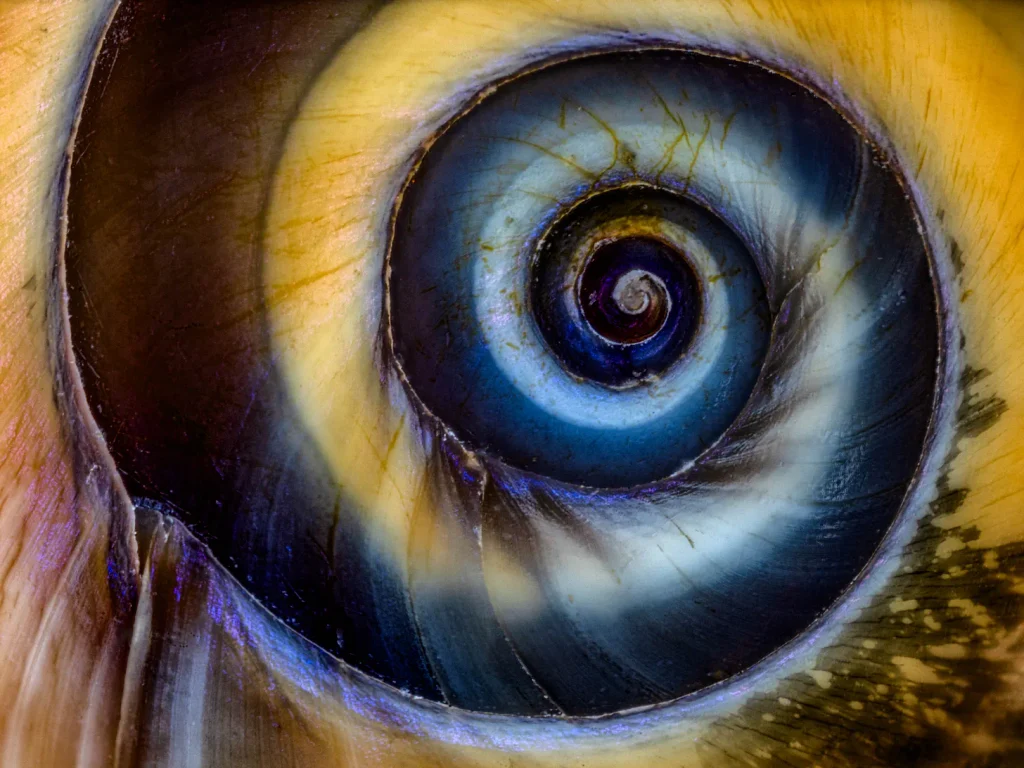
These patterns tell us that the same forces keep writing themselves into the world: flow, pressure, growth, erosion, gravity, competition, adaptation, time.
Our brains evolved inside this grammar. Long before we had written language, we were reading landscapes. We needed to notice the difference between healthy and stagnant water, safe and exposed terrain, edible and dangerous plants, animal movement, weather changes, seasonal timing, shelter, threat, and opportunity.
Pattern recognition was not a luxury. It was survival.
So when we look at nature, some ancient part of the brain experiences a kind of homecoming. The world is complex, but legible. There is information everywhere, but much of it is embodied, rhythmic, and relational.
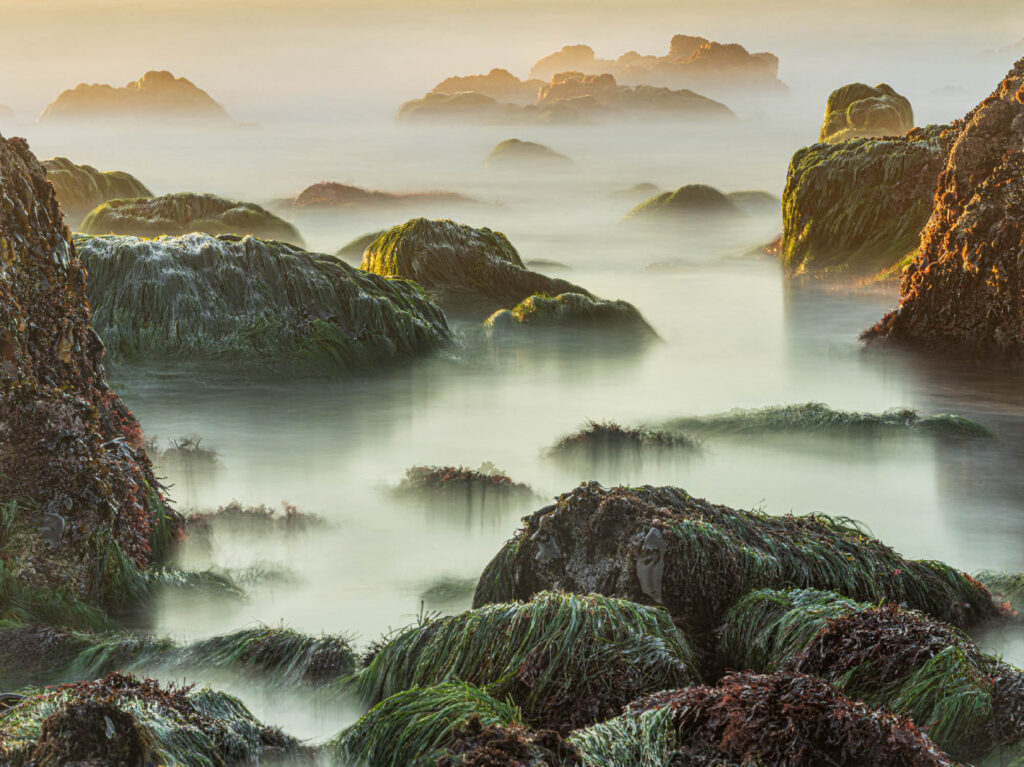
This is why certain natural forms feel calming without being boring. Fractal patterns, structures that repeat at different scales, appear throughout nature: trees, rivers, clouds, mountains, lungs, blood vessels, coastlines. Research has shown that looking at some natural fractal patterns can increase alpha brain activity, which is associated with a wakefully relaxed state.
That phrase, wakefully relaxed, feels exactly right to me.
See more of Jon McCormack’s work at jonmccormack.com or on Instagram, @jonmccormackphoto.
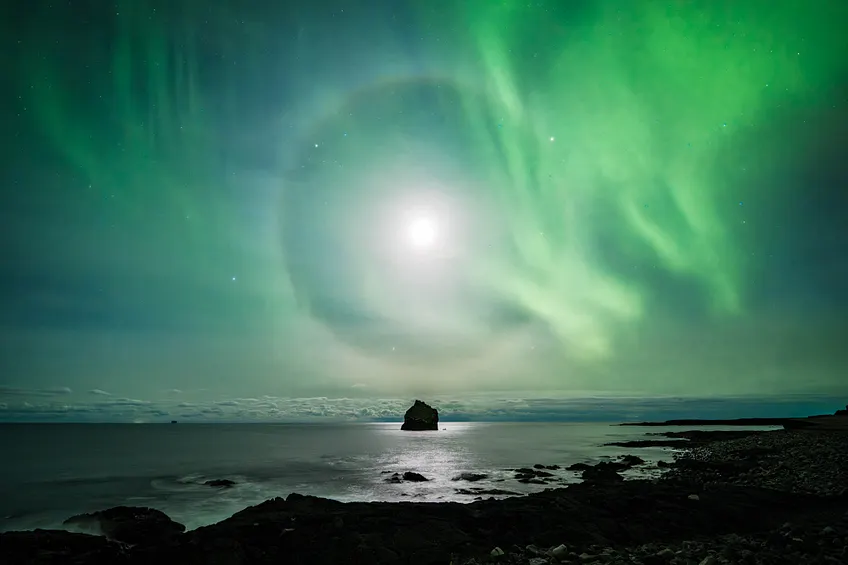
In this photograph of Karlinn off the Reykjanes Peninsula in Iceland, the sea stack sits like a dark anchor beneath a sky alive with movement. Above it, the northern lights sweep across the night in green veils, while the moon burns through a luminous 22-degree halo, a circular ring formed as light passes through ice crystals suspended high in the atmosphere. The effect is almost otherworldly: ocean, rock, moonlight, aurora, and atmosphere all briefly aligned. What might have been a simple coastal scene becomes something larger—a reminder that Iceland’s landscapes are shaped not only by lava and sea, but by light, weather, and the vast invisible forces moving overhead.